
Navigating Central Bank Policy Uncertainty Amid Mixed U.S. Jobs Data
The U.S. economic landscape in late 2025 presents a paradox: a labor market showing signs of moderation amid a stubbornly high unemployment rate, and inflation easing but remaining elevated due to external shocks like tariffs. For investors, this environment demands a nuanced approach to portfolio positioning, particularly as central banks grapple with the risk of hawkish surprises in inflation and employment data.
Mixed Signals in the Labor Market
, , largely attributed to deferred federal worker resignations. , the highest in over four years, . While sectors like healthcare and construction showed resilience, the data underscores a labor market that is neither overheating nor collapsing. 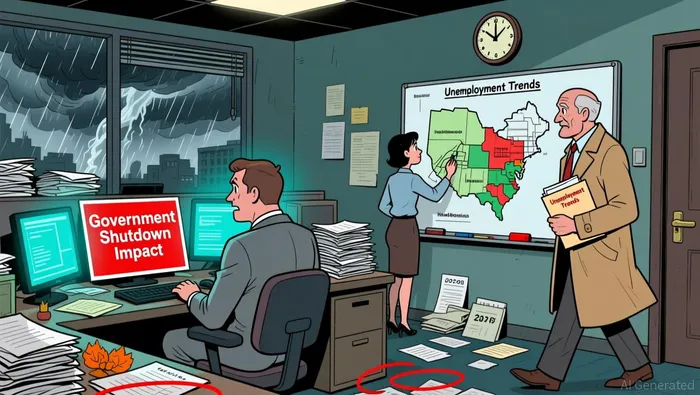 However, the October government shutdown disrupted data collection, introducing volatility and potential biases into key metrics. This uncertainty complicates the Federal Reserve's ability to calibrate policy, as it must balance the risk of a softening labor market with the need to maintain price stability.
Inflationary Pressures and Policy Dilemmas
Inflation, as measured by the CPI, , driven by tariffs on goods and disrupted data collection during the shutdown. Goldman Sachs estimates that the delayed October data , further muddying the inflation picture. The Fed faces a challenging balancing act: while responding to labor market softness. A 25-basis-point rate cut at the December FOMC meeting reflected this tension, with officials like emphasizing price stability as the more pressing risk. However, the Fed's "wait and see" approach leaves open the possibility of hawkish surprises if inflation shows unexpected resilience.
Strategic Portfolio Positioning
Given these uncertainties, investors must adopt a defensive yet adaptive strategy. Key considerations include:
- Asset Allocation and Sector Rotations
- Small and Mid-Cap Stocks: . , and U.S. .
Non-U.S. Equities: A weak U.S. dollar environment, driven by domestic policy uncertainties, supports opportunities in international markets. Investors should prioritize regions with stronger growth fundamentals and less exposure to U.S. inflationary shocks.
Fixed Income and Duration Management
- Longer Duration Bonds: As cash yields drift lower, . The Fed's cautious stance on employment risks suggests a prolonged period of low rates, .
Treasury Bill Purchases: The Fed's December intervention, which included Treasury bill purchases to inject liquidity, signals a potential shift in monetary policy tools. Investors should monitor these actions for clues about future rate trajectories.
Diversification and Hedging
- Gold and Commodities: during periods of . With inflation still above target, .
- High-Yield Corporate Bonds: in , .
Conclusion
The Fed's December 2025 "hawkish rate cut" underscores the central bank's delicate balancing act between inflation control and labor market support. For investors, the path forward requires agility: leveraging sector rotations, extending fixed-income duration, and diversifying into non-U.S. assets and alternative assets like gold. As the Fed navigates data gaps and external shocks, portfolios positioned for both inflationary resilience and growth recovery will be best equipped to weather potential policy surprises.







Comentarios
Aún no hay comentarios