
Navigating Central Bank Policy Divergence in a Fragmented Global Market Outlook
U.S. Policy Shift: A Pivot Toward Easing
The Federal Reserve's decision to conclude its Quantitative Tightening (QT) program in early 2025 marks a pivotal shift. By halting bond sales and resuming monthly Treasury purchases of $35 billion starting in Q1 2025, the Fed aims to stabilize yields and ease financial conditions, according to the Schroders Q3 2025 review. This move reflects a pivot from inflation-fighting to addressing labor market weakness, a theme that has dominated market sentiment in late 2025, according to a Coinotag article.
For asset allocators, the Fed's balance sheet expansion offers opportunities in duration positioning. U.S. Treasury yields, which had risen during QT, are expected to stabilize, making long-duration bonds more attractive. Additionally, the Fed's pivot supports equities, particularly in sectors sensitive to lower borrowing costs, such as technology and industrials.
U.K. Policy Adjustments: Rate Cuts and Caution
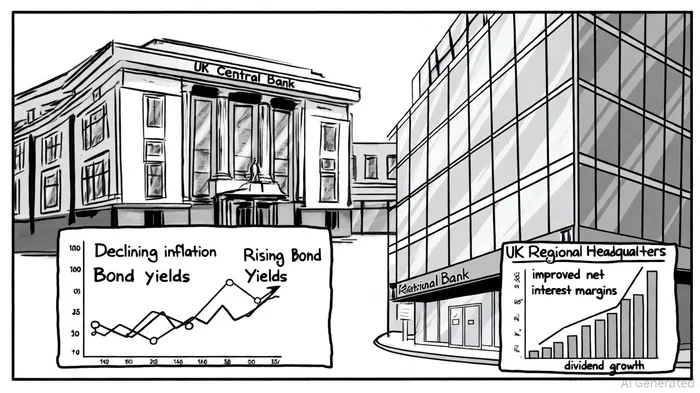
The BoE's Q3 2025 rate cut to 4.0%-its first since 2020-signals a more accommodative stance amid persistent inflation (3.8% in August 2025) driven by food, energy, and utility costs, as noted by Schroders. Complementing this, the BoE's slowdown in quantitative tightening is expected to lower bond yields and borrowing costs, providing relief to UK borrowers.
However, the BoE's cautious approach contrasts with the Fed's proactive easing. UK asset markets, including regional banks like Central Pacific Financial, have demonstrated resilience through prudent capital management, with improved net interest margins and controlled credit costs, according to the Central Pacific Financial Q3 report. For investors, UK equities and government bonds may offer defensive appeal, though political and inflationary risks warrant careful monitoring.
Emerging Markets: A Tale of Three Economies
Emerging markets in Q3 2025 are defined by stark contrasts. India's market faces headwinds from U.S. tariffs on pharmaceuticals, while Brazil grapples with political uncertainty and high real rates (nearly 10%), as discussed by Schroders. In contrast, China's market benefits from progress in U.S.-China trade talks and anti-inflation policies, fueling a liquidity-driven rally in tech sectors, per Schroders.
Strategic allocation to emerging markets requires selective exposure. China's equity market, driven by AI and tech momentum, offers growth potential, whereas Brazil's high borrowing costs make it more sensitive to rate cuts. India, meanwhile, is expected to regain investor focus in 2026 after a challenging 2025, according to Schroders.
Strategic Asset Allocation: Balancing Divergence
The divergent central bank policies necessitate a multi-asset approach:
1. Fixed Income: A strategic overweight in developed government bonds, particularly U.S. Treasuries, provides diversification amid easing monetary conditions, according to Barclays' multi-asset note.
2. Equities: Developed market equities remain preferred risk assets, but valuation caution persists. Emerging market equities should be approached with sector-specific focus, favoring China's tech-driven growth.
3. Emerging Market Debt: High-yield and local currency bonds require careful selection due to spread volatility, with a small overweight in hard-currency emerging market spreads for lower equity beta, as BarclaysBCS-- suggests.
Conclusion
Central bank divergence in 2025 underscores the importance of dynamic asset allocation. While the Fed's easing and BoE's cautious cuts create opportunities in U.S. and UK assets, emerging markets demand a nuanced, selective approach. Investors must balance macroeconomic trends with regional idiosyncrasies, leveraging policy shifts to optimize risk-adjusted returns in a fragmented global landscape.





Comentarios
Aún no hay comentarios