
Navigating Central Bank Divergence: Inflation Misperceptions and the Case for Rebalancing Portfolios in 2026
The global central bank landscape in 2026 is marked by a stark divergence in policy approaches, driven by conflicting narratives around inflation, labor markets, and the lingering effects of protectionist policies. While central banks like the Federal Reserve (Fed) and the Bank of Canada grapple with stubborn inflation and softening employment data, their public rhetoric often emphasizes external shocks-such as U.S. tariffs-over structural labor market trends. This disconnect between central bank narratives and on-the-ground economic realities creates fertile ground for misperceptions, which investors must navigate by reallocating capital toward inflation-protected assets and undervalued global growth markets.
The Fed's Tariff-Centric Inflation Narrative
The Fed's 2026 policy calculus remains anchored to its dual mandate of price stability and maximum employment. However, its public focus on inflation has increasingly centered on external factors, particularly the inflationary impact of President Trump's tariffs. According to a report by Bloomberg, the Fed attributes much of the elevated inflation to these tariffs, which it describes as a "one-time but significant impact on prices." This narrative has justified a cautious approach to rate cuts, with the Fed maintaining a target range of 3.50% to 3.75% despite signs of labor market moderation.
Yet, the data tells a more nuanced story. While the U.S. consumer price index (CPI) eased to 2.7% year-over-year in November 2025-below expectations of 3.1%-core CPI remained at 2.6%, still above the 2% target. Meanwhile, the unemployment rate climbed to 4.6% in November 2025, reflecting a cooling labor market. Professional forecasters now predict CPI inflation will rise slightly to 2.9% in 2026, with unemployment expected to reach 4.5%. These trends suggest that the Fed's focus on tariffs may obscure deeper structural challenges in the labor market, where wage growth and job creation are slowing.
Global Divergence and the Hawkish Consensus
The Fed's dual mandate approach contrasts sharply with the global trend of central banks adopting a more hawkish stance. As noted in KPMG's Central Bank Scanner, most central banks have completed their rate-cutting cycles and are prioritizing inflation control over growth support. The Bank of Canada, for instance, has held interest rates steady despite labor market softness, with an unemployment rate above post-pandemic lows. This divergence creates a fragmented policy environment, where the U.S. remains uniquely attuned to employment risks while other economies prioritize price stability.
This fragmentation has tangible implications for capital flows. Investors are increasingly wary of the Fed's credibility, particularly as internal divisions among policymakers signal a divided path ahead. The risk of a policy misstep-such as delaying rate cuts in response to a worsening labor market-could exacerbate market volatility and erode confidence in central bank forecasts.
Misperceptions and the Case for Rebalancing
The central banks' overemphasis on tariff-driven inflation risks a misperception of the true drivers of economic weakness. Tariffs may have contributed to short-term price spikes, but they cannot mask the broader trend of labor market moderation and shifting consumer behavior. For investors, this divergence between narratives and realities presents an opportunity to rebalance portfolios toward assets that hedge against inflationary surprises and capitalize on undervalued growth opportunities.
1. Inflation-Protected Assets
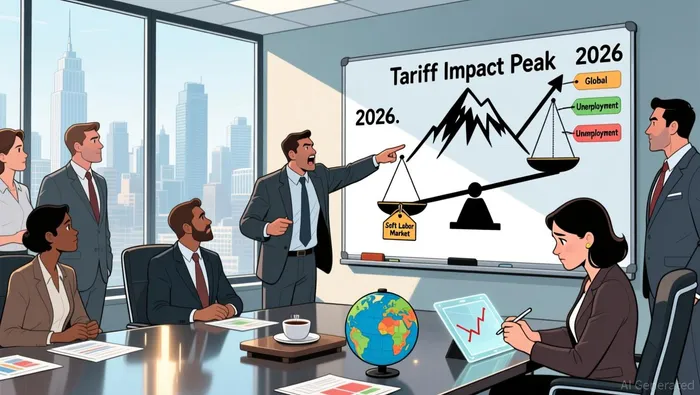
With central banks underestimating the persistence of inflationary pressures-particularly in sectors exposed to trade policy shifts-investors should prioritize inflation-protected assets. Treasury Inflation-Protected Securities (TIPS) and commodities like gold and energy remain compelling, given their historical performance during periods of policy uncertainty. The Fed's own admission that tariff effects will peak in early 2026 suggests that inflationary pressures may linger longer than currently priced into markets.
2. Undervalued Global Growth Markets
Meanwhile, the hawkish stance of non-U.S. central banks creates opportunities in undervalued global growth markets. Emerging economies with accommodative monetary policies-such as India and parts of Southeast Asia-are better positioned to absorb the shocks of U.S. protectionism and Fed inaction. These markets offer higher growth potential and more flexible policy frameworks, making them attractive for long-term capital allocation.
Conclusion: Preparing for Policy Recalibration
Central bank policy divergence in 2026 is not merely a technical debate but a reflection of deeper misperceptions about inflation's drivers. By overemphasizing external shocks like tariffs and underestimating labor market fragility, policymakers risk misaligning their responses to the true state of the economy. Investors who act now to reallocate toward inflation-protected assets and undervalued global markets will be better positioned to navigate the inevitable recalibrations ahead.







Comentarios
Aún no hay comentarios