
Navigating Canadian Markets Amid Tariff Turbulence: Sector Risks and Strategic Plays
The escalating U.S. tariffs on Canadian imports—now at a punitive 35%—are reshaping the investment landscape for Canadian equities and commodity markets. With the Bank of Canada's July rate decision looming and Morgan StanleyMS-- warning of margin pressure across key sectors, investors must dissect vulnerabilities and opportunities in the S&P/TSX index. Here's how to navigate this high-stakes environment.
The Tariff Regime: Sector-Specific Fallout
The 35% tariff on Canadian goods, effective August 1, 2025, targets industries outside the U.S.-Mexico-Canada Agreement (USMCA) exemptions. Three sectors face the most immediate risks:
- Industrial Sector (S&P/TSX Industrial Index)
- Vulnerability: Auto manufacturers and machinery companies are hardest-hit. Non-USMCA-compliant vehicles face a 25% tariff, while the new 35% levy applies to other goods. Ford Motor CompanyF--, for instance, has cited a $1,700 per-vehicle cost increase, though its stock remains resilient—a disconnect Morgan Stanley attributes to investor complacency.
Retaliation Risk: Canada's $20.7 billion retaliatory tariffs, including 25% duties on U.S. dairy and lumber, could intensify trade friction. Investors should avoid overexposure to tariff-sensitive names like auto parts suppliers.
Energy Sector (S&P/TSX Energy Index)
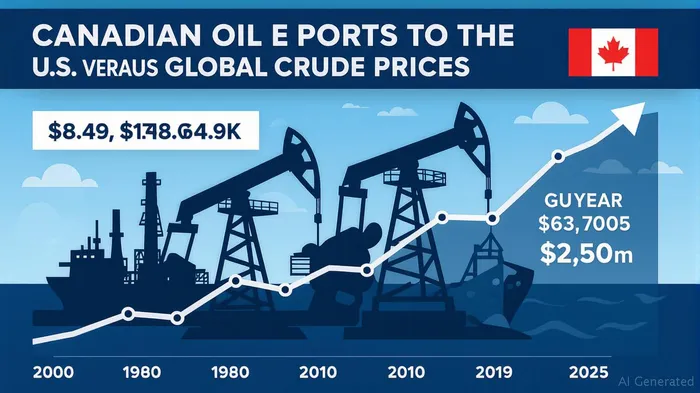
- Relative Safety: Energy imports (crude oil, natural gas) face only a 10% tariff, lower than other sectors. This exemption is a lifeline for regions like Alberta, which supplies 80% of U.S. oil imports.
- Wildcards: Geopolitical risks loom. If the U.S. expands tariffs to energy—a remote but possible scenario—Canadian producers like Cenovus EnergyCVE-- could suffer. Meanwhile, China's retaliatory measures (e.g., 70% cuts to U.S. pork imports) highlight spillover risks for global trade.
- Materials Sector (S&P/TSX Materials Index)
- Severe Pressure: Aluminum and steel producers face a 50% tariff, exacerbating margin erosion. Morgan Stanley notes that smaller firms, lacking pricing power, may struggle to offset costs.
- Defensive Edge: Gold miners like Barrick Gold could thrive as tariffs stoke inflation and safe-haven demand. The metal's price has risen 12% this year amid trade uncertainty.
The Bank of Canada's July Crossroads: Rate Cuts or Caution?
The central bank's decision on July 30 will amplify sector dynamics. Current expectations lean toward a rate cut to 2.25% or lower, driven by:
- Economic Softness: Canada's Q2 GDP is forecasted to slump, with unemployment rising to 6.9%.
- Inflation Divergence: Core inflation (2.3%) remains above target, but tariff-driven cost pressures are easing as businesses deplete inventory buffers.
A rate cut would support rate-sensitive sectors like utilities and telecoms, while penalizing energy and materials (which benefit from higher rates). Investors should monitor 2-year Canadian bond yields as a proxy for rate expectations.
Defensive Strategies: Where to Anchor Capital
- Gold and Precious Metals: Tariffs fuel inflation uncertainty, making gold a hedge against policy missteps.
- Rate-Sensitive Utilities: Regulated firms like Fortis Inc.FTS-- offer steady dividends, insulated from trade wars.
- USMCA-Compliant Firms: Companies fully aligned with the trade agreement (e.g., automotive suppliers meeting regional content rules) avoid tariffs.
Red Flags: Avoid These Plays
- Non-USMCA Auto Parts: Firms exposed to the 35% tariff without pricing power face margin compression.
- Aluminum Producers: The 50% tariff and weak industrial demand make this subsector risky.
Final Call: A Cautionary Optimism
While Canadian equities have shrugged off tariffs so far—S&P/TSX is near record highs—the risks are asymmetric. Investors should trim exposure to tariff-hit sectors and prioritize defensive plays ahead of the BoC's decision. Monitor the S&P/TSX Volatility Index for shifts in market sentiment, and remain agile as trade talks evolve.
In this climate, the mantra is clear: profit from the storm, but avoid drowning in it.





Comentarios
Aún no hay comentarios