
Navigating Canada-China Trade Tensions: Strategic Opportunities in Agricultural Diversification
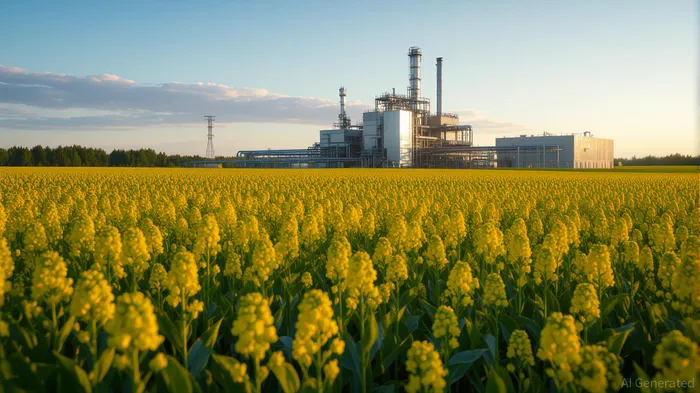
The Canada-China trade dispute has entered a new phase, marked by China's imposition of a 75.8% provisional anti-dumping tariff on Canadian canola imports. This move, effective August 14, 2025, has sent shockwaves through global agricultural markets, exposing vulnerabilities in Canada's overreliance on a single export destination. Yet, within this crisis lies a profound opportunity for Canadian agribusiness to redefine its value proposition through innovation, diversification, and strategic alignment with global sustainability trends.
The Immediate Impact and Risks
China's decision to target canola—a crop that historically accounted for 80% of its imports—has triggered a sharp decline in ICE canola futures, with prices dropping 6.5% to a four-month low. The tariff, framed as a response to alleged Canadian subsidies, effectively threatens to cut off a market that absorbs four to five million tonnes annually. For Canadian farmers, this represents not just a revenue loss but a reputational challenge, as China's dominance in the sector has long insulated the industry from competitive pressures.
The risks extend beyond the canola sector. Retaliatory measures, such as Canada's 100% tariffs on Chinese electric vehicles, have escalated tensions, creating a feedback loop of protectionism. Investors must weigh the short-term volatility against the long-term structural shifts Canada is now compelled to pursue.
Strategic Diversification: A Path to Resilience
Canada's response has been twofold: market diversification and value-added innovation.
Expanding into the EU and Southeast Asia
The European Union and Southeast Asia are emerging as critical markets for Canadian canola. The EU's Renewable Energy Directive (RED) has created a demand for non-GMO and sustainably certified feedstocks, aligning with Canada's strengths. Certification programs, such as the International Sustainability and Carbon Certification (ISCC), are enabling Canadian growers to access these premium markets. Meanwhile, India and Thailand are showing growing appetite for non-GMO canola, driven by consumer preferences and food security needs.Non-GMO Canola and Soybean Innovation
Canadian companies like NRGene Canada and Pulse Genetics are leading a $4.3 million initiative to develop high-protein, non-GMO soybean and canola varieties. These crops are tailored for northern climates and resistant to pests like soybean cyst nematode (SCN). The project, supported by Protein Industries Canada, aims to bridge the performance gap between GMO and non-GMO crops, capturing premium markets in Asia and the EU.
- Renewable Diesel Integration
The Clean Fuel Regulation (CFR), effective July 1, 2023, is driving demand for canola-based biofuels. With diesel fuel required to contain 2% biofuel, Canada's canola industry is projected to reduce annual GHG emissions by 4.4 megatonnes. The CFR's expansion could add another 3.5 megatonnes of reductions, creating a domestic market that insulates farmers from export volatility.
Investment Opportunities and Strategic Considerations
For investors, the key lies in identifying companies and sectors poised to benefit from Canada's strategic pivot:
- Non-GMO AgTech Firms: NRGene Canada and Pulse Genetics are at the forefront of developing high-protein, non-GMO crops. Their partnerships with Hensall Co-op and Yumasoy Foods Ltd. highlight a vertically integrated approach to capturing value across the supply chain.
- Renewable Diesel Infrastructure: Companies like Archer Daniels Midland (ADM), which recently invested in a 265 million-liter biodiesel plant in Alberta, are critical to scaling Canada's renewable diesel capacity.
- Certification and Logistics Providers: Cargill, BungeBG--, and G3 are pivotal in facilitating EU market access through sustainability certification programs. Their role in managing the supply chain from farm to biofuel processor positions them as long-term beneficiaries of Canada's green energy transition.
However, risks remain. The finalization of China's anti-dumping tariff in September 2025 could further disrupt markets, while geopolitical tensions may delay trade agreement negotiations. Investors should also monitor the pace of EU and Southeast Asian market adoption, as regulatory hurdles or shifting consumer preferences could slow growth.
Conclusion: A New Era for Canadian Agribusiness
The Canada-China trade dispute is a catalyst for transformation. By leveraging its strengths in non-GMO innovation, renewable energy, and global sustainability standards, Canada is repositioning its agribusiness sector for long-term resilience. For investors, this transition offers opportunities in both direct agricultural production and the enabling technologies and infrastructure that will underpin the next phase of growth.
The path forward is not without challenges, but the strategic clarity of Canada's response—combining policy support, technological innovation, and market diversification—creates a compelling case for investment in a sector poised to thrive in a post-pandemic, climate-conscious world.





Comentarios
Aún no hay comentarios