
Navigating the Bull Run: Strategic Sectors to Outperform in a Rising Dollar and Post-Fed Rate Cut Environment
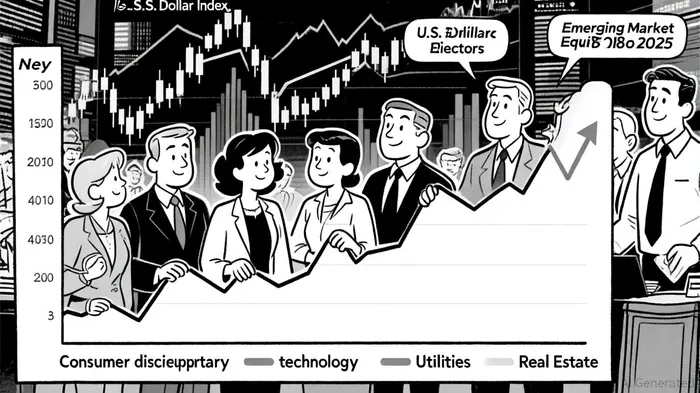
The Federal Reserve's September 2025 rate cut—its first reduction since December 2024—marks a pivotal shift in monetary policy. By lowering the federal funds rate to 4.00%–4.25%, the Fed prioritized a cooling labor market over inflation, signaling two more cuts by year-end [1]. This easing cycle, while modest, has already triggered a reevaluation of capital allocation strategies, with investors recalibrating portfolios to capitalize on lower borrowing costs, dollar dynamics, and sector-specific opportunities.
The Dollar's Dual Role: Safe Haven or Catalyst for Reallocation?
A stronger U.S. dollar typically attracts capital inflows during tightening cycles, but the Fed's pivot has reversed this dynamic. As rate cuts reduce the dollar's yield advantage, global investors are shifting toward higher-yielding assets, including emerging market (EM) equities and local-currency bonds [2]. Historical data shows that during Fed easing cycles, EM assets gain traction as interest rate differentials widen, making them more attractive relative to U.S. Treasuries [3]. For instance, EM equities are currently trading at a 35% forward price-to-earnings discount to developed markets, offering compelling value for risk-tolerant investors [4].
However, the dollar's strength remains a wildcard. While a weaker dollar post-rate cuts could boost EM flows, a stronger dollar—driven by lingering inflation or geopolitical risks—may temporarily redirect capital to U.S. defensive sectors. This duality underscores the need for a balanced approach to capital allocation.
Sector Winners in a Post-Rate Cut Environment
Consumer Discretionary and Technology
Lower interest rates reduce the discount rate for valuing future earnings, making growth stocks more attractive. The S&P 500 consumer discretionary sector historically surged 26% following Fed easing cycles, as reduced borrowing costs stimulate consumer spending on non-essentials [5]. Similarly, technology stocks—particularly those tied to AI and semiconductors—benefit from cheaper capital for R&D and expansion. ETFs like the Roundhill Magnificent Seven ETF (MAGS) and iShares Semiconductor ETF (SOXX) are positioned to outperform [6].Real Estate and Regional Banks
Mortgage rates are expected to decline with the Fed's easing, spurring housing demand and boosting real estate valuations. REITs861104--, which are sensitive to interest rate changes, have historically outperformed in low-rate environments [7]. Regional banks, meanwhile, may see improved net interest margins as lower rates reduce deposit costs while maintaining loan yields.Defensive Sectors: Utilities and Consumer Staples
As bonds become less attractive in a low-rate world, utilities—known for stable dividends—gain appeal. Consumer staples, which provide consistent demand regardless of economic cycles, also benefit from reduced discounting pressures.Emerging Markets and Alternatives
With the dollar weakening, EM equities and currencies are gaining traction. J.P. Morgan notes a “modestly pro-risk” stance among investors, with overweights in U.S. tech and EM opportunities [8]. Gold and cryptocurrencies, which thrive in low-yield environments, are also seeing inflows as portfolio diversifiers [9].
Capital Allocation Strategies: ETFs and Duration Shifts
Fixed income strategies are adapting to the new rate environment. Investors are favoring the “belly” of the Treasury yield curve (3–7-year maturities) for a balance of yield and resilience [10]. Ultra-short and intermediate bonds are also gaining traction as inflation risks persist.
Equity ETFs like the iShares Russell 2000 ETF (IWM) and SPDR S&P Biotech ETF (XBI) are attracting capital for their exposure to rate-sensitive small-cap and innovation-driven sectors [11]. Meanwhile, asset managers are increasing allocations to EM equities and U.S. tech, reflecting a dual focus on growth and diversification.
Conclusion: Balancing Growth and Risk in a Shifting Landscape
The Fed's rate cuts have created a mosaic of opportunities and risks. While consumer discretionary, technology, and EM equities offer growth potential, defensive sectors and fixed income provide stability. Investors must remain agile, leveraging ETFs and tactical allocations to navigate dollar volatility and sector rotations. As the Fed signals further easing, the key to success lies in aligning capital with both macroeconomic trends and granular sector dynamics.







Comentarios
Aún no hay comentarios