
Navigating APEC's Trade Crossroads: Where to Invest Now Amid U.S. Tariff Turbulence
The U.S. tariff regime has reshaped the Asia-Pacific trade landscape, creating a stark divide between sectors and regions. With APEC members scrambling to secure favorable bilateral deals to avoid steep tariffs, investors face a critical choice: pivot to tech, manufacturing, and logistics leaders with diversified supply chains or risk obsolescence in sectors tied to the volatile China-U.S. trade axis.
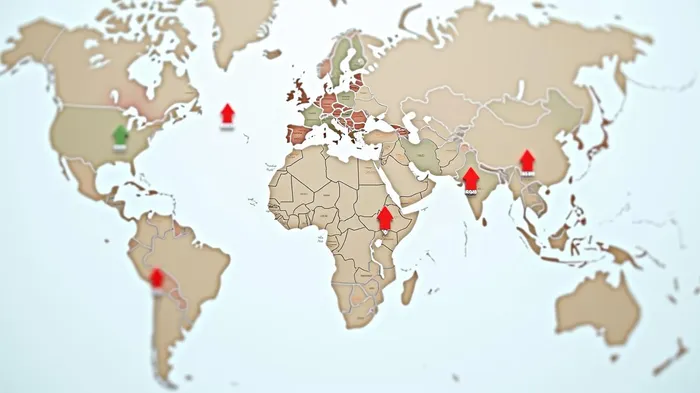
The Opportunity: Bilateral Deals as a Shield Against Tariff Volatility
The U.S. has imposed or threatened tariffs averaging 17.8% on APEC imports—highest since the 1930s—yet a select group of nations are negotiating carve-outs that could redefine winners and losers.
1. Tech Sector: South Korea and Vietnam Lead the Pivot
- South Korea: Semiconductor giants like Samsung and SK Hynix are negotiating Section 232 exemptions to avoid 25% tariffs on U.S. exports. The U.S. has already excluded semiconductor manufacturing equipment (SME) from reciprocal tariffs, a lifeline for firms building domestic facilities.
- Vietnam: Becoming the "new China" for tech assembly, with Apple, Intel, and NVIDIA ramping up production to avoid U.S. tariffs on Chinese imports. Vietnam’s 46% reciprocal tariff suspension until July 2025 offers a window to lock in low-cost manufacturing.
2. Manufacturing: USMCA Compliance as a Gold Standard
U.S.-Mexico-Canada Agreement (USMCA) members Canada and Mexico enjoy 0% tariffs on compliant goods, but penalties jump to 25% for non-compliant items like non-North American steel. Investors should favor firms that meet regional content rules, such as General Motors (GM) or Magnesium Corporation of America (MGM), which source U.S.-made alloys.
3. Logistics: The Rise of Southeast Asia’s Hub-and-Spoke Model
Ports in Thailand and Malaysia are positioning as intermediaries for U.S. trade, leveraging their low 10% baseline tariffs. Investors should track firms like PT Indonesia Logistics (ILG), which handles 30% of Southeast Asia’s container traffic, and CMA CGM (CMG), expanding in the region.
The Risk: Overexposure to China-U.S. Trade
Companies reliant on cross-border supply chains between China and the U.S. face existential threats.
- Tariff Stacking: U.S. tariffs on Chinese imports could rise to 145% if the current truce expires, while China’s retaliatory measures—like 15% tariffs on U.S. agricultural goods—will squeeze margins.
- Supply Chain Fragmentation: Automotive and pharmaceuticals sectors face particular strain. For example, Novares (a tier-1 supplier) now demands upfront payments to hedge against 25% U.S. auto tariffs.
Strategic Investment Playbook
- Tech & Semiconductors:
- Buy: South Korea’s SK Hynix (000660.KS) and Vietnam’s FPT Corporation (FPT.HN).
Avoid: U.S. firms like Micron (MU), vulnerable to China’s 84% retaliatory tariffs.
Manufacturing:
- Buy: U.S. firms with USMCA compliance, such as Ford (F) and Mexico’s Cemex (CX).
Avoid: Steel producers like Nucor (NUE) exposed to 25% tariffs on non-compliant imports.
Logistics:
- Buy: Thai AirAsia (THAI) and Japan’s Mitsui OSK Lines (MOL), which dominate Southeast Asian trade routes.
Final Call: Act Now or Be Left Behind
The window to position in APEC’s tariff-advantaged sectors is narrowing. As reciprocal tariffs on China, Indonesia, and others revert to 24–46% by July, companies without diversified supply chains will face margin collapses. Investors must act swiftly to:
- Rebalance portfolios toward APEC nations with bilateral deals.
- Reinvent supply chains using AI-driven logistics (e.g., Singapore’s NCS Limited) to navigate tariff volatility.
The era of China-U.S. trade dominance is over. The future belongs to those who diversify, localize, and digitize—before the next tariff wave hits.







Comentarios
Aún no hay comentarios