
Navigating the AI Boom: Challenges, Incentives, and the Future of Silicon Valley.
PorAinvest
lunes, 8 de septiembre de 2025, 4:10 am ET2 min de lectura
NVDA--
Historically, August and September have been risky periods for stocks, with the S&P 500 often experiencing declines. This seasonal bearish trend is projected to impact short-term trades significantly, leading to heightened volatility [1]. Despite these risks, the AI sector continues to attract substantial investment, with U.S. startup funding surging 75.6% in the first half of 2025, driven largely by major AI investments [2].
Anthropic, an AI startup backed by Google-parent Alphabet and Amazon.com, is a notable example of the sector's growth. The company recently secured a $13 billion Series F round, valuing it at $183 billion post-money. This funding will expand Anthropic's capacity to meet growing enterprise demand, deepen its safety research, and support international expansion [2]. Anthropic's latest upgrade to its Opus 4.1 model demonstrates its commitment to real-world applications, including coding and reasoning [2].
OpenAI, another dominant player in the AI ecosystem, has seen explosive growth. As of March 2025, OpenAI's valuation reached $300 billion, fueled by a $40 billion funding round led by SoftBank and Microsoft. The company's annual recurring revenue hit $13 billion in August 2025, with projections of surpassing $20 billion by year-end [3]. OpenAI's dominance is further underscored by its 17% share of the generative AI market and 500 million weekly active users [3].
However, not all AI startups are experiencing the same level of success. Some are facing challenges such as top talent leaving and potential risks for venture capitalists. Wolfe noted that while the AI boom is creating opportunities, it also presents challenges in aligning incentives and maintaining the "social contract" of Silicon Valley [4].
The AI infrastructure market is projected to grow at a 36.78% CAGR to $98.82 billion by 2030, presenting compelling opportunities for investors [5]. However, investors must balance exposure to high-growth model builders with infrastructure enablers, while cautiously evaluating application-layer startups for niche differentiation [6].
In conclusion, the AI boom is characterized by significant investment trends, rising valuations, and challenges in aligning incentives. While key players like Nvidia, OpenAI, and Anthropic are seeing growth, other AI startups are facing unique challenges. Investors must navigate these complexities to capitalize on the opportunities presented by the AI ecosystem.
References:
[1] https://stocknews.ai/ai-news/how-i-m-trading-the-most-dangerous-time-of-the-year-for-stocks/68aba7b05a9647b418b66569
[2] https://finance.yahoo.com/news/anthropic-valued-183-billion-13-161742911.html
[3] https://www.ainvest.com/news/openai-dominance-ai-ecosystem-future-model-builders-2509/
[4] https://www.luxcapital.com/
[5] https://www.grandviewresearch.com/industry-analysis/explainable-ai-market-report
[6] https://www.ainvest.com/news/openai-explosive-revenue-growth-strategic-path-125-billion-2029-2507/
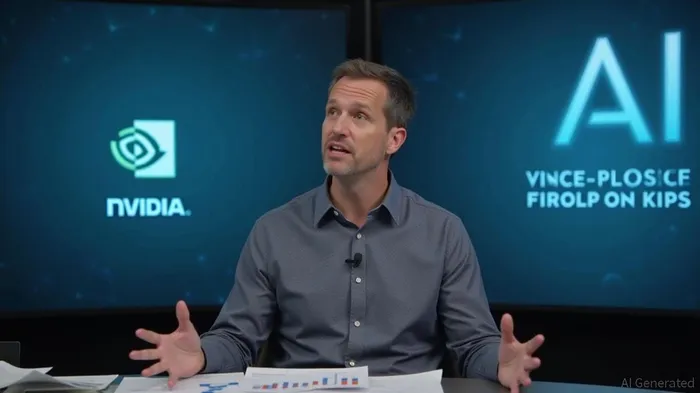
Josh Wolfe, co-founder of Lux Capital, discusses the AI boom, investment trends, and the challenges of aligning incentives. He notes that Nvidia, OpenAI, and Anthropic are seeing rising valuations, while other AI startups are experiencing weird outcomes, such as top talent leaving and potential risks for VC bagholders. Wolfe also touches on the "social contract" of Silicon Valley and the potential threats to it.
The AI sector is experiencing a boom, with significant investment trends and rising valuations for key players. Josh Wolfe, co-founder of Lux Capital, recently discussed the AI boom, investment trends, and the challenges of aligning incentives. Wolfe highlighted that Nvidia, OpenAI, and Anthropic are seeing rising valuations, while other AI startups are facing unusual outcomes such as top talent leaving and potential risks for venture capitalists.Historically, August and September have been risky periods for stocks, with the S&P 500 often experiencing declines. This seasonal bearish trend is projected to impact short-term trades significantly, leading to heightened volatility [1]. Despite these risks, the AI sector continues to attract substantial investment, with U.S. startup funding surging 75.6% in the first half of 2025, driven largely by major AI investments [2].
Anthropic, an AI startup backed by Google-parent Alphabet and Amazon.com, is a notable example of the sector's growth. The company recently secured a $13 billion Series F round, valuing it at $183 billion post-money. This funding will expand Anthropic's capacity to meet growing enterprise demand, deepen its safety research, and support international expansion [2]. Anthropic's latest upgrade to its Opus 4.1 model demonstrates its commitment to real-world applications, including coding and reasoning [2].
OpenAI, another dominant player in the AI ecosystem, has seen explosive growth. As of March 2025, OpenAI's valuation reached $300 billion, fueled by a $40 billion funding round led by SoftBank and Microsoft. The company's annual recurring revenue hit $13 billion in August 2025, with projections of surpassing $20 billion by year-end [3]. OpenAI's dominance is further underscored by its 17% share of the generative AI market and 500 million weekly active users [3].
However, not all AI startups are experiencing the same level of success. Some are facing challenges such as top talent leaving and potential risks for venture capitalists. Wolfe noted that while the AI boom is creating opportunities, it also presents challenges in aligning incentives and maintaining the "social contract" of Silicon Valley [4].
The AI infrastructure market is projected to grow at a 36.78% CAGR to $98.82 billion by 2030, presenting compelling opportunities for investors [5]. However, investors must balance exposure to high-growth model builders with infrastructure enablers, while cautiously evaluating application-layer startups for niche differentiation [6].
In conclusion, the AI boom is characterized by significant investment trends, rising valuations, and challenges in aligning incentives. While key players like Nvidia, OpenAI, and Anthropic are seeing growth, other AI startups are facing unique challenges. Investors must navigate these complexities to capitalize on the opportunities presented by the AI ecosystem.
References:
[1] https://stocknews.ai/ai-news/how-i-m-trading-the-most-dangerous-time-of-the-year-for-stocks/68aba7b05a9647b418b66569
[2] https://finance.yahoo.com/news/anthropic-valued-183-billion-13-161742911.html
[3] https://www.ainvest.com/news/openai-dominance-ai-ecosystem-future-model-builders-2509/
[4] https://www.luxcapital.com/
[5] https://www.grandviewresearch.com/industry-analysis/explainable-ai-market-report
[6] https://www.ainvest.com/news/openai-explosive-revenue-growth-strategic-path-125-billion-2029-2507/
Divulgación editorial y transparencia de la IA: Ainvest News utiliza tecnología avanzada de Modelos de Lenguaje Largo (LLM) para sintetizar y analizar datos de mercado en tiempo real. Para garantizar los más altos estándares de integridad, cada artículo se somete a un riguroso proceso de verificación con participación humana.
Mientras la IA asiste en el procesamiento de datos y la redacción inicial, un miembro editorial profesional de Ainvest revisa, verifica y aprueba de forma independiente todo el contenido para garantizar su precisión y cumplimiento con los estándares editoriales de Ainvest Fintech Inc. Esta supervisión humana está diseñada para mitigar las alucinaciones de la IA y garantizar el contexto financiero.
Advertencia sobre inversiones: Este contenido se proporciona únicamente con fines informativos y no constituye asesoramiento profesional de inversión, legal o financiero. Los mercados conllevan riesgos inherentes. Se recomienda a los usuarios que realicen una investigación independiente o consulten a un asesor financiero certificado antes de tomar cualquier decisión. Ainvest Fintech Inc. se exime de toda responsabilidad por las acciones tomadas con base en esta información. ¿Encontró un error? Reportar un problema




Comentarios
Aún no hay comentarios