
Navigating Agricultural Market Stability: Policy Risks and the Rise of Data Transparency in 2025
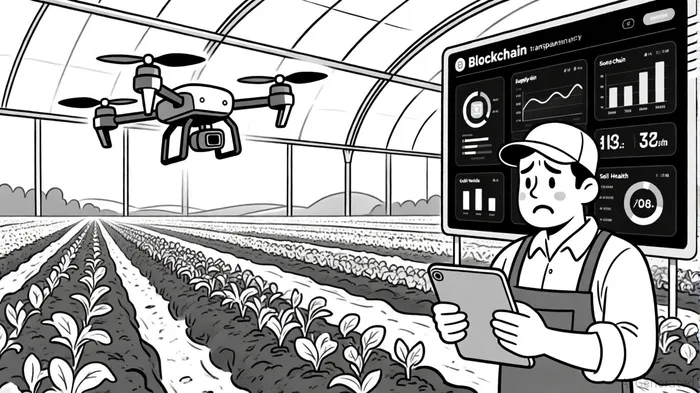
The agricultural and food sector in 2025 is at a crossroads, with policy risks and data transparency initiatives reshaping investment landscapes. From to EU CAP reforms and the rise of blockchain-driven traceability, investors must navigate a complex web of challenges and opportunities. Let's break it down.
U.S.-China Trade Tensions: A Double-Edged Sword
The 2025 escalation of U.S.-China tariffs has sent shockwaves through global agricultural markets. According to a report by Forbes, , . Retaliatory tariffs from China—up to 120% on U.S. soybeans and pork—have compounded the crisis, forcing farmers to grapple with oversupply and collapsing prices[4]. Meanwhile, .
Yet, not all is doom. FarmlandFPI-- investments, historically resilient during trade wars, , . Investors are advised to focus on permanent crops like tree nuts and citrus, .
EU CAP Reforms: Simplification or Compromise?
The European Union's 2025 (CAP) reforms aim to streamline support for farmers while boosting sustainability. A new program replaces rigid conditionality rules with flexible incentives for environmental action, while a merged funding system seeks to reduce bureaucracy[1]. However, critics warn that these changes may dilute environmental safeguards, as seen in Renew Europe's concerns about CAP fragmentation[2].
Quantitatively, , . Yet, .
Data Transparency: Blockchain and Precision Agriculture
The rise of and precision agriculture is a game-changer. A 2025 study in the , . Meanwhile, 73% of large U.S. farms now use remote sensing technologies, .
The USDA's 2025 initiatives, including the "" rule, are also fostering trust by mandating fair practices[2]. However, high tech adoption costs and privacy concerns remain hurdles[1].
Investment Strategies for 2025
- Diversify Crops and Markets.
- Leverage AgTech.
- Hedge Against Policy Shocks: Use crop insurance, forward contracts, .
Conclusion
The agricultural sector in 2025 is a mosaic of risks and innovations. While trade tensions and policy shifts create turbulence, data transparency and technological adoption offer a lifeline for stability. Investors who balance caution with innovation—hedging against policy risks while embracing agtech—will find fertile ground for growth.





Comentarios
Aún no hay comentarios