
Navigating the Aftermath of the Bybit Hack: Strategic Rebalancing and Positioning in a Volatile Crypto Market
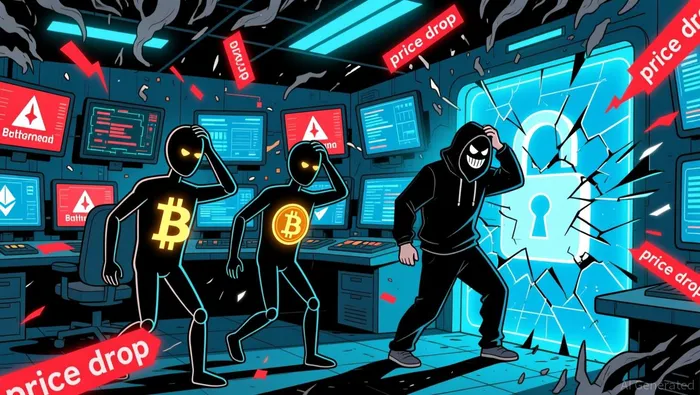
The Bybit hack of 2025, a $1.5 billion heist attributed to the North Korea-sponsored Lazarus Group, has become a watershed moment for the cryptocurrency industry. Exploiting vulnerabilities in third-party software-specifically a flaw in Safe Wallet during a routine transfer between cold and hot wallets-the attack exposed critical weaknesses in even the most industry-accepted security measures, including multisignature wallets and cold storage. The incident not only triggered a 20% drop in BitcoinBTC-- prices and a 7% decline in EthereumETH-- but also catalyzed a broader reckoning with risk management in a sector already prone to volatility. For investors, the aftermath demands a recalibration of strategies to ensure portfolio resilience amid escalating threats and regulatory uncertainty.
The Immediate Fallout and Market Reactions
The Bybit breach underscored the fragility of centralized custody models. Nearly $160 million in stolen assets were laundered through crypto mixers within 48 hours, highlighting the speed and sophistication of modern cyberattacks. The market's sharp sell-off reflected not just panic but a loss of confidence in exchange security. Bybit's subsequent adoption of zero-trust architecture and enhanced monitoring systems signaled a necessary but reactive shift. However, for individual and institutional investors, the lesson is clear: diversification and proactive risk mitigation must now be non-negotiable.
Risk Management: From API Security to Hedging Frameworks
Post-hack, secure API key management has emerged as a cornerstone of crypto risk management. Best practices include storing keys in environment variables, leveraging secrets management platforms like AWS Secrets Manager or HashiCorp Vault, and avoiding hardcoded exposure in source code. These measures reduce the attack surface for malicious actors seeking to exploit exchange integrations.
For hedging, institutions are increasingly adopting delta-neutral strategies using perpetual futures and options-based frameworks. Platforms like Phemex, with their Hedge Mode and multi-asset margin support, enable cost-efficient protection against downside risk while preserving upside potential. Portfolio diversification remains foundational, with allocations spanning large-cap cryptocurrencies, stablecoins, and tokenized assets to mitigate concentration risk.
Proactive monitoring of funding rates and regular rebalancing of hedge exposure-typically capped at 20–50% of portfolio value-further insulate investors from liquidity shocks. Avoiding excessive leverage is equally critical, as margin calls can exacerbate losses during sudden price swings. Meanwhile, artificial intelligence and machine learning are being deployed to optimize volatility surface analysis, offering predictive insights into liquidity risks as research shows.
Positioning for Resilience: Regulatory Clarity and Institutional Tools
The 2025 regulatory landscape, shaped by frameworks like the U.S. GENIUS Act and maturing stablecoin regulations, has provided a lifeline for institutional adoption. Registered investment vehicles, such as crypto ETFs, now offer structured, compliant avenues for exposure, reducing reliance on volatile spot markets as institutional data shows. Security leaders are also prioritizing pre-incident communication strategies-approved messaging templates, designated spokespersons, and prioritized media lists-to preserve stakeholder trust during crises.
DeFi platforms, once seen as high-risk, are demonstrating improved resilience. The VenusXVS-- Protocol's September 2025 incident, for instance, showcased the efficacy of proactive monitoring and rapid response mechanisms in recovering funds before significant damage occurred according to Chainalysis. This shift toward agility and transparency contrasts with earlier cycles, where hacks often led to irreversible losses.
Conclusion: Adapting to a New Normal
The Bybit hack is a stark reminder that crypto markets are no longer insulated from geopolitical and cyber threats. For investors, the path forward lies in embracing a multi-layered approach: securing infrastructure, diversifying holdings, and leveraging institutional-grade tools to hedge against systemic risks. As regulatory clarity and technological innovation converge, the sector's ability to adapt will determine its long-term viability. In this new normal, resilience is not just a strategy-it is a survival imperative.






Comentarios
Aún no hay comentarios