
Navigating 2026 Social Security Reforms: Implications for Fixed-Income Portfolios and Retirement Strategies
Legislative Developments and Benefit Adjustments
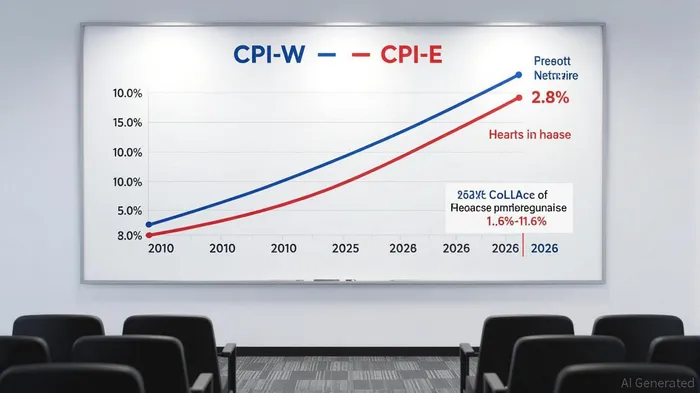
The 2.8% COLA for 2026, effective January 1, , according to reports. However, this adjustment, calculated using the Consumer Price Index for Urban Wage Earners and Clerical Workers (CPI-W), has long been criticized for underrepresenting retirees' spending patterns, particularly on healthcare and housing. Proposals to adopt the (CPI-E) or the Chained CPI-W have gained traction. While CPI-E could better align with retirees' inflation experiences, shifting to Chained CPI-W-a measure that grows more slowly-would reduce the program's long-term shortfall by 14% but erode future benefits.
Earnings thresholds for early retirees also rose in 2026, . This change allows retirees to work more without penalty, but the benefits of the COLA may be partially offset . These adjustments reflect a broader fiscal strategy to balance immediate support with long-term sustainability, though they leave retirees grappling with higher out-of-pocket healthcare costs.
Fixed-Income Portfolios and Inflationary Pressures
For retirees relying on fixed-income assets, the 2026 reforms highlight the fragility of traditional conservative portfolios. The (CRR) notes that retirees often hold low-yielding bonds, which lose value during inflationary periods. With medical care and housing costs rising faster than the CPI-W, retirees face a dual challenge: stagnant real returns on bonds and eroding purchasing power.
Experts recommend a proactive approach. Reinvesting fixed-income assets , while increasing equity exposure offers a hedge against inflation. Morningstar's Amy Arnott emphasizes that the , though criticized in recent years, remains a viable starting point for retirees seeking balance between growth and income. However, she cautions that allocations must be tailored to individual and time horizons, .
Retirement Planning and Fiscal Policy Trends
The 2026 reforms also signal broader fiscal policy trends. Policymakers are increasingly prioritizing over immediate benefit expansions, as seen in the debate over Chained CPI-W. This shift mirrors broader efforts to curb entitlement spending amid rising deficits, a trend that could influence future tax and benefit adjustments. For retirees, this means planning for a future where Social Security may play a smaller role in income replacement, necessitating greater reliance on and diversified investments.
Intergenerational equity further complicates the landscape. Younger workers, who will receive lower benefits relative to their contributions, may demand reforms that adjust eligibility ages or tax rates. Such changes could reduce the program's appeal as a , pushing retirees to adopt more aggressive .
Asset Allocation Strategies for Retirees
Given these uncertainties, retirees should consider the following strategies:
1. : A mix of income-producing fixed-income securities (e.g., .
2. .
3. : .
The , which eliminates the and Government Pension Offset, also expands benefits for , offering a rare bright spot for certain retirees according to analysis. However, these gains must be balanced against the broader shaping the program.
Conclusion
The 2026 Social Security reforms mark a turning point in retirement planning, emphasizing the need for adaptability in the face of . , retirees must prepare for a future where inflation, healthcare costs, and challenges demand more dynamic portfolio strategies. By embracing diversified and staying attuned to fiscal policy shifts, retirees can navigate these changes with resilience.







Comentarios
Aún no hay comentarios