
Navigating the 2026 Crypto Winter: Strategic Opportunities Amid Market Volatility
The 2026 crypto market is poised at a critical inflection point, marked by institutional-grade risk management frameworks and emerging market resilience. As macroeconomic pressures and regulatory shifts reshape the landscape, investors must adopt a dual lens: mitigating risks through structured strategies while capitalizing on innovation-driven opportunities. This analysis explores how institutional players and emerging economies are navigating the "crypto winter," offering actionable insights for investors seeking to balance caution with growth.
Institutional-Grade Risk Management: A New Paradigm
Institutional adoption of crypto has matured significantly in 2025–2026, driven by regulatory clarity and infrastructure advancements. The U.S. GENIUS Act and EU's MiCA framework have established robust licensing pathways, enabling institutions to treat digital assets as core holdings. For instance, BlackRockBLK-- and Franklin Templeton now offer tokenized treasury products, with over 280 public companies holding $115 billion in crypto assets.
Risk mitigation strategies have evolved to address volatility. 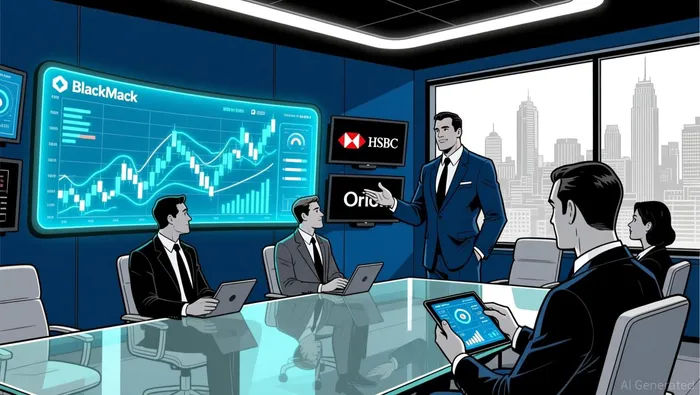 Diversification, position sizing, and stablecoin allocations are now standard practices. Stress testing, which simulates extreme market conditions, has become a cornerstone for identifying liquidity vulnerabilities. Additionally, tokenized real-world assets (RWAs) are emerging as a buffer against price swings. By mid-2025, the RWA tokenization market surpassed $24 billion, with platforms like HSBC Orion enabling institutional access to programmable settlement rails.
Regulatory alignment is further stabilizing the sector. The FASB's ASU 2023-08 fair-value standard has simplified corporate balance sheet reporting for digital assets, while the SEC's innovation exemption and CFTC's tokenized collateral pilot programs are fostering institutional-grade compliance. These developments underscore a shift from speculative trading to structured, utility-driven adoption.
Emerging Market Resilience: Tokenization and DeFi as Catalysts
Emerging markets have demonstrated remarkable resilience during 2025–2026 downturns, leveraging tokenization and decentralized finance (DeFi) to bypass traditional barriers. In Brazil, tokenized private credit platforms have enabled global capital flows, reducing reliance on intermediaries. Similarly, the UAE's tokenized real estate market allows fractional ownership starting at $1,000, democratizing access to luxury property investments.
DeFi's institutional-grade evolution is another key driver. By 2026, DeFi platforms are expected to offer 24/7 liquidity for tokenized and traditional assets, supported by conservative loan-to-value ratios and real-time monitoring. For example, Ethereum's role as a programmable settlement layer has accelerated RWA tokenization, with projections indicating it will settle 25% of global tokenized assets by 2028.
Mobile-first adoption is amplifying this trend. In regions with limited banking infrastructure, stablecoins and DeFi protocols are becoming primary tools for cross-border payments and savings. Tokenized energy assets and carbon credits are also gaining traction, enabling emerging economies to attract ESG-aligned capital while meeting sustainability goals.
Strategic Opportunities: Balancing Risk and Innovation
Investors navigating the 2026 crypto winter should prioritize three areas:
1. Tokenized RWAs: Assets like real estate, commodities, and treasuries offer liquidity and diversification. Platforms like Securitize and Tokeny Solutions provide institutional-grade compliance and custody solutions.
2. Stablecoin Ecosystems: USD-backed stablecoins remain central to institutional strategies, serving as a bridge between traditional finance and blockchain infrastructure.
3. Regulated Infrastructure: Firms specializing in custody, on-chain settlement, and compliance (e.g., Amberdata, Securitize) are well-positioned to benefit from the sector's maturation. The risk management framework has been refined to address operational challenges.
Caution is warranted, however. Operational risks in custody solutions and multi-jurisdictional compliance challenges persist. Investors must prioritize platforms with proven governance frameworks and robust cybersecurity protocols.
Conclusion
The 2026 crypto winter is not a collapse but a recalibration. Institutional-grade risk management and emerging market innovation are creating a foundation for sustainable growth. By aligning with regulated frameworks, tokenized assets, and DeFi-driven utility, investors can navigate volatility while capturing long-term value. As the sector evolves, the winners will be those who combine crypto-native agility with traditional financial rigor.





Comentarios
Aún no hay comentarios