
Navigating 2025's Volatile Markets: Defensive Investing and Sector Rotation Strategies
The fourth quarter of 2025 has emerged as a pivotal period for investors navigating a landscape marked by heightened volatility and economic uncertainty. With the CBOE Volatility Index (VIX) hovering near 16.65, markets remain in a state of cautious equilibrium, reflecting moderate expectations of turbulence but not the extreme fear seen during prior crises, per the CBOE Volatility Index. This environment, shaped by a confluence of geopolitical tensions, trade policy shifts, and the lingering effects of the energy transition, has amplified the importance of defensive investing and tactical sector rotation strategies.
The Volatility Landscape: A Balancing Act
The VIX's current level underscores a market that is neither complacent nor panicked. Historically, the index has exhibited mean-reverting behavior, suggesting that its trajectory in the coming months will likely depend on macroeconomic catalysts such as inflation data, central bank policy, and geopolitical developments, according to a Bloomberg feature. For now, the VIX's inverse relationship with the S&P 500 remains intact, with defensive positioning gaining traction as investors hedge against potential downturns, as shown in a government shutdown analysis.
Meanwhile, inflationary pressures persist, driven by a mix of supply-side constraints and demand-side dynamics. The resurgence of protectionist policies, including the sweeping U.S. tariff regime, has disrupted global supply chains, while the energy transition has added to production costs, according to a CME Group analysis. Artificial intelligence, though a driver of efficiency, has also introduced new inflationary pressures as industries adapt to automation and data-driven processes, a point that the same analysis highlights. These factors collectively point to a prolonged period of elevated volatility, necessitating a strategic approach to portfolio construction.
Defensive Sectors: Safe Havens in a Storm
Defensive sectors-utilities, healthcare, and consumer staples-have emerged as key beneficiaries of risk-off sentiment in late 2025. According to a Bloomberg feature, consumer staples led the pack with a 4% gain in Q4 2025, followed by utilities at 2.6% and healthcare at 0.7%. This outperformance aligns with historical patterns, where defensive sectors tend to outperform during periods of economic uncertainty.
The October 2025 U.S. government shutdown provided a stark example of this trend. During this period, the Healthcare Select Sector SPDR (XLV) surged 3.09%, while the Utilities Select Sector SPDR (XLU) rose 0.96%, as detailed in the government shutdown analysis. These gains contrasted sharply with the broader market's volatility, underscoring the resilience of defensive assets. The stability of these sectors stems from their low sensitivity to economic cycles and their ability to generate consistent cash flows, even in downturns, a theme highlighted in the CME Group analysis.
Sector Rotation: Tactical Adjustments for Uncertainty
As economic uncertainty persists, sector rotation has become a critical tool for managing risk and capturing opportunities. Data from the CME Group highlights the growing use of sector options to hedge against macroeconomic shocks. For instance, protective put options on technology sector indices have been employed to mitigate downside risks while preserving upside potential. Similarly, calendar spreads and vertical spreads allow investors to capitalize on divergences between implied and realized volatility, particularly in sectors like industrials and consumer discretionary, which have underperformed in 2025.
The dispersion in sector performance-driven by trade policy shifts and AI-driven cost dynamics-has created fertile ground for tactical positioning. Defensive sectors, while offering stability, are not the only consideration. For example, TSMC and Xiaomi have demonstrated strong growth potential in Q4 2025, driven by AI-driven demand and expanding EV production, as noted in the Bloomberg feature. However, investors must balance these opportunities against the risks posed by sectors like Whirlpool and Waste Connections, which face headwinds from declining housing activity and economic sluggishness, also highlighted in the Bloomberg feature.
Conclusion: A Dual-Pronged Approach
The late 2025 market environment demands a dual-pronged strategy: a defensive core to weather volatility and tactical rotations to exploit sector-specific catalysts. Defensive sectors provide a buffer against macroeconomic shocks, while strategic use of derivatives and sector ETFs enables investors to navigate the fragmented landscape. As the VIX continues to oscillate and inflationary pressures persist, the ability to adapt-both in asset allocation and risk management-will define successful outcomes in the final stretch of 2025.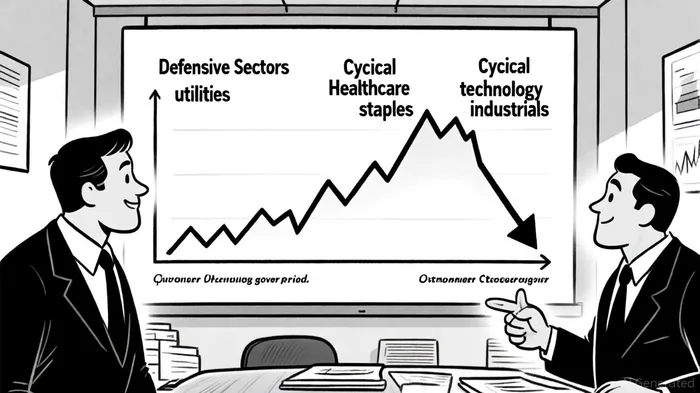







Comentarios
Aún no hay comentarios