
Navigating 2025 Municipal Bond Fund Strategies: Investor Timing and Capital Reallocation Opportunities
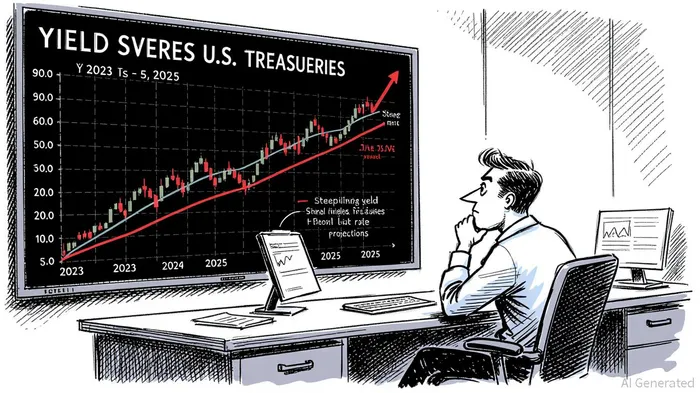
In 2025, municipal bond fund strategies are undergoing a transformative shift driven by evolving fiscal policies, macroeconomic stability, and investor demand for yield. As states grapple with the expiration of pandemic-era federal aid and implement modest spending cuts to preserve fiscal resiliency, the municipal bond market has emerged as a compelling arena for capital reallocation. Investors are increasingly leveraging strategic timing and diversification tactics to capitalize on historically attractive yields, stable credit fundamentals, and the tax-exempt advantages of municipal bonds [1].
Fiscal Adjustments and Market Dynamics
State governments are navigating a delicate balance between budget sustainability and economic resilience. With reserves built up over recent years, many states are now prioritizing pension funding and infrastructure projects while reducing reliance on one-time federal support. However, tax cuts enacted in several states have dampened income tax collections, creating a fiscal environment where municipal bonds are being issued to bridge gaps [1]. This dynamic has led to a surge in municipal bond issuance, with over $281 billion in new debt raised in 2025 alone, driven by construction costs and anticipation of policy changes [1].
The resulting supply surge has steepened municipal yield curves, particularly for 30-year taxable revenue bonds, which now offer spreads of 127 basis points over 10-year Treasuries. This divergence creates opportunities for investors to employ a "rolling down the curve" strategy, where bonds with longer maturities are sold as they approach shorter durations, capturing higher yields [1].
Investor Timing: Positioning for Rate Normalization
Investor timing has become a critical factor in 2025, as market participants anticipate Federal Reserve rate cuts and a stabilizing inflationary environment. With inflation tamed and fixed-income returns offering competitive inflation-adjusted yields, municipal bonds are being repositioned as a cornerstone of diversified portfolios [3]. According to a report by BlackRockBLK--, bonds are increasingly viewed as a hedge against stock market volatility, with municipal bonds’ tax-exempt status and lower sensitivity to global trade tensions further enhancing their appeal [4].
Data from Q2 2025 underscores this trend: municipal bond funds recorded $5 billion in inflows, with long-term and high-yield segments attracting disproportionate capital. Year-to-date inflows approached $10 billion, driven by pre-spending of summer reinvestment capital and confidence in the preservation of tax-exempt status under the One Big Beautiful Bill Act (OBBBA) [1]. These flows reflect a strategic shift toward duration extension and active management, as investors seek to lock in yields before potential rate cuts erode returns [3].
Capital Reallocation: Municipal Bonds vs. Treasuries
The municipal bond market’s relative strength against Treasuries has further fueled reallocation. U.S. Treasuries, now rated AA+ after losing their AAA status, face headwinds from a $9.2 trillion refinancing overhang in 2025, which risks upward pressure on interest rates [2]. In contrast, municipal bonds offer a superior credit profile, with the Bloomberg US Taxable Municipal Bond Index rated AA overall and spreads comparable to BBB corporate bonds [1].
This divergence is particularly evident in yield parity: taxable municipal bonds now yield 4.99%, matching U.S. corporate yields for the first time since 2021. For high-income investors, tax-exempt municipals provide an even greater advantage, with yields nearly on par with Treasuries [3]. These dynamics have made municipal bonds a preferred asset class for those seeking to hedge against geopolitical risks, as research shows they outperform sovereign and corporate bonds during periods of global uncertainty [1].
Strategic Opportunities in 2025
Investors are adopting nuanced strategies to exploit these conditions. A "barbell" approach—combining short-term bonds to mitigate rate risk and long-term bonds to capture steep yield curves—is gaining traction [3]. Additionally, active managers are targeting dislocated deals in sectors like healthcare and transportation, where increased issuance has created inefficiencies [1]. For taxable clients, high-quality long-dated municipals (15+ years) offer historically favorable yields, with starting yields in the 97th percentile compared to their 10-year history [2].
The geopolitical stability of municipal bonds also positions them as a safe haven. Studies indicate that during periods of heightened geopolitical risk, municipal bonds exhibit greater resilience than other fixed-income assets, making them a strategic choice for risk-averse investors [1].
Conclusion
The 2025 municipal bond market presents a unique confluence of fiscal, macroeconomic, and policy-driven opportunities. As states prioritize fiscal sustainability and investors seek yield in a low-volatility environment, municipal bonds are emerging as a linchpin of capital reallocation. Strategic timing—positioning portfolios for rate normalization, leveraging yield curve steepness, and capitalizing on sector-specific inefficiencies—will be key to unlocking value. With robust credit fundamentals and a favorable tax landscape, municipal bonds are poised to deliver strong returns for investors who navigate this dynamic market with agility.
**Source:[1] The case for US municipal bonds Versus Treasuries [https://www.insightinvestment.com/uk/perspectives/the-case-for-us-municipal--bonds-versus-treasuries/][2] $9.2 Trillion in U.S. Treasury Debt Set to Mature This Year [https://marketadvisorygroup.com/finances/9-2-trillion-in-u-s-treasury-debt-set-to-mature-this-year-what-retirees-need-to-know/][3] Active Fixed Income Perspectives Q3 2025: The power of income [https://advisors.vanguard.com/insights/article/series/active-fixed-income-perspectives][4] Fixed Income & Bond Market Outlook | BlackRock [https://www.blackrock.com/us/financial-professionals/insights/fixed-income-outlook]







Comentarios
Aún no hay comentarios