
Navigating the 2025 Market Downturn: Strategic Allocation to Bitcoin and Ethereum as Hedging Tools
The 2025 market environment is defined by a fragile macroeconomic landscape: inflationary pressures persist at 2.7% year-on-year (as measured by the U.S. PCE index), while central banks grapple with balancing liquidity and growth, as noted in a Bitcoin inflation analysis. In this context, BitcoinBTC-- and EthereumETH-- have emerged as unconventional yet increasingly relevant tools for hedging against systemic risks. However, their effectiveness is nuanced, shaped by historical performance, correlation dynamics, and evolving macroeconomic narratives.
Historical Performance: Synchronized Declines and Limited Diversification
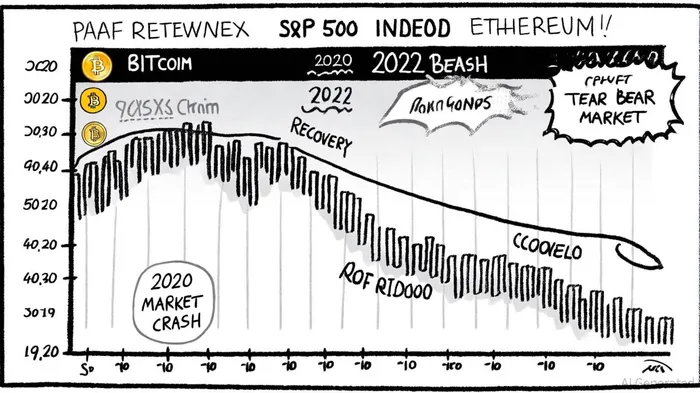
During the 2022 bear market, Bitcoin and Ethereum exhibited a near-perfect correlation, both losing over 70% of their value from all-time highs, according to a Cointelegraph explainer. This synchronized collapse-mirrored in the 2020 market crash-undermined their utility as diversification tools, as crypto investors faced "double exposure" to traditional market downturns. For example, Ethereum's 11.79% weekly gain in June 2025 occurred amid Fed rate-holding decisions, yet its 8% drop during the June 2022 75-basis-point hike underscored its sensitivity to monetary policy.
This alignment with traditional assets, particularly the S&P 500 (correlation coefficient of 0.77 for Ethereum), reflects crypto's integration into global financial systems, as discussed in a Gate price outlook. As Caio Marchesani notes in an MDPI paper, "Cryptocurrencies are no longer isolated safe-haven assets; they now dance to the same macroeconomic tune as equities and bonds."
Bitcoin: A Flawed Inflation Hedge with Institutional Momentum
Bitcoin's fixed supply of 21 million coins positions it as a theoretical hedge against fiat devaluation. In 2025, institutional adoption-exemplified by firms like Strategy and Metaplanet accumulating BTC-has reinforced this narrative. However, Bitcoin's volatility (20% price swings in short periods) and limited utility as a medium of exchange (stablecoins dominate daily transactions) complicate its role.
Macroeconomic factors further muddy the picture. A weaker U.S. dollar historically boosts Bitcoin demand, yet this inverse relationship is tempered by ETF approvals and global demand shifts. For instance, the Federal Reserve's 2025 rate-holding stance did not directly drive Bitcoin's performance, but expectations of rate cuts created a risk-on environment. This duality-Bitcoin as both inflation hedge and speculative asset-requires careful allocation.
Ethereum: Macroeconomic Sensitivity and Structural Resilience
Ethereum's price dynamics are more intertwined with traditional markets. Its 0.7 correlation with the Nasdaq 100 and responsiveness to CPI data (e.g., a 4% rebound following a lower-than-expected November 2022 CPI reading) highlight its role as a "risk-on" asset. The Fed's 2022–2023 rate-hiking cycle saw Ethereum drop 8% within 48 hours of key announcements, illustrating its liquidity-driven volatility.
Structurally, Ethereum's proof-of-stake transition and EIP-1559 burn mechanism have improved its inflation resistance, yet an Ethereum supply analysis shows annual supply growth of 0.805% remains a liability compared to Bitcoin's deflationary model. This makes Ethereum more of a "growth" asset during accommodative monetary regimes than a pure inflation hedge.
Strategic Allocation: Balancing Exposure and Diversification
Given these dynamics, a strategic 2025 portfolio must balance Bitcoin and Ethereum's strengths while mitigating their shared risks:
1. Bitcoin as a Macro Hedge: Allocate 5–10% of a portfolio to Bitcoin during high-inflation environments, leveraging its fixed supply and institutional adoption. However, cap exposure during periods of rising interest rates, when its correlation with equities amplifies downside risk.
2. Ethereum as a Cyclical Play: Use Ethereum (3–5% allocation) to capitalize on Fed easing cycles and DeFi innovation. Its sensitivity to CPI and Fed policy makes it a barometer for risk appetite.
3. Diversification Beyond Crypto: The 2022 bear market's synchronized crypto losses underscores the need for non-correlated assets (e.g., gold, TIPS, or short-duration bonds) to offset crypto's volatility.
Conclusion: Crypto as a Macro Tool, Not a Panacea
Bitcoin and Ethereum are no longer speculative novelties but macroeconomic variables in their own right. While Bitcoin's inflation-hedging narrative gains traction in weak-currency environments, its volatility and Ethereum's cyclical profile demand disciplined allocation. As 2025 unfolds, investors must treat crypto as part of a diversified toolkit-one that balances innovation with the timeless principles of risk management.







Comentarios
Aún no hay comentarios