
Navigating 2025's Market Crosscurrents: Sector Rotation and Risk Mitigation in a Fragmented Recovery
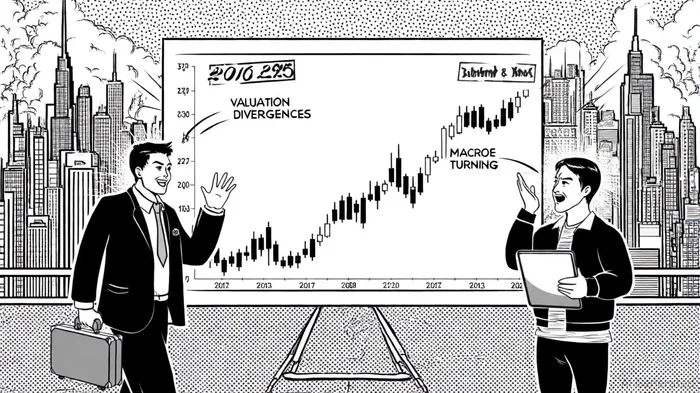
The global investment landscape in 2025 is defined by a paradox: markets are simultaneously buoyed by resilient corporate earnings and shadowed by looming macroeconomic headwinds. According to a report by State StreetSTT--, major equity indices have reached record highs amid investor optimism about technological innovation and AI-driven productivity gains[1]. Yet, stretched valuation metrics—such as the S&P 500's price-to-earnings ratio returning to pre-2008 crisis levels—signal fragility[3]. Meanwhile, Morgan StanleyMS-- notes a sharp divergence between market exuberance and economic fundamentals, as the U.S. services sector contracts and consumer confidence wanes[2]. This dissonance demands a recalibration of investment strategies, particularly through disciplined sector rotation and advanced risk mitigation.
Economic Reacceleration: A Tenuous Path
Global growth in 2025 is projected to decelerate to 2.9%, per Euromonitor, as trade tensions and policy uncertainty dampen momentum[1]. The U.S. appears to be a partial exception: the Philadelphia Federal Reserve upgraded its Q3 2025 GDP forecast to 1.3% annualized growth, citing stronger-than-expected consumer spending and business investment[2]. However, this optimism is tempered by the CitiC-- Economic Surprise Index hitting its lowest level since September 2024, underscoring the gap between expectations and reality[2].
Emerging markets offer a more robust outlook. China's 4.3% GDP growth forecast for 2025, supported by export surges and stimulus measures, contrasts with the Eurozone's anticipated slowdown as U.S. tariff hikes erode European competitiveness[1]. Japan's 0.7% growth projection, meanwhile, reflects a fragile rebound driven by low unemployment and accommodative monetary policy[3]. These divergences highlight the need for geographically diversified sector strategies.
Sector Rotation: Aligning with Macro Cycles
In this fragmented environment, sector rotation emerges as a critical tool. Hedge Equities emphasizes shifting allocations based on economic phases: industrials, materials, and consumer discretionary typically outperform during growth, while utilities and staples provide ballast during slowdowns[1]. For 2025, three sectors stand out:
Information Technology: The IT sector remains a linchpin of reacceleration, driven by AI adoption and cybersecurity demand. MorningstarMORN-- notes that tech-heavy indices like the S&P 500 are increasingly tied to AI-related developments, though valuation risks have risen[3]. Investors are advised to focus on subsectors with durable cash flows, such as cloud infrastructure and semiconductors, rather than speculative AI plays.
Energy: The "Cheapskate Sector Strategy" recommends energy as the most undervalued S&P 500 sector in 2025[2]. With global inflation easing to 4.1% and U.S. energy prices stabilizing, renewable energy and battery storage—supported by government incentives—offer long-term growth potential[2].
Manufacturing: Automation and robotics are transforming manufacturing, enhancing productivity while reducing labor costs[2]. This sector's resilience is further bolstered by nearshoring trends and AI-driven supply chain optimization.
Risk Mitigation: Beyond Diversification
Traditional diversification is insufficient in 2025's volatile climate. DW Asset Management advocates for liquidity buffers and regular portfolio rebalancing to navigate uncertainties[2]. Two advanced strategies stand out:
- The Sector Bridesmaid Strategy: Invest in the second-best performing sector from the previous year. In 2025, this points to Information Technology, which, while no longer the market leader, retains strong fundamentals[2].
- Macro Hedges: Hedge against inflation risks by overweighting sectors with pricing power (e.g., industrials) and underweighting interest rate-sensitive sectors (e.g., real estate).
Institutional investors are also adopting dynamic asset allocation, shifting between equities, Treasury bonds, and commodities based on real-time economic signals[1]. For individual investors, sector-specific ETFs and options strategies provide accessible tools to implement these tactics.
Conclusion
The 2025 investment environment demands a dual focus: capitalizing on reacceleration in technology and energy while hedging against a potential slowdown. As Morgan Stanley warns, U.S. equity markets remain vulnerable to corrections if growth decelerates further[3]. By aligning sector allocations with macroeconomic cycles and deploying proactive risk management, investors can navigate this crosscurrents-laden year with greater confidence.





Comentarios
Aún no hay comentarios