
Navigating 2025's Interest Rate Landscape: Opportunities in Undervalued Fixed-Income and Rate-Sensitive Equities
The Federal Reserve's September 2025 rate cut-its first since December 2024-has reshaped the global investment landscape. By reducing the federal funds rate to 4–4.25%, the Fed signaled a shift toward accommodative policy, driven by slowing labor market growth and inflation nearing its 2% target, according to the Fed's implementation note. This decision, coupled with adjustments to its monetary policy framework, has created fertile ground for undervalued fixed-income and rate-sensitive equities. Meanwhile, the European Central Bank (ECB) and Bank of England (BoE) have adopted more cautious stances, with the ECB maintaining rates and the BoE opting for a "gradual and careful" approach to easing, as Chatham Financial reports. These divergent policies underscore the need for sector-specific strategies to capitalize on 2025's evolving rate environment.
Fixed-Income: Corporate Credit and Emerging Markets Lead the Charge
The Fed's rate cuts have invigorated demand for shorter-duration bonds and income-generating assets. Corporate credit, securitized credit, and emerging-market debt are highlighted as key opportunities in 2025, according to Morgan Stanley's outlook. High-yield corporates, for instance, offer attractive spreads relative to Treasuries, with UBS projecting a 3.3% default rate for EUR high yield and 4.8% for USD high yield-levels historically associated with strong returns. Securitized credit, including asset-backed securities (ABS) and mortgage-backed securities (MBS), has outperformed traditional corporate bonds due to its higher yield and diversified cash flow streams, Guggenheim finds.
Emerging-market debt also presents compelling value. With U.S. dollar weakness and central banks in countries like Brazil and India poised to cut rates, local-currency bonds in Asia and Latin America are gaining traction. Goldman Sachs notes that these markets benefit from high real yields and disinflationary trends, making them ideal for investors seeking diversification. However, active management remains critical, as trade policy uncertainties-particularly under the Trump administration's tariff regime-could introduce volatility, a point PineBridge warns.
Rate-Sensitive Equities: Energy and Real Estate on the Radar
The Fed's rate cuts have amplified the appeal of sectors sensitive to borrowing costs. Financials, traditionally beneficiaries of higher rates, now face a mixed outlook. While banks may profit from wider net interest margins as short-term rates fall, prolonged low-rate environments could compress margins further. Conversely, sectors like Energy and Real Estate are emerging as undervalued plays.
Charles Schwab's analysis identifies Energy stocks as trading 7% below fair value, driven by near-term supply chain disruptions and geopolitical risks, according to Schwab's analysis. Exploration and production subsectors, in particular, offer upside potential as oil prices stabilize. Real Estate, meanwhile, is 8% undervalued, with REITs poised to benefit from the Fed's rate cuts through lower financing costs and increased demand for commercial properties, as U.S. News reports. Morningstar's review notes that real estate stocks historically outperform during rate-cut cycles, as rising rents and inflation-linked leases enhance cash flows.
Health Care and Utilities, though less rate-sensitive, also show signs of undervaluation. Health Care stocks trade at a 5% discount to fair value, supported by defensive characteristics and long-term demand for medical services, according to Morningstar. Utilities, often seen as safe havens, could gain traction as investors seek stable dividends in a low-growth environment.
Strategic Allocation: Balancing Risk and Reward
Investors must navigate the tension between rate normalization and sector-specific risks. The Fed's projected 3.6% terminal rate by year-end 2025 suggests a pause in cuts, which could pressure long-duration assets like Treasuries, per iShares' outlook. A "belly of the curve" strategy-overweighting intermediate-duration bonds-offers a hedge against this uncertainty. Similarly, equity investors should prioritize sectors with strong balance sheets and inflation-linked revenues, such as Energy and Real Estate, while avoiding overexposure to rate-sensitive growth stocks.
The ECB's and BoE's cautious approaches add another layer of complexity. While the ECB's rate hold supports European fixed-income markets, the BoE's 7-2 vote to maintain rates highlights the fragility of the U.K. economy, as CNBC reports. Diversification across geographies and sectors will be key to mitigating risks from divergent central bank policies.
Conclusion
2025's interest rate environment, shaped by the Fed's dovish pivot and global central bank divergence, has created a mosaic of opportunities. Fixed-income investors should focus on high-quality corporate credit and emerging-market debt, while equities in Energy, Real Estate, and Health Care offer undervalued potential. As central banks navigate the delicate balance between inflation control and growth, active management and sector-specific insights will be paramount to unlocking returns.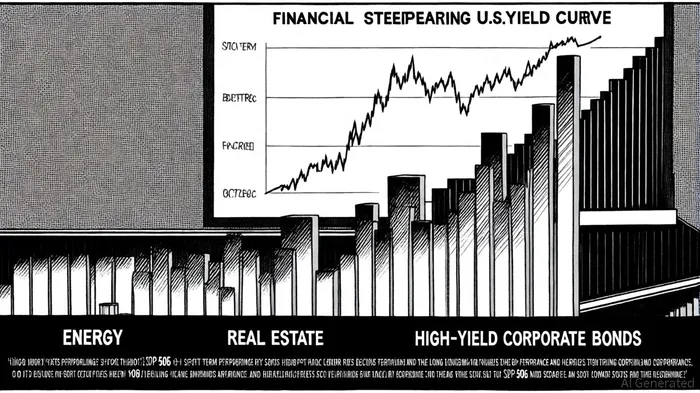





Comentarios
Aún no hay comentarios