
Navigating the 2025–2026 Housing and Construction Equity Valuations: Opportunities Amid Macroeconomic Shifts
The interplay of macroeconomic sentiment and housing market dynamics in 2025–2026 has created a unique landscape for equity valuation in real estate and construction sectors. While inflation, labor shortages, and material cost pressures persist, structural shifts in consumer behavior and industrial demand are carving out pockets of opportunity for investors willing to identify undervalued equities. This analysis synthesizes macroeconomic trends, sector-specific challenges, and strategic company responses to map a path for capitalizing on these dynamics.
Macroeconomic Sentiment: A Tug-of-War Between Inflation and Rate Cuts
The U.S. economy in 2025 has been defined by a delicate balancing act. Inflation rose to 2.9% in August 2025, driven by imported goods and shelter costs, yet the Federal Reserve opted for a September rate cut to cushion a weakening labor market, where unemployment climbed to 4.3%. This "higher-for-longer" interest rate environment has kept mortgage rates elevated, with the 30-year fixed rate averaging 6.27% in October 2025. While this has dampened demand for new homes, it has also spurred refinancing activity, boosting mortgage securitizations by 11% year-over-year in Q2 2025.
The Federal Reserve's cautious approach reflects broader economic uncertainty. J.P. Morgan Research projects a 3% rise in home prices for 2025 but notes that affordability constraints and a "lock-in" effect-where 80% of borrowers are 100 basis points or more out-of-the-money-have frozen the market. This duality of inflationary pressures and accommodative monetary policy creates a volatile backdrop for equity valuations, particularly in sectors reliant on consumer spending and borrowing.
Housing Market Dynamics: Supply Constraints and Subtle Shifts
The housing market's structural imbalances remain a defining feature. Single-family housing starts hit a two-and-a-half-year low in August 2025, while homebuilder sentiment remains subdued as firms grapple with excess inventory. Median home prices, however, have edged upward, rising from $414,000 in August 2024 to $422,000 in August 2025. This divergence between supply and demand underscores a market in transition.
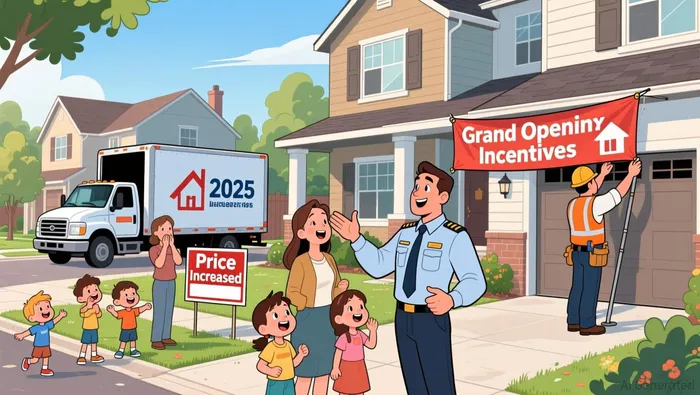
A glimmer of optimism emerged in Q4 2025, as the CNBC Housing Market Survey noted a shift toward balance, with 37.5% of agents reporting a balanced market compared to 30% in Q3. Yet, affordability challenges persist. The National Association of Home Builders/Wells Fargo Housing Market Index (HMI) for December 2025 stood at 39, reflecting modest builder confidence, albeit with 40% of builders cutting prices and 67% using sales incentives-the highest post-COVID level. These metrics suggest a market where price flexibility is becoming a survival mechanism for developers.
Labor and Consumer Trends: A Double-Edged Sword
The construction sector faces a perfect storm of labor shortages and rising material costs. Immigration policy shifts and ICE enforcement have tightened the labor supply, with foreign-born workers comprising 34% of the industry workforce nationally and up to 50% in states like California and Texas. Simultaneously, tariffs on steel (13%), aluminum (23%), and copper (4.9%) have driven material costs higher, compounding project delays and cancellations.
Consumer behavior is also evolving. High-income households are driving a larger share of spending, supporting demand in industrial and data center construction but leaving lower-income markets vulnerable. For instance, data center construction grew by 33% in 2025, fueled by AI infrastructure demand, while institutional sectors like healthcare and education show resilience. This bifurcation of demand highlights the importance of sector-specific analysis when evaluating equity valuations.
Identifying Undervalued Equities: Strategic Adaptation as a Proxy for Value
Amid these challenges, companies that innovate in labor efficiency and cost control are emerging as compelling investments. United Homes Group, Inc. (UHG) exemplifies this trend. By reducing housing starts during transitional phases and introducing redesigned, labor-efficient house plans, UHG has improved inventory turnover while aligning with consumer demand. Similarly, Legacy Housing Corp (LEGH) leverages its vertically integrated factory-built housing model to mitigate material cost volatility and labor shortages, offering affordable, customizable homes with faster production timelines.
In the data center segment, firms like HITT Contracting and DPR Construction are capitalizing on near-zero vacancy rates and preleasing activity in key markets like Northern Virginia and Dallas. While their price-to-earnings (P/E) ratios were not explicitly detailed in the research, their strategic positioning in a high-growth, low-supply sector suggests undervaluation relative to future cash flow potential.
The Path Forward: Balancing Risks and Rewards
For 2026, the housing and construction sectors will hinge on three variables: mortgage rate trends, labor market stability, and the pace of industrial demand. The CNBC survey's cautious optimism-67.8% of agents expect Q1 2026 sales improvements, and 77% anticipate a better year overall-reflects this conditional outlook. Investors should prioritize companies with:
1. Vertical integration to control material costs (e.g., LEGH).
2. Labor-efficient technologies (e.g., modular construction, AI-driven scheduling).
3. Exposure to resilient sectors like industrial real estate and data centers.
However, risks remain. The One Big Beautiful Bill Act (OBBBA)'s fiscal implications, including increased deficits, could dampen long-term investor confidence. Additionally, the construction industry's reliance on immigration policy makes it vulnerable to political shifts.
Conclusion
The 2025–2026 period presents a paradox: macroeconomic headwinds coexist with niche opportunities in real estate and construction equities. By focusing on firms that address labor and material constraints through innovation and strategic sector alignment, investors can navigate this complex landscape. As the market inches toward balance, undervalued stocks in industrial real estate, factory-built housing, and data center construction are poised to outperform-provided they are selected with a keen eye on adaptability and long-term fundamentals.





Comentarios
Aún no hay comentarios