
Navient's Share Buyback: A Strategic Move Amid Earnings Challenges?
Financial Context: A Tale of Declining Earnings and Cost-Cutting
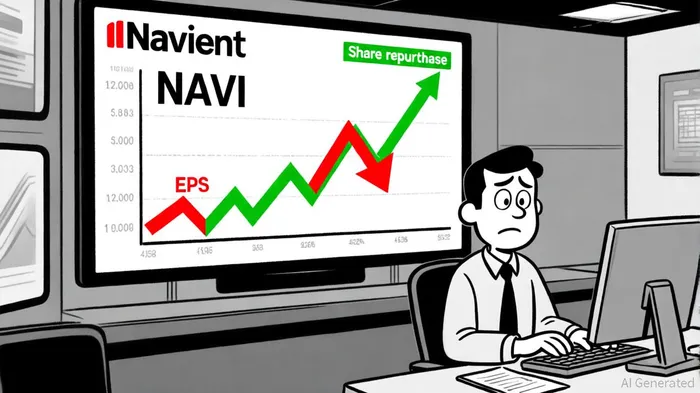
Navient's Q3 2025 earnings preview paints a complex picture. The company is projected to report an EPS of $0.18, a staggering 87.6% year-over-year decline, while revenue of $140 million is expected, a sharp contrast to the 17.4% growth recorded in the same period last year. Analysts have assigned a cautious "hold" rating, with a median 12-month price target of $14.00, slightly above the current closing price of $12.82.
The share repurchase program emerges amid Navient's broader cost-control efforts, including workforce reductions, outsourcing servicing operations, and divesting non-core businesses like Government Services and Healthcare Services. These moves aim to streamline operations and improve margins, yet they also highlight the company's struggle to adapt to a competitive student lending sector.
Strategic Implications: Value Creation or Diversion?
Share repurchases can theoretically boost shareholder value by reducing the number of outstanding shares, thereby increasing EPS and potentially stock price. However, Navient's current financial health raises questions about the program's efficacy. With a negative Earnings ESP of -3.44% and a Zacks Rank of 3 (Hold), the company's ability to execute meaningful value creation through buybacks appears constrained.
The $100 million program, while symbolic, may also divert attention from deeper structural challenges. Navient's core loss in Q3 2025 and declining net interest income swings to a Q3 core loss suggest that operational improvements-rather than financial engineering-should be the priority. Analysts have noted that Navient has missed revenue estimates five times in the past two years, underscoring persistent execution risks.
Market Reactions and Analyst Perspectives
The market's muted response to the buyback announcement reflects skepticism. Navient's stock has underperformed peers like Sallie Mae and LendingClub, and the median price target of $14.00 implies limited upside potential. While the program may stabilize investor sentiment in the short term, its long-term impact hinges on Navient's ability to reverse its earnings trajectory.
Notably, the company's $2.2 billion origination target for 2025 signals a focus on expanding private lending opportunities, particularly in the Grad PLUS reform space. This strategic pivot could complement the buyback by driving revenue growth, but success depends on macroeconomic factors such as interest rates and student loan demand.
Conclusion: A Calculated Gamble
Navient's share repurchase program represents a calculated attempt to signal confidence in its capital structure and shareholder value. However, the initiative must be viewed through the lens of a company grappling with declining earnings, high provisions for loan losses, and a competitive landscape that favors agility. For investors, the key question is whether Navient can leverage the buyback to offset operational headwinds or if it will become another example of short-term financial tactics failing to address long-term challenges.
As Navient prepares to release its Q3 2025 earnings on October 29, the market will scrutinize not only the buyback's progress but also the company's broader strategic narrative. In an era where capital allocation decisions are under intense scrutiny, Navient's ability to align its financial and operational strategies will determine whether this $100 million gamble pays off.





Comentarios
Aún no hay comentarios