
The U.S. Natural Gas Supercycle: Why $5/mcf is the New Normal and How to Profit From It
The U.S. natural gas market is undergoing a transformation, driven by structural shifts in demand, disciplined supply growth, and geopolitical realignments. After years of volatility, prices are now on a clear trajectory toward $5 per thousand cubic feet ($5/mcf), supported by irreversible trends in LNG exports, emerging industrial demand, and constrained production. This is not a temporary spike—it's the dawn of a decade-long supercycle. Here's how to position your portfolio to profit.
The Demand Case: LNG, Data Centers, and Cold Weather
The U.S. natural gas market has entered a “new era of scarcity,” fueled by three unstoppable forces:
LNG Exports Are Powering Global Demand
U.S. LNG exports hit 15.2 Bcf/d in early 2025, with projects like Cheniere's Corpus Christi Stage 3 and QatarEnergy's Golden Pass adding over 3 Bcf/d by year-end.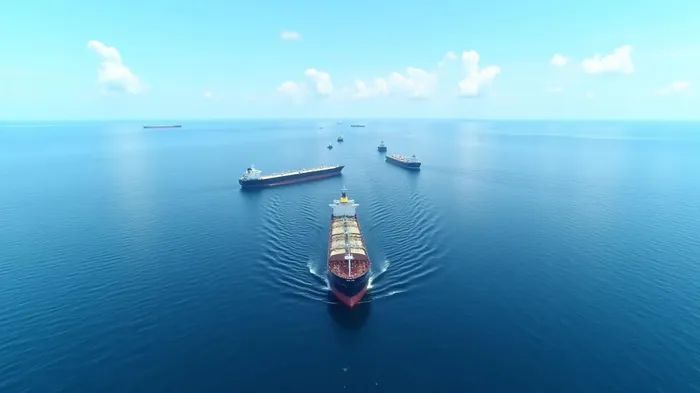 . Europe's reliance on U.S. LNG to replace Russian pipeline gas has solidified demand, while Asia's energy transition—shifting from coal to gas—adds another 40% growth by 2040 (Shell estimates).
 Data Centers and AI Infrastructure Are Gas Hogs
Hyperscale data centers, particularly in Texas and Virginia, are now critical gas consumers. Amazon, Microsoft, and others are deploying onsite gas turbines for reliable power, while grid-connected facilities are increasing natural gas-fired generation during peak loads. This is not a fad: AI workloads require 24/7 energy, and gas is cheaper and cleaner than diesel.Weather-Driven Volatility Is Here to Stay
Colder winters and hotter summers are straining storage systems. Early 2025 withdrawals hit a 21% five-year high, leaving inventories 4% below average by March. With storage deficits expected by late 2025, weather shocks will amplify price spikes.
Supply Constraints: Why $5/mcf is the Floor
Production is struggling to keep up. Despite a 4.3% year-over-year increase in Q2 2025, output faces headwinds:
- Associated Gas Declines: Permian Basin crude prices below $70/bbl are slowing oil-linked gas production.
- Drilling Discipline: Producers like Exxon and Chevron are prioritizing returns over volume, reducing rigs by 15% since mid-2024.
- Infrastructure Bottlenecks: Pipeline expansions lag demand, particularly in Appalachia and the Permian.
The result? Supply can't outpace demand for years. Even with new projects online, the EIA forecasts prices will rise to $4.60/mcf in 2026—but this is a conservative estimate. Risks like storage deficits, geopolitical disruptions, and climate extremes could push prices far higher.
Pricing Catalysts: Why $5/mcf is the New Normal
Three trends will lock in this higher price regime:
1. LNG Contracts Are Pricing in Scarcity
Long-term fixed-fee contracts (e.g., Cheniere's 90% contracted capacity) are now tied to floating price formulas, ensuring producers capture rising market rates.
Storage is a Broken Buffer
With inventories projected to end 2025 3% below the five-year average, the buffer for weather or geopolitical shocks has vanished.Gas vs. Coal: The Cost Tipping Point
At $5/mcf, gas becomes uneconomical versus coal in many regions, but the shift back to coal is slow. Utilities are locked into gas-fired plants, and coal's environmental stigma keeps it sidelined. This creates a price ceiling below $6/mcf—but the floor is now $5/mcf.
Top Equity Plays: The LNG Giants to Own
To profit, focus on companies with direct LNG exposure and operational leverage as prices rise.
- Cheniere Energy (LNG): The LNG Export King
- Catalyst: Sabine Pass and Corpus Christi expansions add 30 MTPA capacity by 2026.
- Financials: Generates $20+/share in distributable cash flow by 2026.
ExxonMobil (XOM): Golden Pass's Massive Upside
- Catalyst: The $10B Golden Pass project (18 MTPA) begins operations in late 2025, boosting LNG sales by 25%.
Global Play: Qatar's North Field expansion (27 MTPA by 2027) ensures long-term growth.
Shell (SHEL): Integrated Global Dominance
- Catalyst: LNG Canada's 14 MTPA capacity and Qatar's North Field expansion provide scale.
Risk-Adjusted: Its integrated supply chain minimizes volatility exposure.
Woodside Energy (WPL) (via Louisiana LNG): The Newcomer to Watch
- Catalyst: Its $17.5B Louisiana LNG project (16.5 MTPA by 2029) taps into surging U.S. shale gas.
Conclusion: Act Now Before the Rally
The math is clear: supply can't catch up with demand, and geopolitical shifts will keep LNG prices elevated. The $5/mcf threshold is not a target—it's already the floor. Investors who buy now into LNG leaders like Cheniere, Exxon, and Shell will capture multiyear gains as the supercycle unfolds.
Final Call to Action:
The window to buy these equities at current valuations is closing. With storage deficits looming and LNG projects delayed by permitting hurdles, the path to $5/mcf—and beyond—is all but assured. Act fast before the market catches up.







Comentarios
Aún no hay comentarios