
U.S. Natural Gas Futures Retreat As Weather Warms Up
Generado por agente de IACyrus Cole
lunes, 24 de febrero de 2025, 8:53 am ET2 min de lectura
COLD--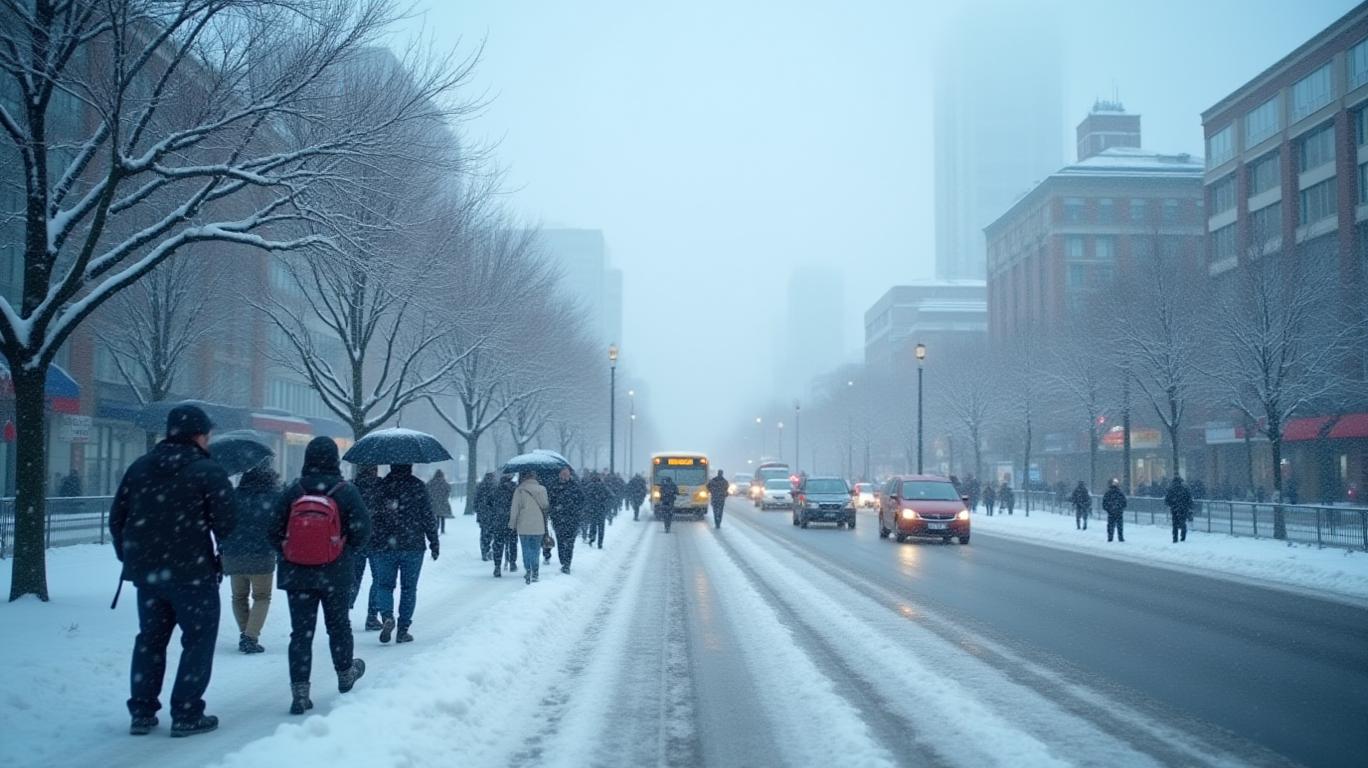
U.S. natural gas futures prices eased to $4.11/MMBtu on Monday, February 24, 2025, as an Arctic blast that had driven up heating demand over the past week began to retreat. The retreat in prices aligns with historical trends during periods of warming weather, as demand for heating decreases and production recovers from freeze-offs. The recent price movement is a stark contrast to the elevated levels reached in December 2022, when prices surged due to extreme cold weather and reduced production.
The retreat in natural gas futures prices can be attributed to several key factors driving demand and supply dynamics in the U.S. market. Weather conditions play a significant role in influencing demand, particularly for space heating in residential and commercial sectors, and for electricity generation. As temperatures rise, demand for heating decreases, leading to a decrease in natural gas consumption. This decrease in demand, coupled with an increase in production as freeze-offs subside, puts downward pressure on prices.
Production levels also impact supply and prices. In February 2025, production held above 104.0 Bcf/d, but demand fell by 27.8 Bcf/d week-over-week due to a decrease in cold weather. This decrease in demand, combined with increased production, contributed to the decrease in February futures by 33.0 cents. Liquefied Natural Gas (LNG) exports have also become a significant demand component, affecting the balance between supply and demand. During cold weather events, LNG export facilities may reduce exports to maintain reliability, as seen in January 2024 when Freeport LNG and Corpus Christi Train 3 faced outages.
Storage levels play a crucial role in balancing supply and demand. In February 2025, a larger-than-expected 196 bcf draw in inventory contributed to the increase in prices. However, as temperatures rise and demand for heating decreases, storage levels are expected to increase, putting downward pressure on prices. The rig count and hydraulic fracturing (frac) spreads also indicate field activity, which influences production levels. Despite the rig count and frac spreads indicating reduced field activity, production remained high, affecting the price trajectory.
Geopolitical events and macroeconomic indicators also play a significant role in shaping the U.S. natural gas market and its future price movements. The Arctic blast and subsequent warming weather have had a direct impact on demand and supply dynamics, leading to significant price fluctuations. Additionally, geopolitical threats and energy price shocks have been identified as significant contributors to the recent inflation surge in Poland, a small open economy. These shocks have become more persistent after the outbreak of the Covid-19 pandemic, highlighting the interconnectedness of global energy markets.
In conclusion, the retreat in U.S. natural gas futures prices aligns with historical trends during periods of warming weather, as demand for heating decreases and production recovers from freeze-offs. Key factors driving demand and supply dynamics, such as weather conditions, production levels, LNG exports, storage levels, and geopolitical events, all contribute to the price trajectory of natural gas in the U.S. market. As temperatures continue to rise and demand for heating decreases, prices are expected to remain under pressure, with storage levels increasing and production recovering from freeze-offs. However, geopolitical events and macroeconomic indicators may continue to influence the U.S. natural gas market, shaping future price movements in an increasingly interconnected global energy landscape.
RIG--
U.S. natural gas futures prices eased to $4.11/MMBtu on Monday, February 24, 2025, as an Arctic blast that had driven up heating demand over the past week began to retreat. The retreat in prices aligns with historical trends during periods of warming weather, as demand for heating decreases and production recovers from freeze-offs. The recent price movement is a stark contrast to the elevated levels reached in December 2022, when prices surged due to extreme cold weather and reduced production.
The retreat in natural gas futures prices can be attributed to several key factors driving demand and supply dynamics in the U.S. market. Weather conditions play a significant role in influencing demand, particularly for space heating in residential and commercial sectors, and for electricity generation. As temperatures rise, demand for heating decreases, leading to a decrease in natural gas consumption. This decrease in demand, coupled with an increase in production as freeze-offs subside, puts downward pressure on prices.
Production levels also impact supply and prices. In February 2025, production held above 104.0 Bcf/d, but demand fell by 27.8 Bcf/d week-over-week due to a decrease in cold weather. This decrease in demand, combined with increased production, contributed to the decrease in February futures by 33.0 cents. Liquefied Natural Gas (LNG) exports have also become a significant demand component, affecting the balance between supply and demand. During cold weather events, LNG export facilities may reduce exports to maintain reliability, as seen in January 2024 when Freeport LNG and Corpus Christi Train 3 faced outages.
Storage levels play a crucial role in balancing supply and demand. In February 2025, a larger-than-expected 196 bcf draw in inventory contributed to the increase in prices. However, as temperatures rise and demand for heating decreases, storage levels are expected to increase, putting downward pressure on prices. The rig count and hydraulic fracturing (frac) spreads also indicate field activity, which influences production levels. Despite the rig count and frac spreads indicating reduced field activity, production remained high, affecting the price trajectory.
Geopolitical events and macroeconomic indicators also play a significant role in shaping the U.S. natural gas market and its future price movements. The Arctic blast and subsequent warming weather have had a direct impact on demand and supply dynamics, leading to significant price fluctuations. Additionally, geopolitical threats and energy price shocks have been identified as significant contributors to the recent inflation surge in Poland, a small open economy. These shocks have become more persistent after the outbreak of the Covid-19 pandemic, highlighting the interconnectedness of global energy markets.
In conclusion, the retreat in U.S. natural gas futures prices aligns with historical trends during periods of warming weather, as demand for heating decreases and production recovers from freeze-offs. Key factors driving demand and supply dynamics, such as weather conditions, production levels, LNG exports, storage levels, and geopolitical events, all contribute to the price trajectory of natural gas in the U.S. market. As temperatures continue to rise and demand for heating decreases, prices are expected to remain under pressure, with storage levels increasing and production recovering from freeze-offs. However, geopolitical events and macroeconomic indicators may continue to influence the U.S. natural gas market, shaping future price movements in an increasingly interconnected global energy landscape.

Divulgación editorial y transparencia de la IA: Ainvest News utiliza tecnología avanzada de Modelos de Lenguaje Largo (LLM) para sintetizar y analizar datos de mercado en tiempo real. Para garantizar los más altos estándares de integridad, cada artículo se somete a un riguroso proceso de verificación con participación humana.
Mientras la IA asiste en el procesamiento de datos y la redacción inicial, un miembro editorial profesional de Ainvest revisa, verifica y aprueba de forma independiente todo el contenido para garantizar su precisión y cumplimiento con los estándares editoriales de Ainvest Fintech Inc. Esta supervisión humana está diseñada para mitigar las alucinaciones de la IA y garantizar el contexto financiero.
Advertencia sobre inversiones: Este contenido se proporciona únicamente con fines informativos y no constituye asesoramiento profesional de inversión, legal o financiero. Los mercados conllevan riesgos inherentes. Se recomienda a los usuarios que realicen una investigación independiente o consulten a un asesor financiero certificado antes de tomar cualquier decisión. Ainvest Fintech Inc. se exime de toda responsabilidad por las acciones tomadas con base en esta información. ¿Encontró un error? Reportar un problema


SOBRE NOSOTROS
Nuestra historiaAutores de noticiasBase de conocimientosPolítica de privacidadTérmino de usoDescargo de responsabilidad de corretaje de tercerosTérminos de uso de AIMEDivulgaciones de riesgos de AInvest AICarrerasCONTÁCTENOS
Email: support@ainvest.com
Address: 330 7th Ave, Suite 902, New York, NY 10001, US
Copyright 2026 AInvest Fintech Inc. All rights reserved.


Comentarios
Aún no hay comentarios