
U.S. Natural Gas Futures: Capturing Value in a Volatile LNG-Driven Market
The U.S. natural gas market is at a pivotal juncture, fueled by record LNG exports, seasonal demand swings, and widening global price differentials. For investors, this volatility presents both risks and opportunities—especially in the futures market. Let's dissect the drivers and outline actionable strategies to navigate this dynamic landscape.
The LNG Export Surge: A Tailwind for Prices
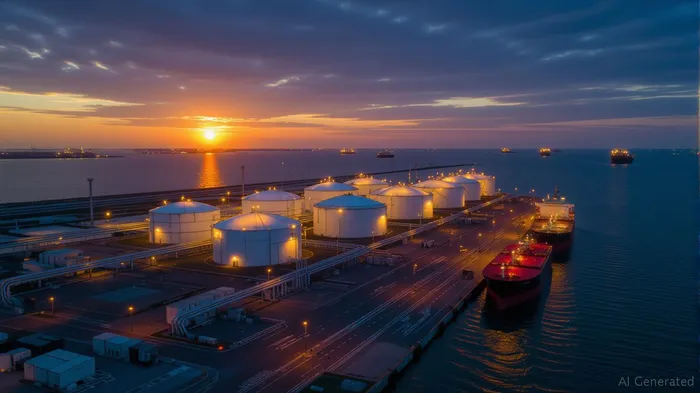
The U.S. has solidified its position as the world's largest LNG exporter, with volumes projected to reach 14.6 Bcf/d in 2025 and 16 Bcf/d in 2026 (). New terminals like Venture Global's Plaquemines and Cheniere's Corpus Christi Stage III are critical to this growth, adding 5.7 Bcf/d of capacity by 2025. With export growth outpacing domestic production, the EIA forecasts Henry Hub prices to average $4.88/MMBtu in 2026, up from $4.02 in 2025.
However, utilization rates remain sensitive to operational hiccups. For instance, May 2025's 21.5% drop in feedgas volumes due to Freeport's power outage highlights the risks of maintenance and hurricane season disruptions. Investors should monitor terminal utilization metrics closely—90%+ utilization signals tight supplies, while delays in projects like Golden Pass could ease price pressures.
Seasonal Demand Dynamics: Summer and Winter Playbooks
Natural gas is a seasonal commodity, and futures traders thrive by anticipating these swings:
- Summer Cooling Demand:
- Hot weather drives power generation needs, pushing prices higher. In June 2025, the Northeast's record heat spiked Algonquin Citygate prices to $6.75/MMBtu, outpacing the Henry Hub's $3.99/MMBtu.
Trade Idea: Go long on NGN25 (August futures) ahead of peak summer demand, with stop-losses below $3.50/MMBtu.
Winter Heating and Storage:
- Winter 2025–26 storage levels are projected to be 6% below 2024 levels, even with June's robust injections. A cold snap could trigger a sharp rally.
- Trade Idea: Use call options on December 2025 futures (NGZ25) to profit from volatility, with a strike price of $4.50/MMBtu.
Global Price Differentials: The Arbitrage Opportunity
U.S. gas remains ~$6/MMBtu cheaper than European TTF prices and ~$10/MMBtu below Asian benchmarks (). This divergence supports sustained LNG exports, but geopolitical risks loom:
- Russia's sanctions: EU bans on Russian gas imports have solidified U.S. LNG's role as a substitute.
- Middle East tensions: Israeli-Iranian conflicts could disrupt regional supply chains, boosting U.S. LNG demand.
Investors should watch for narrowing differentials—a TTF/Henry Hub ratio below 1.5 may signal oversupply—as it could depress futures prices.
The Risk/Reward Tradeoff: Key Metrics to Watch
- Storage Levels: Below-average inventories (like the 2,898 Bcf reported in June 7% above the 5-year average but 6% below 2024) indicate tighter supply.
- Weather Forecasts: NOAA's July outlook for above-normal temperatures in the South could sustain demand.
- Export Facility Uptime: Monitor maintenance schedules—Golden Pass's delayed start could reduce 2025 exports by 0.2 Bcf/d, easing prices.
Investment Strategy: Positioning for Near-Term Gains
- Long Futures:
- Entry: Buy NGN25 at $3.90/MMBtu, targeting $4.50/MMBtu by late August.
Risk Management: Close or hedge if the Henry Hub dips below $3.50/MMBtu.
Options for Volatility:
Bull Call Spread: Buy a $4.25/MMBtu call and sell a $4.75/MMBtu call. This limits upside risk while protecting against downside.
Equity Plays:
- Cheniere (LNG): Benefits from its 44 MTPA Plaquemines terminal.
- EQT (EQT): A top producer in the Marcellus shale, with exposure to rising production.
Conclusion: Timing Is Everything
U.S. natural gas futures offer compelling opportunities in 2025, but success hinges on timing seasonal trends and geopolitical shifts. With LNG exports at record levels and global price gaps widening, the market is poised for volatility—but that's where the profit lies.
Final Advice: Stay nimble. Hedge with options, capitalize on seasonal demand peaks, and monitor export facility utilization. In a world hungry for energy, natural gas remains the bridge fuel—investors who track its dynamics will reap rewards.
Data as of July 7, 2025. Past performance does not guarantee future results.





Comentarios
Aún no hay comentarios