
U.S. Natural Gas: A Contrarian Play on Oversupply and Export-Driven Rebound
The U.S. natural gas market is caught in a classic contrarian crossroads: short-term oversupply dynamics are driving prices to unattractive lows, yet the stage is set for a sharp rebound by late summer. For investors willing to look beyond the noise of seasonal storage trends and pipeline maintenance hiccups, the current environment presents a high-reward entry point. Let's dissect why the near-term pain is fleeting—and why strategic positioning now could yield outsized returns by Q3.
Near-Term Oversupply: A Temporary Headwind, Not a Death Knell
The U.S. natural gas market is undeniably oversupplied in early 2025, but the excess is neither unprecedented nor irreversible. As of May 23, working gas storage levels stood at 2,476 Bcf, 316 Bcf below 2024's record levels but 93 Bcf above the five-year average. While this surplus has kept Henry Hub prices subdued at $3.30/MMBtu, it's critical to note two key factors:
- Production is slowing: Natural gas rig counts have fallen to 101 rigs—25 fewer than this time last year—signaling a natural correction in supply growth.
- Geographic imbalances matter: The Permian Basin's Waha Hub is trading at a steep discount to Henry Hub due to localized oversupply and pipeline constraints. This disparity creates a self-correcting mechanism: low regional prices will eventually curb production or spur arbitrage-driven flows toward higher-priced markets.
LNG Exports: The Catalyst for Long-Term Growth
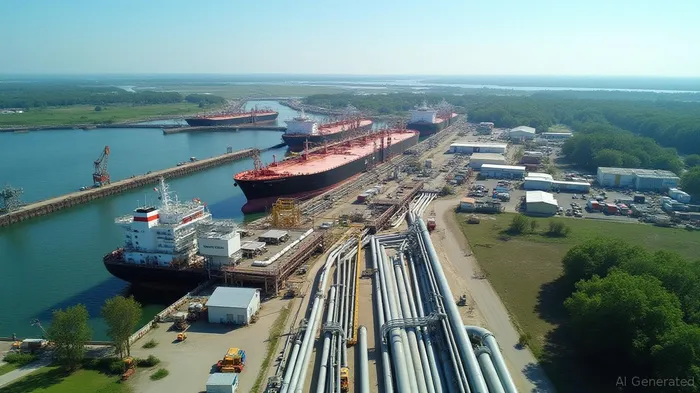
While domestic storage dynamics dominate headlines, the real game-changer lies in LNG exports, which are transforming the U.S. gas market into a global price setter. For the week ending May 14, LNG pipeline receipts surged to 15.9 Bcf/d, with 29 vessels (109 Bcf of capacity) departing U.S. ports in a single week. This activity isn't just mitigating domestic oversupply—it's unlocking a structural tailwind:
- Global price differentials are widening: East Asia and Europe are paying $11.46/MMBtu and $11.55/MMBtu, respectively—a staggering $8/MMBtu premium to U.S. prices.
- Export capacity is expanding: New terminals in Texas and Louisiana will add ~1.5 Bcf/d of capacity by late 2025, ensuring more gas flows overseas just as global demand peaks.
Seasonal Demand and Q3's Rebound Catalyst
Natural gas is inherently seasonal, and the coming summer months will test—and likely reverse—the current oversupply narrative. Historically, Q3 storage drawdowns average ~2,000 Bcf, driven by industrial demand, power generation needs, and cooling requirements. This year's drawdowns could be even sharper given:
- Lower starting storage levels: Even at 2,476 Bcf, current inventories are 14% below 2024's highs, reducing the risk of a “storage glut” by winter.
- Maintenance-driven supply cuts: The Permian Basin's ongoing pipeline maintenance is trimming local supply, which could accelerate Waha Hub price recoveries and reduce the regional discount to Henry Hub.
The Contrarian Play: Positioning for Q3's Rally
For investors, the playbook is clear: buy now, hold through summer, and reap the rewards by fall. Here's how to execute:
- Go long on natural gas futures: The Henry Hub's current $3.30/MMBtu price is artificially depressed. A target of $4.50/MMBtu by November is reasonable given seasonal demand and global arbitrage.
- Target LNG exporters: Companies like Cheniere Energy (LNG) and Tellurian (TELL) benefit directly from export growth and global price premiums.
- Diversify with storage plays: ONEOK (OKE) and Targa Resources (TRGP) operate critical infrastructure that thrives when storage utilization rises.
Conclusion: The Pendulum Swings Back
The U.S. natural gas market is in a temporary slump, but the fundamentals for a rebound are undeniable. LNG exports are rewriting the rules of global supply, seasonal demand will soon tighten inventories, and production discipline is curbing over-supply risks. For contrarians, this is the moment to buy the dip—positioning now sets the stage for a multi-month rally fueled by storage draws, export growth, and a world hungry for American energy.
Act now—before the market catches up.







Comentarios
Aún no hay comentarios