
Natural Compound Urolithin A Rejuvenates Aging Immune Systems
Blockchain technology, often associated with cryptocurrencies and financial innovation, is increasingly being explored for its potential to revolutionize scientific research and healthcare. While the direct application of blockchain in extending healthspan and unlocking longevity remains in its nascent stages, recent breakthroughs in biomedical science highlight how emerging technologies and collaborative global initiatives are converging to address aging-related challenges. A key development in this space is the discovery of urolithin A, [a compound derived from polyphenols](https://www.yahoo.com/news/articles/scientists-found-compound-age-immune-140000664.html) found in foods like pomegranates and nuts, which has shown promise in rejuvenating the aging immune system.
Urolithin A, metabolized by gut bacteria from dietary polyphenols, targets mitochondrial dysfunction in T cells-a critical factor in immune aging. Studies led by Dominic Denk, a cancer immunologist at University Hospital Frankfurt, reveal that urolithin A enhances mitophagy, the process of clearing damaged mitochondria, thereby restoring immune cell function. Human trials demonstrated increased levels of cytotoxic T lymphocytes (CTLs), which are vital for combating pathogens and cancer. This discovery underscores the potential of natural compounds to reverse aspects of immunosenescence, the gradual decline of immune function with age. [Such advancements could pave the way for therapies](https://www.yahoo.com/news/articles/scientists-found-compound-age-immune-140000664.html) that extend healthspan-the period of life spent in good health-by delaying age-related diseases.
Parallel to scientific breakthroughs, geopolitical and industrial developments are shaping the landscape for longevity research. The United Kingdom recently signed a pharmaceutical agreement with the United States to bolster life sciences innovation, with British Science Minister Liz Kendall emphasizing the deal's role in accelerating access to cutting-edge treatments. The agreement includes a 25% increase in funding for innovative therapies, reflecting a growing prioritization of aging-related research in both nations. [This collaboration aligns with global trends](https://www.investing.com/news/economy-news/uks-pharmaceutical-deal-with-us-to-boost-life-sciences-sector-says-kendall-93CH-4384135), as aging populations drive demand for solutions to chronic diseases and immune deterioration.
 The infrastructure supporting such innovations is also evolving. The antibody-drug conjugate (ADC) outsourcing services market, which facilitates the production of targeted therapies, is projected to grow from $2.94 billion in 2025 to $5.19 billion by 2034. This expansion is fueled by partnerships like those between Samsung Biologics and Phrontline Biopharma, as well as Lotte BioLogics and SK pharmteco, which aim to enhance ADC manufacturing capabilities. [These efforts are critical for scaling therapies](https://www.globenewswire.com/news-release/2025/12/01/3196868/0/en/ADC-Outsourcing-Services-Market-Forecast-USD-2-94-Billion-in-2025-to-USD-5-19-Billion-by-2034.html) like urolithin A, which require specialized production processes to maintain efficacy and safety.
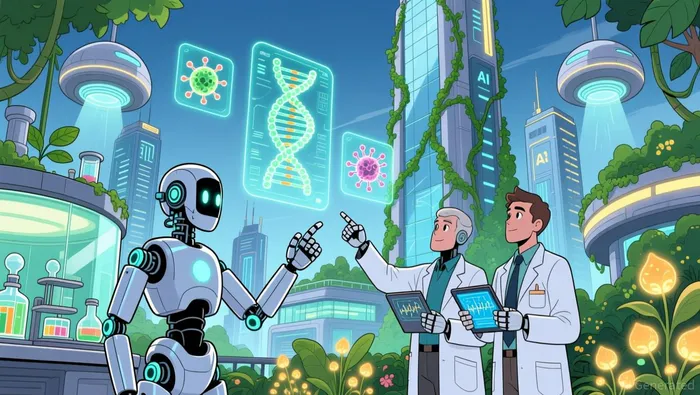
Meanwhile, AI-driven drug development is accelerating the pipeline of longevity-focused treatments. [Generate:Biomedicines, for instance](https://www.morningstar.com/news/pr-newswire/20251201ne34302/generatebiomedicines-to-initiate-global-phase-3-studies-of-gb-0895-a-long-acting-anti-tslp-antibody-for-severe-asthma-engineered-with-ai), is advancing GB-0895, an AI-engineered anti-TSLP antibody for severe asthma, with Phase 3 trials set to evaluate its long-term benefits. Similarly, Santersus AG's NucleoCapture technology, designed to remove cell-free DNA and neutrophil extracellular traps, is being explored for applications in Alzheimer's disease and organ transplantation. [These innovations highlight the intersection](https://www.morningstar.com/news/accesswire/1113073msn/santersus-ag-completes-series-a-financing-and-announces-strategic-collaboration-with-terumo-corporation) of computational biology and biotechnology in addressing age-related conditions.
While blockchain's role in this ecosystem is yet to be fully realized, its potential to streamline data sharing, ensure clinical trial integrity, and track supply chains could enhance transparency and efficiency in longevity research. As the field progresses, interdisciplinary collaboration-spanning science, policy, and technology-will be essential to translate discoveries into scalable solutions.







Comentarios
Aún no hay comentarios