
NATO's Defense Spending Surge: A Bullish Outlook for European Defense Contractors
The NATO alliance's defense spending commitments are undergoing a historic shift, with member states agreeing to raise their collective military expenditures to 5% of GDP by 2035, up from the existing 2% target. This escalation in funding presents a transformative opportunity for European defense contractors, as governments prioritize modernizing arsenals, enhancing cybersecurity, and bolstering critical infrastructure. With geopolitical tensions at a decades-high and U.S. pressure intensifying, investors should position themselves for sustained demand in the defense sector.
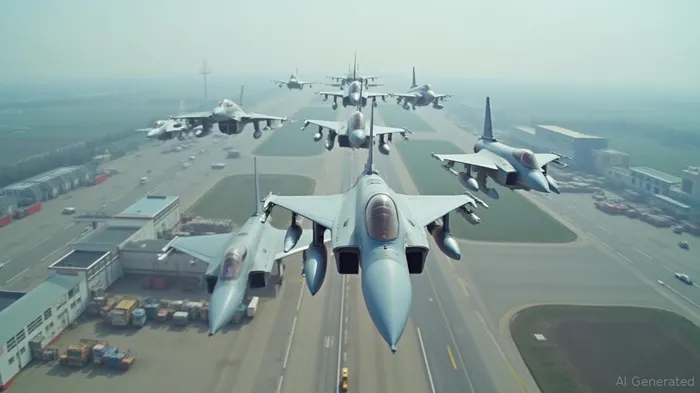
The NATO Defense Spending Landscape: From 2% to 5%
Since 2014, NATO members have made significant progress toward the 2% GDP defense spending goal, with 23 out of 32 countries now meeting or exceeding the target. European allies and Canada alone increased their combined defense spending from 1.43% of GDP in 2014 to 2.02% in 2024, totaling over $430 billion annually. However, the June 2025 Hague Summit marked a turning point: allies agreed to a 5% GDP target by 2035, split into:
- 3.5% for core military capabilities (e.g., equipment, personnel, and operations).
- 1.5% for defense-related infrastructure, including cybersecurity, critical infrastructure, and hybrid threat preparedness.
This shift is being driven by Russia's invasion of Ukraine, rising Chinese assertiveness, and U.S. demands for burden-sharing. While the U.S. remains the largest contributor—spending $935 billion (3.2% of GDP) in 2024—European nations are accelerating their investments. For instance, Poland aims to hit 5% GDP spending “soon,” while Estonia plans to average 5.4% GDP spending by 2029.
Key European Defense Contractors: Riding the Wave of Growth
The surge in defense spending directly benefits European manufacturers, which are well-positioned to supply critical systems. Below are four companies leading the charge:
1. Airbus (EADSF)
- Strengths: Europe's largest defense contractor, producing fighter jets (Eurofighter Typhoon), drones, and satellite systems.
- Recent Contracts: Secured €2.3 billion for modernizing Spain's air defense systems and €1.8 billion for Germany's next-gen fighter program.
- Market Position: Leverages strong ties to NATO members like France, Germany, and the UK.
2. Leonardo (LDOIF)
- Strengths: Italy's top defense firm, manufacturing helicopters, radar systems, and electronic warfare equipment.
- Recent Contracts: Awarded €1.5 billion by Italy to upgrade its fleet of AW101 helicopters.
- Market Position: Benefits from Italy's renewed spending push and partnerships with France's Dassault Aviation.
3. Thales (THLSY)
- Strengths: A leader in cybersecurity, avionics, and radar technology, with operations in 60 countries.
- Recent Contracts: Selected by the UK to supply £1 billion in cybersecurity systems for defense networks.
- Market Position: Positioned to capitalize on the 1.5% “security infrastructure” portion of NATO's new target.
4. Rheinmetall (RHMG)
- Strengths: Specializes in armored vehicles, artillery systems, and ammunition, with a focus on Eastern European markets.
- Recent Contracts: Land €500 million from Poland for Leopard 2 tank upgrades and €300 million from Sweden for next-gen artillery.
- Market Position: Gains share in regions like the Baltics and Scandinavia, where defense spending is surging.
Investment Considerations: Risks and Opportunities
While the outlook is bullish, investors must navigate risks:
- Economic Constraints: Southern European nations like Spain and Italy face fiscal pressures, risking delays in spending.
- Political Pushback: Spain's Prime Minister Pedro Sánchez has labeled the 5% target “unreasonable,” though the 2025 summit's consensus suggests such dissent is waning.
- Currency Volatility: Weak euro zones could affect profitability for exporters.
Opportunities:
- Cybersecurity and Infrastructure: The 1.5% allocation to non-military defense creates demand for companies like Thales and Hensoldt (a Thales subsidiary).
- Regional Diversification: Focus on contractors serving NATO's eastern flank (e.g., Poland, Baltic states) and Nordic countries, which lead in per capita defense spending.
Portfolio Strategy: Overweight European Defense
Investors should overweight European defense equities, prioritizing firms with:
1. Exposure to NATO's Core 3.5% Target: Airbus and Leonardo for fighter jets/aircraft; Rheinmetall for armored vehicles.
2. Exposure to the 1.5% Infrastructure Portion: Thales for cybersecurity and critical infrastructure.
3. Geographic Diversification: Avoid over-concentration in Southern Europe; favor Eastern and Nordic contractors.
Bottom Line: NATO's spending surge is a multi-year tailwind for European defense contractors. While risks exist, the structural demand for modernization and resilience ensures these companies will remain key beneficiaries.
Recommendation: Consider a diversified basket of equities like EADSF, LDOIF, THLSY, and RHMG, with a 5–7% allocation in a growth-oriented portfolio. Monitor macro factors, including European GDP growth and U.S. trade policies, which could impact profitability.
In the shadow of geopolitical volatility, Europe's defense sector is a fortress of opportunity.







Comentarios
Aún no hay comentarios