
The Nasdaq's Recent Underperformance: Historical Patterns and Strategic Implications
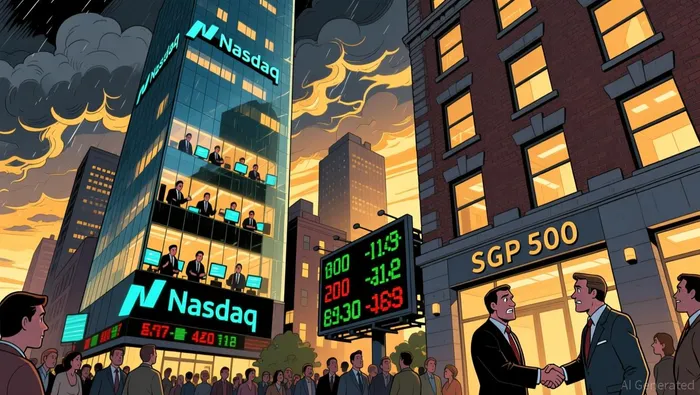
The NasdaqNDAQ-- Composite's underperformance from 2023 to 2025 has sparked renewed scrutiny among investors, with the index falling 18% year-to-date in 2025, lagging behind the S&P 500 and other benchmarks according to market analysis. This decline reflects a confluence of macroeconomic pressures, including inflationary concerns, tariff-related uncertainty, and a shift in investor sentiment away from high-growth technology stocks. To contextualize this trend, it is instructive to examine historical precedents-such as the dot-com crash of 2000, the 2008 financial crisis, and the 2020 pandemic-driven selloff-and the strategies that proved effective during those periods.
Historical Precedents and Market Behavior
The Nasdaq's vulnerability during downturns is not new. During the 2000 dot-com crash, the index surged by 145% in late 1999 and early 2000 before collapsing as speculative fervor gave way to reality. Value-oriented strategies, such as those employed by Warren Buffett's Berkshire Hathaway, outperformed in the aftermath, despite initial underperformance during the bubble's peak. Similarly, in 2008, panic selling exacerbated losses, with Dalbar, Inc. reporting that 70% of investor underperformance since 1984 occurred during just 10 key crisis periods. The 2020 market downturn followed a similar pattern: the S&P 500 fell 31% in early 2020, though it rebounded sharply by year-end according to Fidelity's analysis. These episodes underscore a recurring theme: markets often correct sharply but recover over time, rewarding disciplined, long-term strategies.
Investor Strategies in Volatile Times
The 2025 underperformance highlights the importance of adapting to shifting market dynamics. Historical data suggests that low-volatility stocks-such as consumer staples and utilities-tend to preserve capital during downturns. In 2025, companies like Coca-Cola and Mastercard outperformed the broader Nasdaq during March and April selloffs, echoing their resilience in 2020 and 2018 according to Morningstar research. Conversely, quality and momentum stocks, including tech giants like Nvidia and Alphabet, faced steeper declines, reflecting their sensitivity to valuation corrections.
Diversification and asset allocation remain cornerstones of risk management. BlackRock emphasizes the role of bonds and cash in mitigating equity risk, while Vanguard warns against panic selling, which locks in losses and misses rebounds. Tactical approaches, such as tax-loss harvesting-selling underperforming assets to offset gains-and dollar-cost averaging, which smooths entry costs during volatility, also gain traction. For retirees, strategic bond holdings can act as both a buffer and a growth tool, particularly if interest rates decline according to Dupree Financial.
Market Implications and Forward-Looking Outlook
The Nasdaq's 2025 struggles are emblematic of broader investor caution amid unresolved macroeconomic risks, including the Federal Reserve's tightening cycle and geopolitical tensions. However, historical corrections-averaging 13.6% intra-year declines from 1974 to 2023-typically resolve within 4–5 months, with disciplined investors capturing rebounds. The current environment may favor a staged deployment of cash reserves, with 30–40% allocated as markets dip 10% and additional funds deployed during deeper corrections according to LVW Advisors.
Post-crisis portfolio adjustments, such as the Black–Litterman model for rebalancing asset weights, could further enhance returns while reducing downside risk according to ScienceDirect research. Advisors play a critical role in curbing emotional decisions, such as overconfidence or panic selling, which have historically dented returns according to Morgan Stanley analysis. For the Nasdaq, a recovery may hinge on earnings resilience in tech and a normalization of investor sentiment, but patience and strategic positioning will remain key.
Conclusion
The Nasdaq's recent underperformance is not an anomaly but a reflection of cyclical market forces and investor behavior patterns observed over decades. By drawing on historical lessons-diversification, low-volatility tilts, and disciplined rebalancing-investors can navigate current volatility while positioning for long-term growth. As the Fed's policy trajectory and inflation trends evolve, maintaining a structured approach will be critical to avoiding the pitfalls that have historically eroded returns during downturns.







Comentarios
Aún no hay comentarios