
Nasdaq's Tactical Tightrope: Navigating Volatility and Growth in 2025
The Nasdaq Composite has long been a barometer of innovation and risk appetite in U.S. equities. Yet as 2025 unfolds, the index finds itself at a crossroads, balancing the tailwinds of technological optimism with the headwinds of macroeconomic uncertainty. For options traders and portfolio managers, the challenge lies in parsing this duality: how to capitalize on the Nasdaq's growth potential while hedging against near-term volatility.
Volatility Recedes, but Risks Linger
The NASDAQ-100 VIX, a critical gauge of market anxiety, has fallen sharply in recent months, dropping to 18.44 as of September 5, 2025, from 23.54 a year earlier, according to YCharts. This 21.67% decline suggests a temporary easing of fears, driven in part by the Federal Reserve's dovish pivot and a stabilizing bond market. However, the broader options landscape tells a more nuanced story. While the VIX's retreat implies reduced demand for insurance against sudden selloffs, open interest in Nasdaq 100 (NDX) options has surged by 8.8% to 152,498 contracts, with put open interest rising 6.8% to 85,283 contracts, per MarketChameleon. This bearish positioning, reflected in a put/call ratio of 1.3 for NDX, underscores lingering caution among institutional investors, as shown by alphaQuery.
Meanwhile, the Nasdaq Composite itself has oscillated between 22,300 and 23,000 since mid-September, with mixed signals in its daily closes. On October 7, 2025, the index closed at 22,972.40, a marginal gain from its September 22 high of 22,788.98, according to Yahoo Finance. Yet the volume of 9.16 billion shares that day-a 10% drop from the 10.47 billion traded on October 6-hints at waning conviction in the rally. This tug-of-war between bulls and bears has created fertile ground for tactical options strategies.
Tactical Positioning: Straddles, Sector Hedges, and the Zero-DTE Surge
The current environment demands asymmetric strategies that balance growth and risk. One such approach is the options straddle, which involves buying both a call and put at the same strike price to profit from large price swings. With the Nasdaq 100 hovering near key technical levels, traders are increasingly deploying straddles ahead of macroeconomic catalysts, such as Fed rate decisions or earnings reports from tech giants, according to Nasdaq. For instance, a QN3H5 put butterfly with strikes at 21,000-20,000-19,500 has emerged as a popular structure, leveraging low implied volatility and skew between put options to create a favorable risk-reward profile, as described in Excell with Options.
Sector-specific hedging has also gained traction. Analysts at Evercore ISI recommend using options overlays to protect against trade policy shocks in industries like manufacturing and agriculture, where tariffs could trigger sharp selloffs, according to Evercore ISI. A protective put strategy-buying out-of-the-money puts on NDX while holding long equity positions-has become a staple for investors wary of a Fed reversal. Conversely, in a stagnant market, covered calls on high-quality Nasdaq constituents like Mastercard or Coca-Cola offer income generation without sacrificing upside potential, as noted by Advisor Perspectives.
The rise of zero-day-to-expiration (0DTE) options has further reshaped the landscape. These instruments, which expire at the end of the trading day, have seen notional exposure exceed $1.5 trillion daily in early 2025, according to Northern Trust. While 0DTE options amplify liquidity and precision, they also demand rigorous risk management, given their rapid time decay and sensitivity to volatility spikes.
The Road Ahead: Balancing Act for 2025
As the year progresses, the Nasdaq's trajectory will hinge on three key variables: the Fed's inflation fight, the durability of AI-driven growth, and the ripple effects of global trade policies. For tactical positioning, the data suggests a hybrid approach:
- Volatility-Linked Strategies: In a low-VIX environment, buying options during calm periods and selling them during spikes can generate alpha. For example, purchasing NDX calls when the VIX dips below 18 and selling them as it approaches 22 has proven effective in recent months, per Family Wealth Report.
- Sector Rotation: Morningstar analysis highlights that low-volatility stocks like Berkshire Hathaway and Coca-Cola have outperformed during 2025's selloffs, while momentum plays like Nvidia have underperformed. Rotating into defensive sectors via options overlays could mitigate downside risk.
- Macro Hedges: VIX options and inverse volatility ETFs remain critical tools for managing tail risks. A rising VIX, which historically signals flight to safety, could justify allocating 5–10% of a portfolio to these instruments, as discussed in RCM Alternatives.
Conclusion
The Nasdaq's momentum in 2025 is a study in contrasts: a resilient tech sector buoyed by AI innovation, yet shadowed by macroeconomic fragility. For investors, the path forward lies in tactical agility-leveraging options to hedge, capitalize on volatility, and navigate sector-specific risks. As the Fed's policy trajectory and global trade dynamics evolve, those who master the art of asymmetric positioning will find themselves best positioned to thrive in this volatile yet opportunity-rich environment.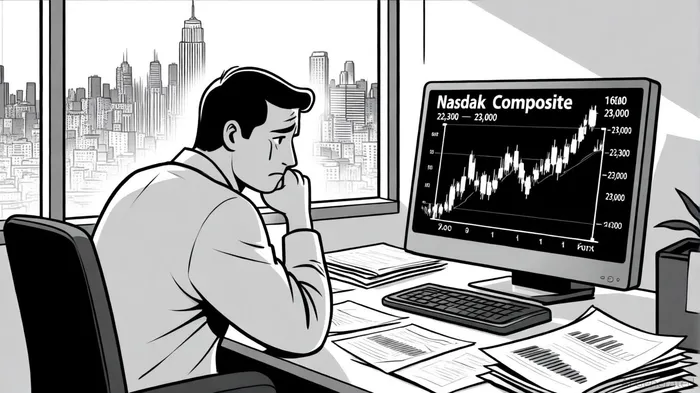







Comentarios
Aún no hay comentarios