
Nasdaq Pushes 24/5 Trading as Tech Selloff Weighs on Market Outlook
U.S. stock indexes opened lower in pre-market trading on Monday, with the NasdaqNDAQ-- falling 0.59%. The decline followed mixed signals from major tech stocks and news that ServiceNow dropped over 4% on reports of a potential $7 billion acquisition of Armis. Investors also reacted to Nasdaq's recent filing for extended trading hours, aiming to accommodate global demand for U.S. equities.
The move by Nasdaq to seek regulatory approval for near-24-hour trading has drawn attention as it joins the New York Stock Exchange and Cboe in pushing for a transformation of U.S. market structure. The proposal would extend trading to 23 hours a day, five days a week, bridging time zones for international investors.
The shift in trading hours reflects a broader trend in the financial markets as globalization continues to reshape investor behavior. Chuck Mack, senior vice president of North American markets at Nasdaq, noted that the U.S. stock market is increasingly becoming a global hub, with foreign holdings of U.S. equities reaching $17 trillion last year.
Extended Trading and Market Demand
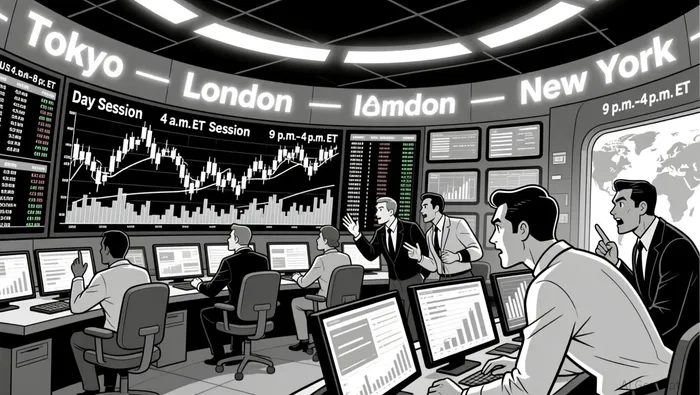
Nasdaq plans to transition to two trading sessions under the proposed 23/5 model: a Day Session from 4 a.m. to 8 p.m. ET and a Night Session from 9 p.m. to 4 a.m. ET. The move is intended to provide greater access to U.S. equities for international investors, particularly in regions where the current market hours are inconvenient. The one-hour break in between sessions will be used for maintenance and clearing according to Reuters.
The exchange argues that demand for U.S. stocks outside traditional hours has surged in recent years, especially with the rise of digital platforms and increased participation from global investors. The U.S. accounts for nearly two-thirds of the global listed market value, making it a key asset class for international portfolios according to financial sources.
Competitors and Regulatory Hurdles
Nasdaq is not alone in its pursuit of round-the-clock trading. The New York Stock Exchange has also submitted plans for 22-hour trading, while Cboe Global MarketsCBOE-- is preparing a similar proposal. Regulatory approval will be a key factor in determining when the extended hours take effect. Nasdaq has cited the second half of 2026 as a potential launch window according to Nasdaq's filing.
The transition to extended hours will also require coordination with other market infrastructure providers, including the Depository Trust & Clearing Corp. (DTCC), which has committed to clearing trades 24 hours a day, five days a week by the second quarter of 2026. This alignment is essential for ensuring the stability and integrity of the trading system according to market reports.
Market Reactions and Analyst Perspectives
The proposal has been met with mixed reactions from analysts and market participants. Some argue that extended trading will enhance liquidity and allow investors to react more quickly to global news and events. Others warn that the move could lead to increased volatility during hours when trading volumes are lower, potentially making pricing less stable according to analysts.
Dilin Wu, a research strategist at Pepperstone Group, called the initiative "a game-changer," particularly for investors in Asia and Australia, where the current market hours are less convenient. He added that it could help bridge the gap between U.S. and global markets, particularly for high-beta stocks like those in the tech sector according to market commentary.
Risks and Uncertainties
Despite the potential benefits, the proposal also carries risks. One concern is that institutional traders may shift their activity to the more liquid hours around the opening and closing bells, potentially reducing the effectiveness of the extended sessions. Another issue is the potential for lower-quality trades during off-peak hours, especially in markets with limited liquidity according to market analysis.
The regulatory landscape also remains a key factor. While the SEC has shown support for proposals to extend trading hours, it has also emphasized the importance of maintaining market integrity. Any changes to the current structure must balance innovation with safeguards to protect investors according to regulatory filings.
What This Means for Investors
For global investors, the proposed changes could offer greater flexibility and access to U.S. stocks. For example, investors in Asia and Australia, who often trade after the U.S. market has closed, could react more quickly to earnings reports and macroeconomic data. This could potentially reduce the price gaps between U.S. and overseas markets according to financial analysts.
However, the shift also raises questions about how investors will adjust their strategies. Retail investors and active traders may find it easier to participate in U.S. markets, while traditional institutional strategies may need to adapt to the new environment. The extended hours could also lead to increased competition among exchanges and trading platforms according to market commentary.
The proposal by Nasdaq represents a significant step in the evolution of U.S. financial markets. As the global economy continues to integrate and investor demand grows, the U.S. market is adapting to remain competitive. The outcome of the SEC's review will be closely watched by market participants, as the extended trading model could reshape how investors approach U.S. equities in the years ahead.





Comentarios
Aún no hay comentarios