
Nasdaq Futures Pause Ahead Of Twin Catalysts: Tariff Ruling & Jobs Report
Markets are on hold, awaiting two high-stakes events that could move them sharply in either direction. The setup is binary: a Supreme Court ruling on Friday and a jobs report at 8:30 a.m. ET. This creates a classic event-driven trade, where the outcome will dictate the near-term path for stocks and policy.
The first catalyst is the Supreme Court's decision on President Trump's sweeping tariffs. The court has set Friday as an opinion day, offering its first chance to rule on the legality of tariffs imposed under a 1977 emergency law. The stakes are enormous. If the court finds the president overstepped his authority, the administration could face a refund of nearly $150 billion paid in duties by major importers like CostcoCOST-- and AmazonAMZN--. This would be a direct financial hit to the Treasury and a major policy reversal. The court's skepticism during arguments in November, with justices from both benches questioning the method, suggests a ruling against the tariffs is a real possibility. The outcome will test presidential power and reshape global trade overnight.
The second catalyst is the December jobs report, due at 8:30 a.m. ET. This data is the primary input for the Federal Reserve's next policy move. With less than three weeks until its next meeting, the report will determine whether the Fed continues its aggressive pivot toward rate cuts or hits the brakes. Economists expect about 70,000 payroll growth, but the market is watching for clarity after a disrupted reporting cycle. A strong print could delay cuts, pressuring rate-sensitive sectors. A weak one would accelerate the dovish shift.
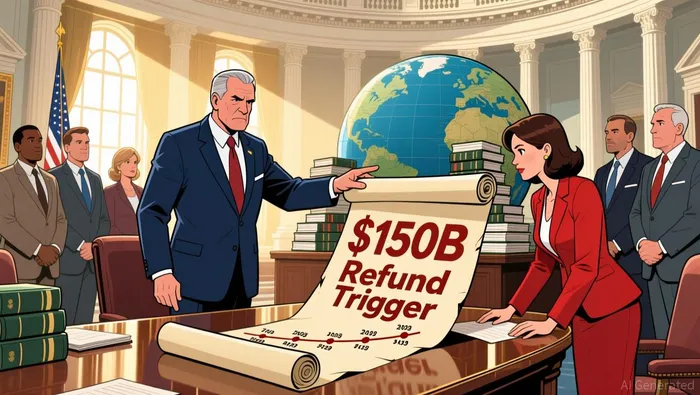
The bottom line is that both events are immediate and quantifiable. The tariff ruling offers a clear $150 billion refund trigger, while the jobs report provides a concrete signal for Fed policy. For traders, this twin setup means volatility is likely, and the market's direction hinges entirely on the outcomes of these two specific catalysts.
Stock-Specific Exposure: The Refund Mechanism and Trade Policy
The Supreme Court's potential ruling on the legality of Trump's tariffs sets up a direct financial trigger for a select group of importers. The key mechanism is the possibility of having to refund nearly $150 billion paid in tariffs to importers if the court finds the IEEPA-based duties illegal. This creates a binary outcome for companies that have paid these duties: a refund or a continued cost. The six named stocks in the article present different profiles of exposure.
Nvidia (NVDA) is a prime candidate for exposure to the semiconductor tariff delay. The article notes that Trump's proposed 100% tariffs on imported semiconductors may not be implemented anytime soon. While this is a delay, not a refund, it directly impacts Nvidia's supply chain and competitive landscape. The company relies on TSMC for manufacturing, and the threat of these tariffs was a key lever in U.S. policy to reshape global chip production. A delay removes immediate pressure but keeps the risk of future, disruptive tariffs on the table, creating uncertainty for long-term planning and investment.
Intel (INTC) shares a similar, though more direct, exposure. The company is a major U.S. chipmaker that would be directly affected by any shift in semiconductor trade policy. The article mentions a 'great meeting' with CEO Lip-Bu Tan yesterday, highlighting the political attention on the company. Any policy shift, whether a refund for past duties or new tariffs, would impact Intel's global operations, supply chain costs, and its strategic push to expand domestic manufacturing. The stock's focus is tied to the broader semiconductor trade war, where China is expected to retaliate against U.S. tariff threats, affecting chip sales in that critical market.
Disney (DIS) presents a different kind of exposure, tied to geopolitical and regulatory shifts. The article notes a reportedly met Disney CEO Bob Iger in Beijing, encouraging investment. This signals that Disney's business in China, a major growth market, is sensitive to U.S.-China trade relations. Escalating tariffs and retaliation could disrupt Disney's content distribution, theme park operations, and consumer spending in the region. The stock's performance is thus linked to the stability of trade policy between the two economic giants.
The remaining three stocks-Chevron (CVX), Exxon Mobil (XOM), and SLB (SLB)-are focused on energy policy. The article states they are in focus after reports that senior executives from major oil companies are set to meet President Donald Trump. This meeting raises expectations around domestic production and energy policy, which are distinct from the tariff refund mechanism. Their exposure is more to regulatory decisions on drilling, production quotas, and energy taxes than to the specific IEEPA tariff refunds. However, broader trade policy can influence global oil demand and pricing, creating an indirect link.
The bottom line for traders is to identify which stocks have the clearest, most immediate link to the twin catalysts. Nvidia and Intel face direct, policy-driven supply chain risks. Disney's exposure is to the geopolitical fallout from trade tensions. The energy trio's link is more to domestic policy meetings than to the tariff refund. The refund mechanism itself is a cash flow event for importers like Amazon, which is named in the evidence as a major importer challenging the tariffs.
Immediate Risk/Reward Setup and Traders' Radar
The market's current bias is modestly USD positive, according to strategists, if both catalysts play out as expected. The setup hinges on a Supreme Court ruling against the tariffs and a jobs report that keeps the Fed on hold. This combination would signal a policy reset and delayed rate cuts, supporting the dollar. Yet the risk is clear: a disappointing jobs print could trigger a 'higher for longer' narrative, pressuring stocks and the dollar's gains.
The highest immediate catalyst is the Supreme Court's decision, expected later today. A ruling against the tariffs would directly unlock the possibility of having to refund nearly $150 billion in duties. This is a concrete, immediate event for the six named stocks with direct exposure. For traders, this is the binary event that will likely drive the most short-term volatility in those names.
The secondary catalyst, the December jobs report at 8:30 a.m. ET, is the market's next major data point. With Fed funds futures now pricing an 86% probability of a hold at the next meeting, the report must provide clarity after a disrupted cycle. Economists expect about 70,000 payroll growth. A print significantly below that could accelerate the dovish shift, while a strong one would delay cuts and pressure rate-sensitive sectors.
For traders, the action is twofold. First, watch for sharp moves in the six named stocks-Nvidia, Intel, Disney, Chevron, Exxon Mobil, and SLB-as the Supreme Court ruling unfolds. Their exposure to the refund mechanism or policy meetings makes them the most direct play on this event. Second, monitor the broader market's reaction to the jobs data, which will determine the Fed's near-term path and, by extension, the risk/reward for all assets. The week's twin triggers have created a clear, event-driven setup with defined catalysts and immediate volatility ahead.





Comentarios
Aún no hay comentarios