
"Nasdaq Drops as Nvidia's GTC Event Fails to Impress Investors"
Generado por agente de IATheodore Quinn
martes, 18 de marzo de 2025, 9:31 pm ET2 min de lectura
NVDA--
The Nasdaq Composite index is leading stocks lower today as Nvidia's (NVDA) stock price falls during its annual GPU Technology Conference (GTC) event. Despite unveiling new products and emphasizing its dominance in the AI sector, Nvidia's stock dropped 2.4% on Tuesday after CEO Jensen Huang's keynote speech. This underperformance suggests that investors were not impressed with the announcements, indicating a cautious sentiment towards the tech sector.
Nvidia's GTC 2025 event featured several key announcements, including the unveiling of the company's next-generation line of chips, such as the powerful new Black Ultra chips. The company also announced a new lineup of "AI personal supercomputers" powered by the Grace Blackwell chip platform. However, these announcements did not meet investor expectations, as the keynote address was described as energetic but lacking in fresh developments that could drive significant revenue growth.
The recent volatility in Nvidia's stock price could have significant implications for the overall market dynamics, particularly for other semiconductor and technology stocks. Nvidia's stock price has shown considerable fluctuations, with a 52-week range of $75.61 to $153.13, indicating a high level of volatility. This volatility can be attributed to various factors, including market sentiment, investor expectations, and the company's performance.
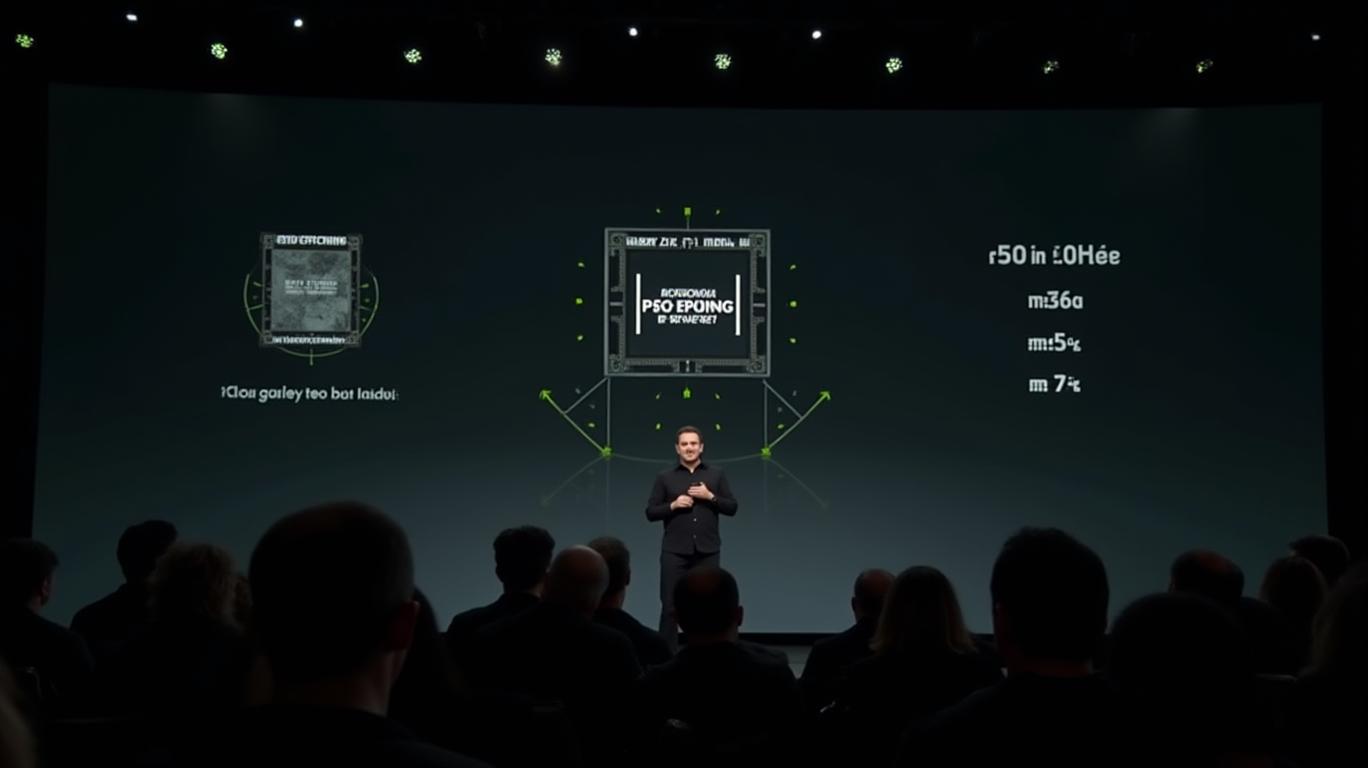
For instance, on March 18, 2025, Nvidia's stock fell 2.4% after CEO Jensen Huang's keynote speech at the GTC event, which failed to deliver a big catalyst for investors. This drop in stock price could have a ripple effect on other semiconductor and technology stocks, as investors may become more cautious about the sector as a whole. The market's reaction to Nvidia's performance can influence investor sentiment towards other companies in the same industry, leading to increased volatility and potential sell-offs.
On the other hand, Nvidia's stock has also shown significant gains, with a 1-year change of 66.81%. This positive performance can attract more investors to the semiconductor and technology sectors, driving up stock prices and increasing market liquidity. For example, Nvidia's stock price today is $131.28, up 3.67% from the previous close, indicating strong investor confidence in the company's future prospects.
Moreover, Nvidia's market capitalization of $3.22 trillion and its high trading volume of 322.55 million shares suggest that it is a significant player in the market. Any changes in Nvidia's stock price can have a substantial impact on the overall market dynamics, as other semiconductor and technology stocks may follow suit. For instance, Advanced Micro Devices, Inc. (AMD) and Qualcomm, Inc. (QCOM) are direct competitors of NvidiaNVDA-- and may experience similar volatility in their stock prices.
In conclusion, the recent volatility in Nvidia's stock price can impact the overall market dynamics for other semiconductor and technology stocks. Investors should closely monitor Nvidia's performance and market trends to make informed investment decisions. The Nasdaq Composite index's performance today reflects broader market sentiment towards the tech sector, and the underperformance of Nvidia's stock during the GTC event highlights that investors may be looking for more concrete developments and revenue streams from tech companies.
The Nasdaq Composite index is leading stocks lower today as Nvidia's (NVDA) stock price falls during its annual GPU Technology Conference (GTC) event. Despite unveiling new products and emphasizing its dominance in the AI sector, Nvidia's stock dropped 2.4% on Tuesday after CEO Jensen Huang's keynote speech. This underperformance suggests that investors were not impressed with the announcements, indicating a cautious sentiment towards the tech sector.
Nvidia's GTC 2025 event featured several key announcements, including the unveiling of the company's next-generation line of chips, such as the powerful new Black Ultra chips. The company also announced a new lineup of "AI personal supercomputers" powered by the Grace Blackwell chip platform. However, these announcements did not meet investor expectations, as the keynote address was described as energetic but lacking in fresh developments that could drive significant revenue growth.
The recent volatility in Nvidia's stock price could have significant implications for the overall market dynamics, particularly for other semiconductor and technology stocks. Nvidia's stock price has shown considerable fluctuations, with a 52-week range of $75.61 to $153.13, indicating a high level of volatility. This volatility can be attributed to various factors, including market sentiment, investor expectations, and the company's performance.
For instance, on March 18, 2025, Nvidia's stock fell 2.4% after CEO Jensen Huang's keynote speech at the GTC event, which failed to deliver a big catalyst for investors. This drop in stock price could have a ripple effect on other semiconductor and technology stocks, as investors may become more cautious about the sector as a whole. The market's reaction to Nvidia's performance can influence investor sentiment towards other companies in the same industry, leading to increased volatility and potential sell-offs.
On the other hand, Nvidia's stock has also shown significant gains, with a 1-year change of 66.81%. This positive performance can attract more investors to the semiconductor and technology sectors, driving up stock prices and increasing market liquidity. For example, Nvidia's stock price today is $131.28, up 3.67% from the previous close, indicating strong investor confidence in the company's future prospects.
Moreover, Nvidia's market capitalization of $3.22 trillion and its high trading volume of 322.55 million shares suggest that it is a significant player in the market. Any changes in Nvidia's stock price can have a substantial impact on the overall market dynamics, as other semiconductor and technology stocks may follow suit. For instance, Advanced Micro Devices, Inc. (AMD) and Qualcomm, Inc. (QCOM) are direct competitors of NvidiaNVDA-- and may experience similar volatility in their stock prices.
In conclusion, the recent volatility in Nvidia's stock price can impact the overall market dynamics for other semiconductor and technology stocks. Investors should closely monitor Nvidia's performance and market trends to make informed investment decisions. The Nasdaq Composite index's performance today reflects broader market sentiment towards the tech sector, and the underperformance of Nvidia's stock during the GTC event highlights that investors may be looking for more concrete developments and revenue streams from tech companies.

Divulgación editorial y transparencia de la IA: Ainvest News utiliza tecnología avanzada de Modelos de Lenguaje Largo (LLM) para sintetizar y analizar datos de mercado en tiempo real. Para garantizar los más altos estándares de integridad, cada artículo se somete a un riguroso proceso de verificación con participación humana.
Mientras la IA asiste en el procesamiento de datos y la redacción inicial, un miembro editorial profesional de Ainvest revisa, verifica y aprueba de forma independiente todo el contenido para garantizar su precisión y cumplimiento con los estándares editoriales de Ainvest Fintech Inc. Esta supervisión humana está diseñada para mitigar las alucinaciones de la IA y garantizar el contexto financiero.
Advertencia sobre inversiones: Este contenido se proporciona únicamente con fines informativos y no constituye asesoramiento profesional de inversión, legal o financiero. Los mercados conllevan riesgos inherentes. Se recomienda a los usuarios que realicen una investigación independiente o consulten a un asesor financiero certificado antes de tomar cualquier decisión. Ainvest Fintech Inc. se exime de toda responsabilidad por las acciones tomadas con base en esta información. ¿Encontró un error? Reportar un problema


SOBRE NOSOTROS
Nuestra historiaAutores de noticiasBase de conocimientosPolítica de privacidadTérmino de usoDescargo de responsabilidad de corretaje de tercerosTérminos de uso de AIMEDivulgaciones de riesgos de AInvest AICarrerasCONTÁCTENOS
Email: support@ainvest.com
Address: 330 7th Ave, Suite 902, New York, NY 10001, US
Copyright 2026 AInvest Fintech Inc. All rights reserved.


Comentarios
Aún no hay comentarios