
Nasdaq Drops 5.5% as Trump Tariffs Spark Market Turmoil
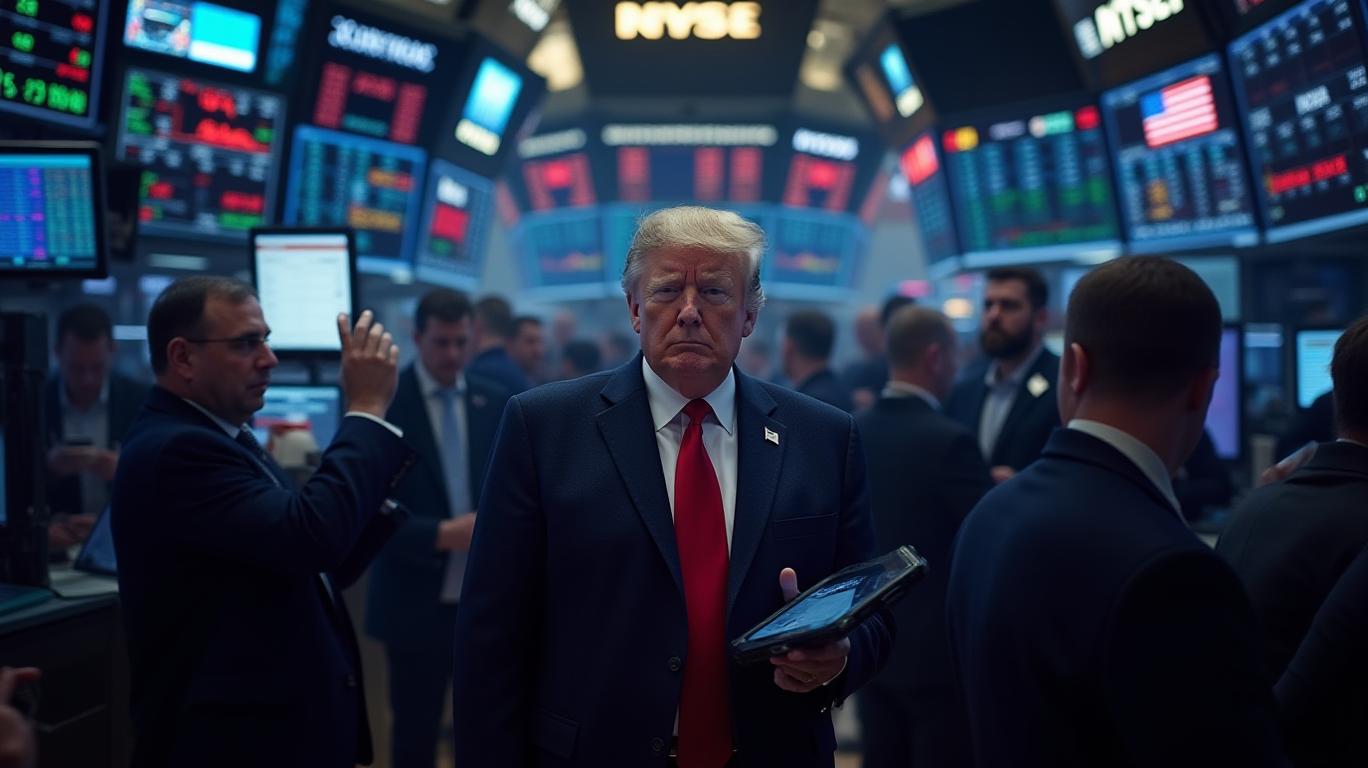
The Nasdaq Composite Index experienced a significant decline, losing 5.5% on Thursday, marking one of its worst single-day performances since the start of the century. This downturn was triggered by President Donald Trump's announcement of global tariffs, which sent shockwaves through the U.S. stock market. The S&P 500 index also suffered, falling almost 5%. The tech-heavy Nasdaq's decline was particularly notable, as it was just outside the top 20 worst single-day drawdowns since 2000, with most of the largest drawdowns occurring during the dot-com crash of 2000-2001 and the 2008 global financial crisis.
In contrast to the stock market's turmoil, the price of bitcoin remained relatively stable. Despite an initial tumble immediately after the tariff announcement, bitcoin rose 0.7% the following day and continued to gain momentum into Friday. This resilience is particularly striking given that bitcoin is typically correlated with U.S. equities over short timeframes. As of the latest data, bitcoin is trading above $84,000, compared to about $87,000 before Trump's speech. This stability in bitcoin's price is in stark contrast to the Nasdaq's performance, which hit a low on Thursday.
Year-to-date, bitcoin has outperformed the Nasdaq, with a loss of 10% compared to the index's 11%. Analyst Caleb Franzen highlighted bitcoin's relative strength, noting its resilience around the 200-day moving average. "It's pretty remarkable to see that bitcoin is up +3.4% today relative to the S&P 500, particularly in a risk-off environment. As I've recently pointed out, BTC/SPY continues to hold above its 200-day moving average cloud," Franzen said in a post on X.
The tariffs announced by President Trump include a minimum 10% reciprocal tariff on nearly all countries and country-specific tariffs on 60 nations. These measures are expected to have far-reaching implications for global trade and the economy. The U.S. is imposing these tariffs in response to what the administration claims are unfair trade practices by other countries. The tariffs will be applied to all of America’s largest trading partners, including high rates on imports from the European Union, Japan and China.
The market's reaction was swift and severe, with stocks falling sharply in extended hours after President Trump unveiled his sweeping plan to tax imports. The yield on the 10-year Treasury, which affects borrowing costs on all sorts of loans, notably mortgages, fell to 4.04% from 4.20% at yesterday's close. The yield, which had been falling in recent days as economic concerns increased, fell as low as 4.00% this morning, its lowest level since October.
Shares of retailers that source a large portion of the products they sell from other countries were among the big decliners. NikeNKE--, Best Buy, TargetTGT--, Dollar TreeDLTR--, Williams-SonomaWSM--, Ralph LaurenRL--, and Deckers Outdoor all saw significant drops. Apple, which has a major manufacturing presence in China, Vietnam and India, was the major decliner among mega-cap technology stocks, falling more than 9%. Chipmakers Nvidia and Broadcom also declined about 8% and 11%, respectively, while Amazon and Meta Platforms each slid 9%, Tesla fell more than 5%, and Microsoft and Alphabet also stumbled.
Financial services stocks were also down sharply today amid growing fears of a recession, with retail banking giants Bank of America and Citigroup both down more than 11%. American Express was down 10%, while investment banks Goldman Sachs and Morgan Stanley each fell more than 9%.
Bitcoin, which had been trading at around $88,000 just before Trump spoke late yesterday afternoon, saw a decline to around $82,400 in late-afternoon trading Thursday. This decline was pulling crypto stocks, including Strategy and Coinbase, sharply lower. Gold futures, which have hit a series of record highs in recent days, were down 0.9% at $3,140 an ounce. West Texas Intermediate futures, the U.S. crude oil benchmark, plunged 7.1% to $66.60 per barrel, amid concerns about a global trade war and as oil producing countries sped up plans to increase output.
The market's reaction to the tariffs highlights the sensitivity of investors to trade policies and their potential impact on the economy. The key question now will be whether there is scope for negotiation on the reciprocal tariffs, as the tariff announcement was worse than most investors expected. The market's volatility in the run-up to the rollout of the new tariffs underscores the concerns that the trade measure would reignite inflation and stall economic growth, while harming companies that do business around the world.







Comentarios
Aún no hay comentarios