
The Nasdaq Altcoin Revolution: Institutional Adoption and the Future of Crypto Asset Allocation
The crypto landscape is undergoing a seismic shift as Nasdaq-listed companies pivot from Bitcoin-centric strategies to diversified altcoin portfolios. This evolution reflects a broader institutional recognition of altcoins' unique value propositions, from cross-border payment solutions to high-throughput blockchain ecosystems. By 2025, firms like Helius MedicalHSDT-- Technologies, Spetz Inc., and BTCSBTCS-- have emerged as pioneers in this transition, allocating hundreds of millions to altcoins such as SolanaSOL-- (SOL), EthereumETH-- (ETH), and SonicS-- (S). These moves are not speculative gambles but calculated steps toward long-term treasury optimization in an era of regulatory progress and technological innovation.
Institutional Adoption: Beyond Bitcoin's Shadow
For years, corporate crypto strategies mirrored MicroStrategy's BitcoinBTC-- playbook. However, 2025 has seen a strategic pivot toward altcoins, driven by three factors: diversification, yield generation, and use-case alignment. Andrei Grachev of DWF Labs has labeled this trend a “Developing Trend of this cycle,” noting that Nasdaq-listed firms are now raising capital explicitly for altcoin acquisitions [1].
Helius Medical Technologies exemplifies this shift. In June 2025, the company announced a $500 million corporate treasury initiative focused on Solana, aiming to scale its holdings over 12–24 months [3]. Solana's high-speed blockchain and developer ecosystem make it an attractive asset for firms seeking both liquidity and technological synergy. Similarly, Spetz Inc. has staked 6 million Sonic (S) tokens while operating a validator node, generating staking rewards that offset treasury costs [2]. These strategies highlight altcoins' dual role as inflation hedges and yield-generating assets.
The Nasdaq Crypto Index: A Catalyst for Mainstream Confidence
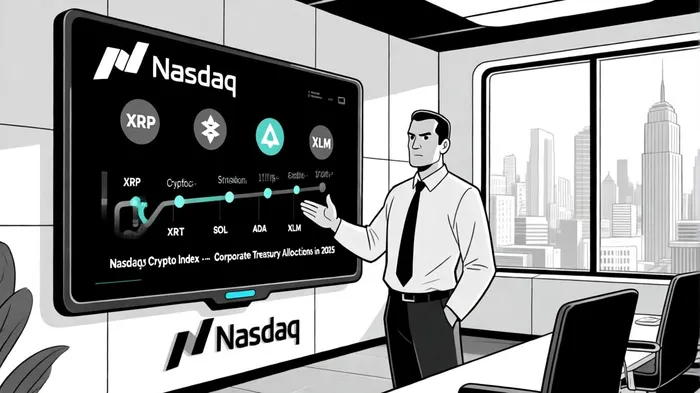
The Nasdaq Crypto Index's expansion to include altcoins like XRPXRP--, Solana, and CardanoADA-- has been a pivotal development. By institutionalizing these assets in a major index, Nasdaq has signaled growing confidence in altcoins' regulatory and technical maturity [1]. This inclusion not only legitimizes altcoins for institutional investors but also creates a benchmark for performance tracking and portfolio allocation.
BTCS, a blockchain-focused publicly traded company, has already capitalized on this trend. In May 2025, it acquired 3,450 ETH for $8.42 million, diversifying its treasury beyond Bitcoin [2]. Such moves are likely to accelerate as more firms recognize the benefits of multi-asset crypto portfolios.
Long-Term Allocation: Balancing Risk and Reward
While altcoins remain riskier than Bitcoin, their potential for outsized returns is undeniable. Institutional investors are adopting a phased approach, prioritizing altcoins with clear use cases and robust fundamentals. For instance, XRP's role in cross-border payments and Cardano's academic-driven development model have made them attractive to firms seeking exposure to niche markets [1].
Regulatory clarity is another critical factor. As the SEC's framework for crypto ETFs evolves, altcoins like Solana and Ethereum are expected to see increased institutional inflows. By 2026–2027, analysts project that token unlock schedules and retail capital shifts into Bitcoin ETFs will create favorable conditions for altcoin growth [3].
Conclusion: A New Era of Institutional Innovation
The strategic entry of Nasdaq-listed companies into the altcoin market marks a turning point in crypto asset allocation. By leveraging altcoins' unique capabilities and diversifying treasury reserves, these firms are positioning themselves to thrive in a post-ETF, multi-chain future. As regulatory frameworks solidify and blockchain ecosystems mature, altcoins are poised to become a cornerstone of institutional portfolios—a trend that investors and market observers would be wise to monitor closely.





Comentarios
Aún no hay comentarios