
NASA's Wallops Rocket Launch Targets Mesopause Study Amid Weather Challenges
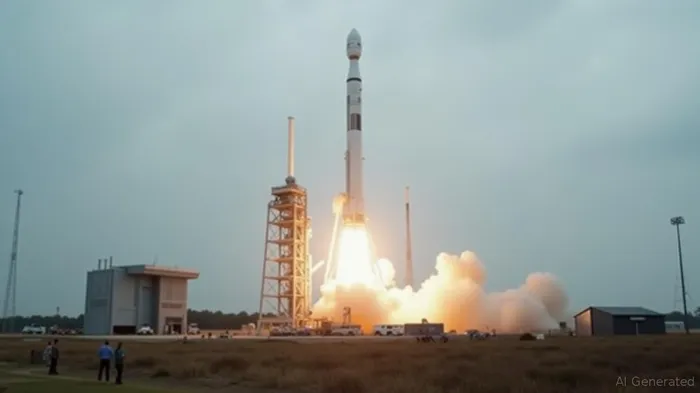
NASA is preparing for the TOMEX+ mission, aiming to launch three suborbital rockets from Wallops Flight Facility in Virginia. Scheduled for August 25 between 10 p.m. and 3 a.m. EDT, the mission seeks to explore the mesopause, the atmospheric region situated between 53 and 65 miles above Earth. Known for its turbulent conditions and extreme cold, with temperatures nearing minus 148 degrees Fahrenheit, the mesopause is pivotal for understanding weather patterns that influence satellite operations.
The TOMEX+ mission, short for Turbulent Oxygen Mixing Experiment Plus, entails a sequence of launches that will enable scientists to study this atmosphere layer more comprehensively. The first two rockets will release vapor tracers—clouds consisting of non-harmful gases like barium and lithium—to track atmospheric movements. Following those, a third rocket equipped with a laser will project sodium atoms to further illuminate the dynamics of turbulence in this high-altitude region. This proceeding will map atmospheric disturbances and help refine models that predict weather and assess risks for aviation and space activities.
The interest in this atmospheric layer stems from its nature as a dynamic boundary where energy transfers from lower layers of the Earth's atmosphere into space, often complicating satellite missions. Historically elusive due to its position—too high for balloons and too low for satellites—this region demands the versatility and precision afforded by sounding rockets that reach specific altitudes needed to gather targeted data.
Visibility of the launch, weather permitting, is expected along parts of the East Coast, from New Jersey to North Carolina. Observers may witness colorful vapor trails briefly after the launches, painting the night sky with vibrant displays lasting from a few seconds up to a minute. As a visual forecast, a launch visibility map elucidates where and when individuals across the mid-Atlantic might glimpse the event.
Contingency planning has been paramount, with previous launch attempts thwarted by high sea states in the recovery zone caused by Hurricane Erin. These weather challenges have necessitated careful monitoring and rescheduling of the launch window, which remains contingent on favorable conditions.
To engage public interest and offer live insights, NASA will provide a livestream of the launch proceedings commencing shortly before rockets depart the coastal site. No formal viewing events will be hosted at the Wallops Visitor Center due to operational logistics, yet this has not deterred excitement among locals and astronomy enthusiasts who are anticipated to gather in suitable open locations to watch. As the TOMEX+ mission unfolds, it stands to contribute significantly to our understanding of atmospheric dynamics and enhance the predictive capabilities that safeguard satellites and weather forecasting infrastructure.







Comentarios
Aún no hay comentarios