
NASA Astronauts in Orbit for Months Prepare for Return Trip
Generado por agente de IAJulian West
martes, 4 de marzo de 2025, 3:25 pm ET2 min de lectura
GRVY--
As NASA astronauts prepare for their return to Earth after months in orbit, they face a unique set of challenges that require extensive training and support to ensure a successful reintegration. The isolation and confinement of space travel, along with the physical effects of microgravity, can have significant impacts on astronauts' psychological and physical well-being. In this article, we will explore the challenges astronauts face when returning to Earth and the strategies employed by NASA to support their mental and physical health during and after the mission.
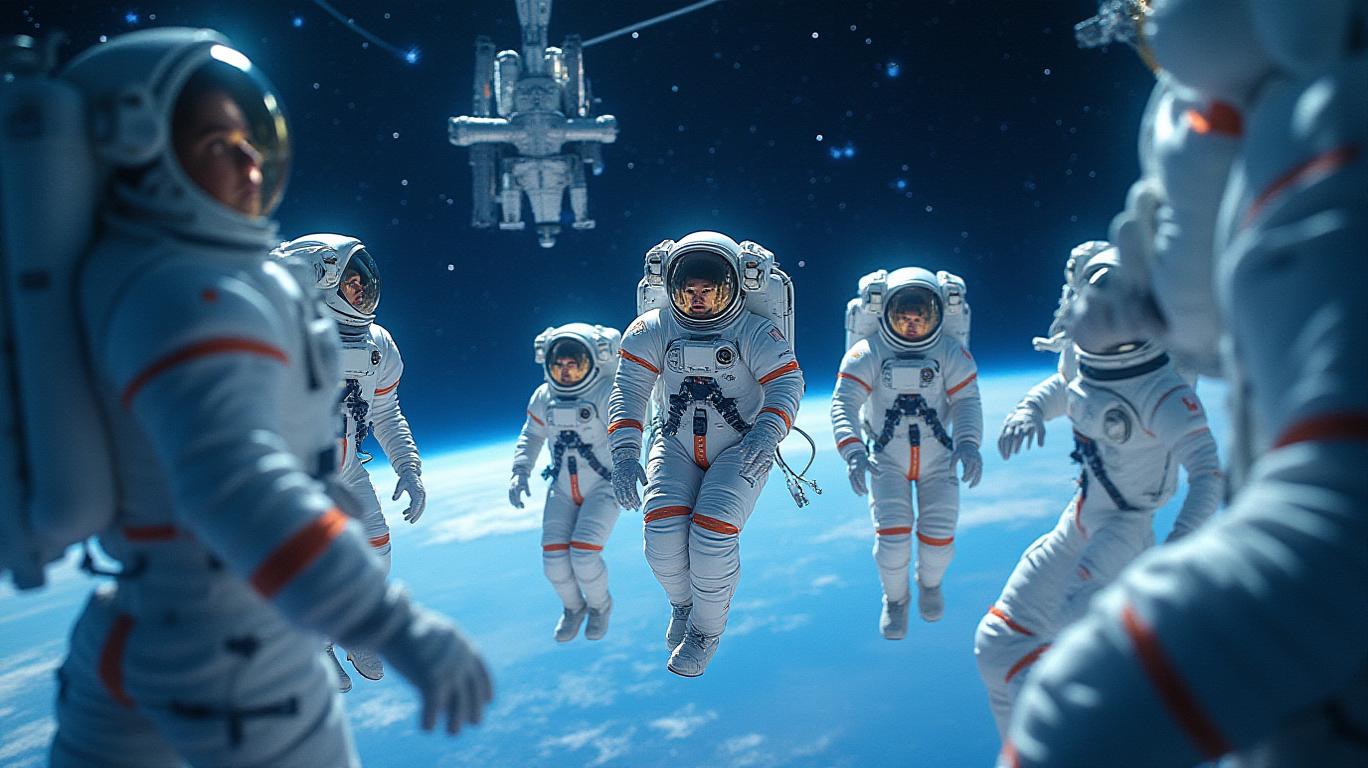
One of the most significant challenges astronauts face when returning to Earth is the isolation and confinement of space travel. The lack of social interaction and the confined living space can lead to feelings of loneliness, stress, and interpersonal conflicts. To address these challenges, NASA provides astronauts with psychological support before, during, and after their mission. This includes regular check-ins with psychologists, stress management training, and access to mental health resources. Additionally, astronauts maintain communication with their families and friends through email, phone calls, and video conferences, and they have access to crew care packages and social activities aboard the space station.
Another challenge astronauts face is the physical effects of microgravity on their bodies. Prolonged exposure to microgravity leads to bone loss, muscle atrophy, and cardiovascular deconditioning. To mitigate these effects, astronauts engage in regular exercise routines aboard the International Space Station (ISS) using specialized equipment like the Advanced Resistive Exercise Device (ARED), the T2 treadmill, and the CEVIS cycling machine. These exercises help maintain bone density, muscle massMASS--, and cardiovascular health. Upon returning to Earth, astronauts undergo post-flight reconditioning to help their bodies readapt to Earth's gravityGRVY-- and recover from any lingering physical effects of spaceflight.
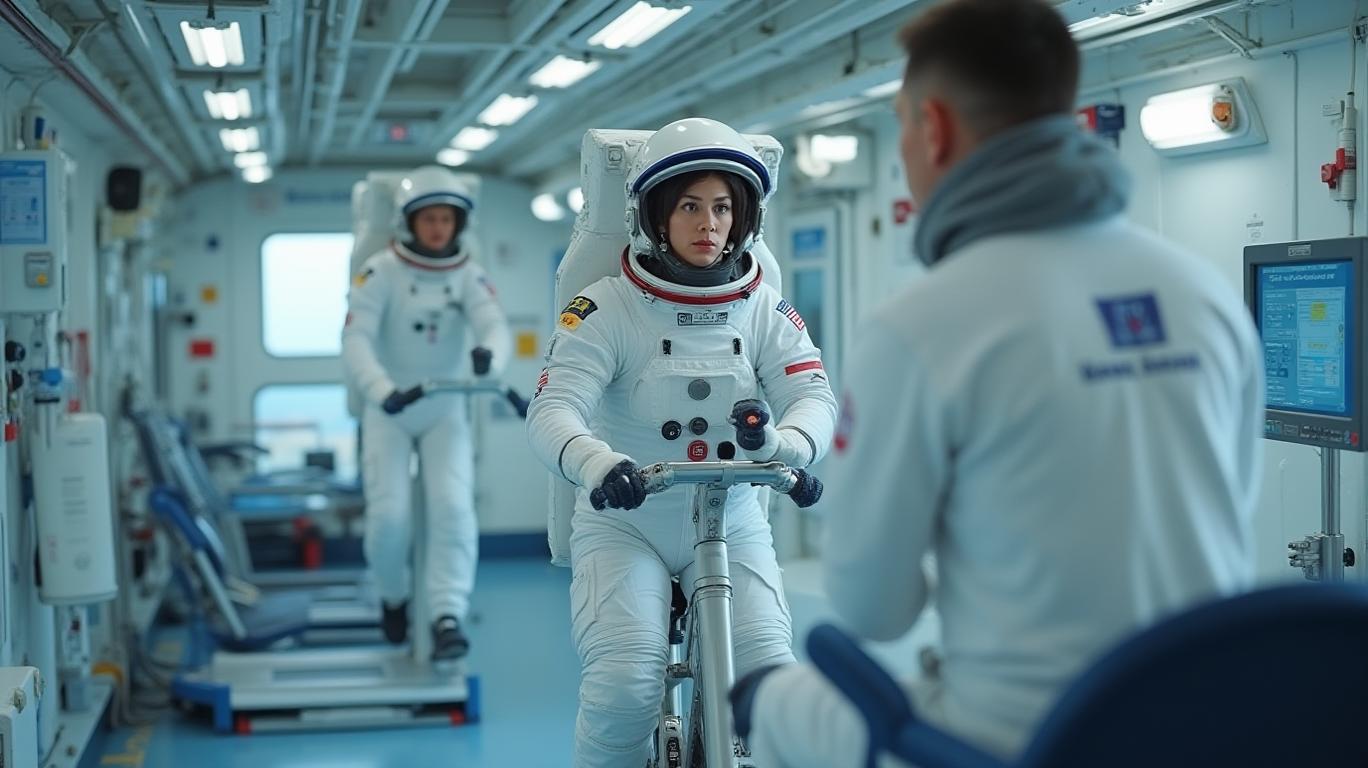
In addition to the physical and psychological challenges, astronauts also face sensory-motor issues, such as difficulty with balance and coordination, upon returning to Earth. To address these challenges, astronauts practice various exercises and use specialized equipment to help maintain their sensory-motor skills. They also receive training in expeditionary skills, such as self-care, team care, communication, and leadership and followership, to help them work effectively as a team and maintain a positive and supportive environment aboard the space station.
In conclusion, the isolation and confinement of space travel, along with the physical effects of microgravity, present significant challenges for astronauts returning to Earth. However, NASA has developed a comprehensive reintegration process to support their mental and physical health during and after the mission. By providing psychological support, encouraging social interaction, promoting regular exercise, and offering post-flight reconditioning, NASA helps astronauts readapt to life on Earth and address any lingering psychological and physical challenges. As the space program continues to evolve and expand, the lessons learned from supporting astronauts during and after their missions will be invaluable in preparing humanity for future space exploration.
MASS--
As NASA astronauts prepare for their return to Earth after months in orbit, they face a unique set of challenges that require extensive training and support to ensure a successful reintegration. The isolation and confinement of space travel, along with the physical effects of microgravity, can have significant impacts on astronauts' psychological and physical well-being. In this article, we will explore the challenges astronauts face when returning to Earth and the strategies employed by NASA to support their mental and physical health during and after the mission.
One of the most significant challenges astronauts face when returning to Earth is the isolation and confinement of space travel. The lack of social interaction and the confined living space can lead to feelings of loneliness, stress, and interpersonal conflicts. To address these challenges, NASA provides astronauts with psychological support before, during, and after their mission. This includes regular check-ins with psychologists, stress management training, and access to mental health resources. Additionally, astronauts maintain communication with their families and friends through email, phone calls, and video conferences, and they have access to crew care packages and social activities aboard the space station.
Another challenge astronauts face is the physical effects of microgravity on their bodies. Prolonged exposure to microgravity leads to bone loss, muscle atrophy, and cardiovascular deconditioning. To mitigate these effects, astronauts engage in regular exercise routines aboard the International Space Station (ISS) using specialized equipment like the Advanced Resistive Exercise Device (ARED), the T2 treadmill, and the CEVIS cycling machine. These exercises help maintain bone density, muscle massMASS--, and cardiovascular health. Upon returning to Earth, astronauts undergo post-flight reconditioning to help their bodies readapt to Earth's gravityGRVY-- and recover from any lingering physical effects of spaceflight.
In addition to the physical and psychological challenges, astronauts also face sensory-motor issues, such as difficulty with balance and coordination, upon returning to Earth. To address these challenges, astronauts practice various exercises and use specialized equipment to help maintain their sensory-motor skills. They also receive training in expeditionary skills, such as self-care, team care, communication, and leadership and followership, to help them work effectively as a team and maintain a positive and supportive environment aboard the space station.
In conclusion, the isolation and confinement of space travel, along with the physical effects of microgravity, present significant challenges for astronauts returning to Earth. However, NASA has developed a comprehensive reintegration process to support their mental and physical health during and after the mission. By providing psychological support, encouraging social interaction, promoting regular exercise, and offering post-flight reconditioning, NASA helps astronauts readapt to life on Earth and address any lingering psychological and physical challenges. As the space program continues to evolve and expand, the lessons learned from supporting astronauts during and after their missions will be invaluable in preparing humanity for future space exploration.

Divulgación editorial y transparencia de la IA: Ainvest News utiliza tecnología avanzada de Modelos de Lenguaje Largo (LLM) para sintetizar y analizar datos de mercado en tiempo real. Para garantizar los más altos estándares de integridad, cada artículo se somete a un riguroso proceso de verificación con participación humana.
Mientras la IA asiste en el procesamiento de datos y la redacción inicial, un miembro editorial profesional de Ainvest revisa, verifica y aprueba de forma independiente todo el contenido para garantizar su precisión y cumplimiento con los estándares editoriales de Ainvest Fintech Inc. Esta supervisión humana está diseñada para mitigar las alucinaciones de la IA y garantizar el contexto financiero.
Advertencia sobre inversiones: Este contenido se proporciona únicamente con fines informativos y no constituye asesoramiento profesional de inversión, legal o financiero. Los mercados conllevan riesgos inherentes. Se recomienda a los usuarios que realicen una investigación independiente o consulten a un asesor financiero certificado antes de tomar cualquier decisión. Ainvest Fintech Inc. se exime de toda responsabilidad por las acciones tomadas con base en esta información. ¿Encontró un error? Reportar un problema




Comentarios
Aún no hay comentarios