
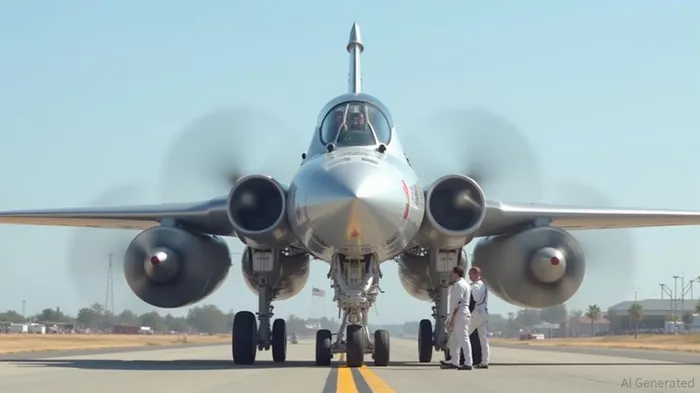
NASA's X-59 supersonic jet takes taxiing test, poised to cut NYC-London flight time in half.
PorAinvest
viernes, 18 de julio de 2025, 10:36 pm ET1 min de lectura
CIGL--
The X-59 jet, measuring 100 feet long and 30 feet wide, is designed to revolutionize air travel by quietly breaking the sound barrier. Its innovative design and shape are expected to produce a quiet "thump" sound instead of the thunderous roar associated with traditional supersonic flights [1]. The aircraft is part of NASA's Quiet Supersonic Technology (QueSST) mission, which aims to reduce the loud sonic boom to a quieter threshold, making supersonic commercial flights over land more acceptable [2].
During the recent taxi tests, the X-59 was monitored for stability and control across various conditions, validating critical systems like steering and braking. The aircraft is expected to reach speeds of up to 925 miles per hour, significantly reducing transatlantic flight times [1]. NASA estimates that the X-59 could potentially fly from New York to London in just three and a half hours, compared to the current average of seven hours [1].
The X-59's success in completing its final trials marks a significant milestone in the history of supersonic aviation. The aircraft is expected to succeed the British Airways Concorde, which was retired from commercial service in 2003 due to high maintenance costs and a fatal crash [1]. The X-59's ability to produce a quieter sonic boom could help overcome regulatory hurdles and pave the way for the commercialization of supersonic travel.
References:
[1] https://nypost.com/2025/07/18/business/nasas-supersonic-x-59-jet-that-could-slash-nyc-london-flight-time-in-half-taxis-closer-to-take-off/
[2] https://www.nasa.gov/image-article/nasas-x-59-quiet-supersonic-aircraft-begins-taxi-tests/
LMT--
NASA's X-59 supersonic jet, dubbed the "son of Concorde," has completed its final series of trials and is set to make its maiden voyage later this year. The plane is designed to break the sound barrier quietly and could potentially cut transatlantic flight time in half, flying from New York to London in just three and a half hours. Taxi tests have been underway on a California runway, and the jet is expected to reach speeds of up to 925 miles per hour.
NASA's X-59 supersonic jet, affectionately dubbed the "son of Concorde," has successfully completed its final series of ground tests, paving the way for its maiden voyage later this year. The experimental aircraft, developed by NASA and Lockheed Martin, taxied on a California runway at low speed using its own power for the first time on July 10, 2025 [1].The X-59 jet, measuring 100 feet long and 30 feet wide, is designed to revolutionize air travel by quietly breaking the sound barrier. Its innovative design and shape are expected to produce a quiet "thump" sound instead of the thunderous roar associated with traditional supersonic flights [1]. The aircraft is part of NASA's Quiet Supersonic Technology (QueSST) mission, which aims to reduce the loud sonic boom to a quieter threshold, making supersonic commercial flights over land more acceptable [2].
During the recent taxi tests, the X-59 was monitored for stability and control across various conditions, validating critical systems like steering and braking. The aircraft is expected to reach speeds of up to 925 miles per hour, significantly reducing transatlantic flight times [1]. NASA estimates that the X-59 could potentially fly from New York to London in just three and a half hours, compared to the current average of seven hours [1].
The X-59's success in completing its final trials marks a significant milestone in the history of supersonic aviation. The aircraft is expected to succeed the British Airways Concorde, which was retired from commercial service in 2003 due to high maintenance costs and a fatal crash [1]. The X-59's ability to produce a quieter sonic boom could help overcome regulatory hurdles and pave the way for the commercialization of supersonic travel.
References:
[1] https://nypost.com/2025/07/18/business/nasas-supersonic-x-59-jet-that-could-slash-nyc-london-flight-time-in-half-taxis-closer-to-take-off/
[2] https://www.nasa.gov/image-article/nasas-x-59-quiet-supersonic-aircraft-begins-taxi-tests/
Divulgación editorial y transparencia de la IA: Ainvest News utiliza tecnología avanzada de Modelos de Lenguaje Largo (LLM) para sintetizar y analizar datos de mercado en tiempo real. Para garantizar los más altos estándares de integridad, cada artículo se somete a un riguroso proceso de verificación con participación humana.
Mientras la IA asiste en el procesamiento de datos y la redacción inicial, un miembro editorial profesional de Ainvest revisa, verifica y aprueba de forma independiente todo el contenido para garantizar su precisión y cumplimiento con los estándares editoriales de Ainvest Fintech Inc. Esta supervisión humana está diseñada para mitigar las alucinaciones de la IA y garantizar el contexto financiero.
Advertencia sobre inversiones: Este contenido se proporciona únicamente con fines informativos y no constituye asesoramiento profesional de inversión, legal o financiero. Los mercados conllevan riesgos inherentes. Se recomienda a los usuarios que realicen una investigación independiente o consulten a un asesor financiero certificado antes de tomar cualquier decisión. Ainvest Fintech Inc. se exime de toda responsabilidad por las acciones tomadas con base en esta información. ¿Encontró un error? Reportar un problema


SOBRE NOSOTROS
Nuestra historiaAutores de noticiasBase de conocimientosPolítica de privacidadTérmino de usoDescargo de responsabilidad de corretaje de tercerosTérminos de uso de AIMEDivulgaciones de riesgos de AInvest AICarrerasCONTÁCTENOS
Email: support@ainvest.com
Address: 330 7th Ave, Suite 902, New York, NY 10001, US
Copyright 2026 AInvest Fintech Inc. All rights reserved.


Comentarios
Aún no hay comentarios