
Mutares' Strategic Play: A Pivotal Move in Automotive Supply Chain Restructuring
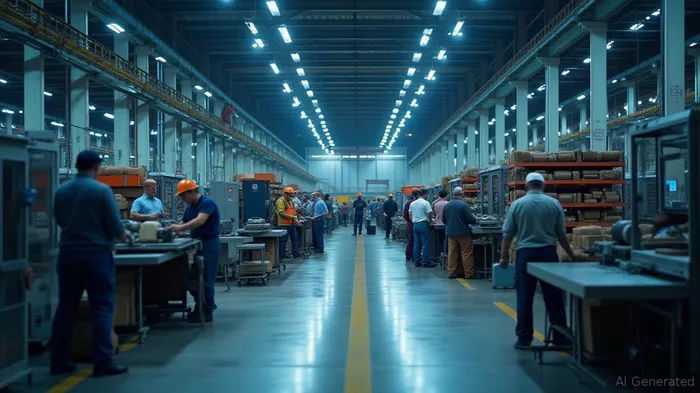
The acquisition of Continental's drum brake facility in Cairo Montenotte, Italy, by private equity firm Mutares SESE-- & Co. KGaA marks a defining moment in the automotive supply chain's ongoing transformation. This €100 million revenue-generating operation, employing 400 skilled workers and specializing in hydraulic drum brakes like the EPB-Si Parking Brake, is now a cornerstone of Mutares' strategy to build scale in mobility technologies. For Continental, the deal crystallizes its pivot toward high-margin electric braking and integrated friction systems—a shift that underscores a broader industry trend: the relentless drive to specialize and consolidate in the face of rapid technological change.
Mutares: Building a Mobility Platform with Proven Assets
Mutares, a Munich-based private equity firm listed on the Frankfurt Stock Exchange (symbol: MUX), has long specialized in acquiring undervalued industrial assets and revitalizing them. The Italian plant represents its largest bet yet in automotive manufacturing. The facility's strengths—its mature product portfolio, deep supplier relationships, and geographic positioning in Europe's dense automotive ecosystem—align perfectly with Mutares' model of “platform investments.” These are assets it can grow incrementally through operational improvements or adjacent acquisitions.
Investors should note that Mutares' stock has outperformed the DAX by 15% year-to-date, reflecting growing confidence in its turnaround strategies. The drum brake facility adds immediate scale and cash flow, while its expertise in hydraulic systems positions Mutares to capitalize on demand for hybrid and electric vehicle (EV) braking solutions—a market expected to grow at 8% CAGR through 2030.
Continental's Strategic Pruning: A Necessity, Not a Retreat
For Continental, this deal is part of a ruthless realignment. By offloading non-core assets like the Italian plant and its plastics division Contitech, the company is channeling resources into cutting-edge technologies. Its upcoming spinoff of the Automotive division into Aumovio—a standalone entity by September 2025—will create a leaner, more focused entity. CEO Philipp von Hirschheydt's emphasis on “electric braking and integrated friction solutions” signals a deliberate move into higher-margin, innovation-driven niches.
The risks here are clear: Continental's stock has underperformed peers by 20% over the past year amid concerns about its restructuring execution. Yet the drum brake sale's proceeds, combined with Aumovio's independence, could stabilize its balance sheet. Investors should monitor whether Aumovio's valuation post-listing reflects market confidence in its new focus.
Industry Dynamics: Consolidation Fuels Value Creation
The transaction highlights a structural shift in the automotive supply chain. Traditional component manufacturers are either doubling down on specialization (e.g., Continental's pivot to electric systems) or partnering with firms like Mutares to offload mature assets. This realignment is critical as EVs and autonomous driving disrupt demand patterns: while legacy components like drum brakes remain vital for ICE vehicles, their growth is slowing.
Mutares' model—acquiring stable, cash-generative operations and improving their efficiency—is a shrewd play in this environment. The firm's global reach (offices in 16 cities) and its focus on operational turnarounds mean it can extract synergies from the Italian plant without overextending itself. Meanwhile, Continental's willingness to divest underscores the necessity for suppliers to cede low-margin businesses to focus on innovation—a theme that will define sector winners in the next decade.
Investment Implications: A Two-Track Opportunity
For investors, this deal offers two distinct entry points:
1. Mutares (MUX): The stock's current valuation (12x EBITDA) suggests it's pricing in execution risks, but the drum brake facility adds a tangible, high-margin asset to its portfolio. A successful turnaround here could unlock 20–30% upside.
2. Continental: The drum brake sale removes an operational drag and sharpens its focus. Investors should watch for Aumovio's listing valuation—if it exceeds €3.5 billion, it could validate the restructuring's merits.
Risks and Considerations
- Regulatory Hurdles: The deal's Q4 closure hinges on antitrust approvals, given Mutares' growing footprint in automotive.
- Demand Volatility: A slowdown in ICE vehicle production (driven by faster-than-expected EV adoption) could pressure drum brake demand.
- Execution Risks: Mutares' track record in automotive turnarounds—this is its largest bet yet—will be under scrutiny.
Conclusion: A Strategic Masterstroke or a Prudent Play?
Mutares' acquisition is less about opportunism than about building a sustainable industrial platform. For Continental, it's a necessary step to survive in a sector where differentiation is king. Investors should view both moves as indicative of a new paradigm: in automotive, value is created not by clinging to the past but by aggressively shaping the future.
The numbers are clear: the braking systems market will grow to €50 billion by 2030, with EV-focused suppliers claiming an increasing share. For now, Mutares' Italian bet offers a stable anchor, while Continental's pivot bets on the stormier seas of innovation. Both strategies, if executed well, could redefine their futures—and investors' returns.







Comentarios
Aún no hay comentarios