
Musk's Roadster Hype: A Growth Catalyst or a Brand Risk?
The Roadster is a classic distraction. Officially, TeslaTSLA-- plans a product demo on April 1, 2026, with production targeting the first half of 2027. This is the latest in a series of delays stretching back to its original 2020 launch promise. The car's positioning, as Tesla CEO Elon Musk frames it, is not about practicality. He has called it "the best of the last of human driven cars", explicitly stating that safety is not the main goal. This is a narrative about performance and legacy, not a scalable growth product.
Financially, the Roadster is a non-starter for the company's bottom line. With a starting price of $200,000+, it is a niche, low-volume model. As Musk himself noted, it is a "small potato situation" that won't move the needle. For a company with annual revenue of $92.72 billion, a few hundred of these ultra-premium cars simply won't materially impact growth or profitability.
The real question is whether the Roadster serves as a credible growth driver or a costly distraction. The answer leans heavily toward the latter. Its primary function appears to be as a technological showcase and a tool for maintaining Musk's personal brand and investor hype. The repeated delays and Musk's recent comments, which some observers link to a public feud with OpenAI's Sam Altman, suggest the car is being used more for narrative control than financial execution. For a company focused on scaling mass-market EVs and energy products, the Roadster is a sideshow. It consumes engineering resources and executive attention without offering a path to meaningful revenue expansion.
The SpaceX Collaboration: Engineering Ambition vs. Scalability
Elon Musk's latest promise for the Tesla Roadster is pure spectacle. In an interview, he claimed the car will accelerate from 0 to 60 mph in under one second, powered by a SpaceX cold-gas thruster system replacing the rear seats. The vision is bold: a collaboration between his two companies to create something "not even really a car." But the engineering math reveals a stark contrast between the headline claim and the practical impact.
Calculations show the thrusters would improve the 0-60 mph time by only about 0.4 seconds. For context, the current projected time without thrusters is around 1.87 seconds. This means the final time would be roughly 1.56 seconds. While still astonishing, it's a marginal gain that raises serious questions about the project's value proposition. The thrusters would consume significant energy, likely eating into the car's already substantial battery pack, and introduce immense complexity, noise, and safety concerns. As one analyst noted, the idea is "not practical... or legal."
More critically, this is a massive engineering undertaking that could divert scarce resources from Tesla's core, high-impact initiatives. Musk himself has acknowledged this, stating on a recent earnings call that the Roadster is "the cherry on the icing on the cake" and that more serious work must come first. The company's stated priorities are accelerating toward a sustainable energy future and advancing its AI/robotics pivot. This includes the development of the Robotaxi and Cybercab, which are central to Musk's vision for future revenue and profitability. Diverting engineering talent and capital to a niche, high-cost, low-utility project like a rocket-powered Roadster risks slowing progress on these more critical fronts.
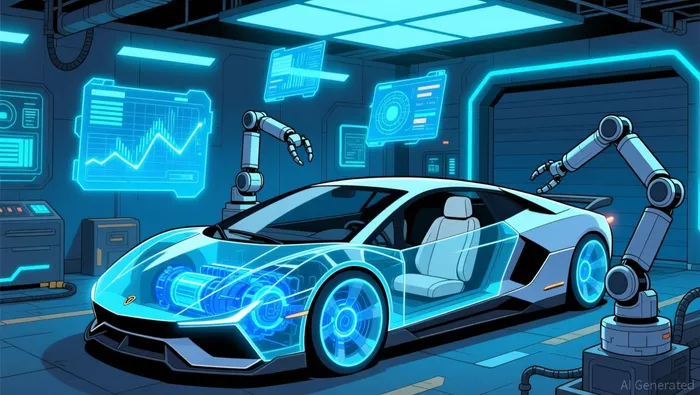
The bottom line is that the SpaceX collaboration is a masterclass in publicity and ambition, not a practical engineering solution. It serves as a powerful brand statement and a potential tool for generating pre-orders from enthusiasts. But for a company focused on scaling its core business and executing its autonomous future, the project represents a costly distraction. The real value isn't in the thrusters' marginal acceleration gain, but in the spectacle they create.
Target Market Size and Reservation Mechanics
The Roadster is a niche project, not a financial engine. Its target market is a very small segment of Tesla's affluent, tech-enthusiast customer base, with a starting price of $200,000 and Founder Series models at $250,000. Financially, it's a "small potato," a luxury item that won't move the needle for the company. The real value is in the brand statement and engineering showcase, not in volume sales.
Tesla's reservation process is designed to test serious interest. It requires a $5,000 immediate payment plus a $45,000 wire transfer within 10 days. The company advertises deposits as fully refundable, but the fine print creates a significant friction point. The policy retains the first $5,000 of the $50,000 deposit even upon cancellation.
This cancellation saga has become a damaging brand incident. After eight years of delays, a popular tech YouTuber, Marques Brownlee, recently canceled his reservation and was only refunded $45,000, with Tesla keeping the initial $5,000. The process was described as a "painful" ordeal with no cancel button and voicemail-only support. For a company that relies heavily on its image as a forward-thinking innovator, this treatment of a key early-adopter demographic is a direct hit to trust. It signals that even for a $250,000 dream car, customer service and deposit policies are not a priority.
Catalysts, Risks, and What to Watch
The Roadster narrative is now on a strict deadline. The primary catalyst is the promised prototype demo by the end of 2025. A failure to deliver would severely damage credibility and brand trust, turning a long-delayed promise into a public relations liability. CEO Elon Musk has repeatedly set this timeline, most recently telling podcaster Joe Rogan that the company is "getting close to demonstrating the prototype" and that the demo "will be unforgettable." This is the immediate test.
Key risks are mounting. Further delays are the biggest threat, with production now slated for the first half of 2027. The high cost of the thruster package, which Musk has described as "classified," adds another layer of uncertainty and potential cost overruns. Compounding the problem is continued negative sentiment from canceled reservations. Tesla is keeping $5,000 of the $50,000 deposit even after more than five years of delay, a policy that fuels frustration among long-time supporters and creates a public relations drag.
The bottom line is that the Roadster hype must not divert management focus from critical near-term goals. The company needs to achieve its forecast for a 30% rise in vehicle deliveries by 2025 and secure regulatory approval for its Robotaxi service next year. These are the operational pillars that will drive growth and profitability. If the Roadster becomes a distraction, it could jeopardize these more important milestones. For now, the stock's reaction will hinge on whether the end-of-year demo materializes as promised.





Comentarios
Aún no hay comentarios