
Municipal Infrastructure and Real Estate Development in Webster, NY: How Public-Private Partnerships Are Unlocking High-Growth Industrial Opportunities
- One

- One `` data-visualization query tag
- One `` tag (with a single line of text)
All tags are placed in the middle sections, not in the first or last paragraph, and are not in consecutive paragraphs (at least one paragraph between any two tags).
Webster, New York, has emerged as a model for post-industrial revitalization, leveraging public-private partnerships (PPPs) and strategic infrastructure investments to transform its economic landscape. From 2023 to 2025, the town has secured over $14.3 million in public funding-combining grants from the NY Forward Program, FAST NY, and other state initiatives-to catalyze industrial real estate growth, reduce vacancy rates, and attract high-value private investments. These efforts have not only revitalized brownfields but also positioned Webster as a logistics and advanced manufacturing hub with strong future growth potential.
Strategic Infrastructure and PPPs: A Blueprint for Revitalization
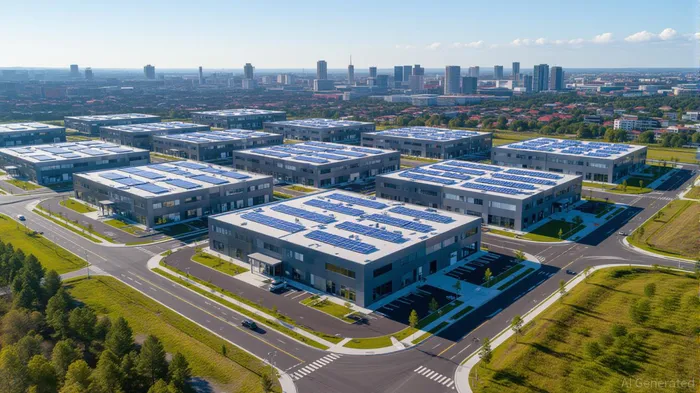
At the core of Webster's success is the FAST NY Shovel-Ready Grant, which allocated $9.8 million to redevelop a 300-acre former Xerox brownfield into a high-tech industrial park. This project, completed in collaboration with the Webster Economic Alliance (WEDA), the Town of Webster, and the Village of Webster, included road redesign, sewer expansion, and electrical upgrades. The result? Industrial vacancy rates plummeted to 2%, and nearly one million square feet of industrial space became available by 2025.
Complementing this was the NY Forward Program, which awarded $4.5 million to the Village of Webster for a community revitalization strategy. This funding supported the Webster Forward initiative, a multi-agency collaboration involving the School District and Business Improvement District to enhance walkability, commercial vibrancy, and infrastructure readiness. Meanwhile, the Reimagine Webster Master Plan, finalized in 2024, designated the Xerox brownfield as a Brownfield Opportunity Area, prioritizing future state funding for further development.
Private Investment and Economic Multipliers
Public infrastructure improvements have directly spurred private-sector commitments. A prime example is the fairlife® dairy production facility, a $650 million project under construction on 100 acres near Tebor Road. This facility, expected to create 250 high-paying jobs by 2025, was made feasible by Webster's upgraded power infrastructure and skilled workforce. Similarly, the Northeast Area for Technology (NEAT) industrial park, featuring 34 kV and 115 kV power lines and a 50 million-gallon daily water supply, has attracted logistics and manufacturing firms, with infrastructure completion slated for 2025.
The economic ripple effects are evident. Residential property values in Webster have surged by 10.1% annually since 2023, driven by job creation and improved quality of life. Industrial real estate, meanwhile, has seen a dramatic shift: the brownfield's transformation into a high-tech hub has made Webster one of the most competitive industrial markets in upstate New York.
Future Projections and Sector Opportunities
Looking ahead, Webster's strategic location-adjacent to Rochester International Airport and major freight corridors-positions it as a logistics and renewable energy hub. The Webster Economic Access Project, involving the rehabilitation of an industrial roadway network under Xerox's private ownership, is set to break ground in late 2025 or mid-2026, further enhancing connectivity.
Stakeholders project sustained growth through 2030. The Sandbar Waterfront Revitalization Project, which completed its first phase in 2023, is expanding shoreline resiliency and recreational amenities, boosting the town's appeal for mixed-use development. Additionally, the Town is exploring reapplications for the Transportation Alternatives Program (TAP) Grant to fund sidewalks and streetscape improvements in the West Webster Hamlet, signaling a commitment to long-term infrastructure-led growth.
Conclusion: A Model for Sustainable Development
Webster's experience underscores the power of PPPs in aligning public infrastructure with private-sector needs. By transforming brownfields into high-value industrial zones and investing in workforce readiness, the town has created a self-reinforcing cycle of growth. For investors, the combination of shovel-ready sites, state-backed funding, and a projected 2% industrial vacancy rate through 2025 presents a compelling opportunity. As Webster continues to prioritize infrastructure and collaboration, it offers a blueprint for how municipalities can unlock industrial real estate potential in the post-industrial era.







Comentarios
Aún no hay comentarios