
Municipal Bond Market Resilience and Income Opportunities: Navigating High-Yield Strategies in 2025
The municipal bond market in 2025 has emerged as a cornerstone of income generation, offering a unique blend of resilience, tax efficiency, and competitive yields. As interest rates stabilize and credit fundamentals remain robust, investors are increasingly turning to munis to balance risk and reward in a post-pandemic economy. This analysis explores how strategic allocation to municipal bonds can capitalize on current market dynamics while mitigating potential pitfalls.
Elevated Yields and Tax-Equivalent Advantages
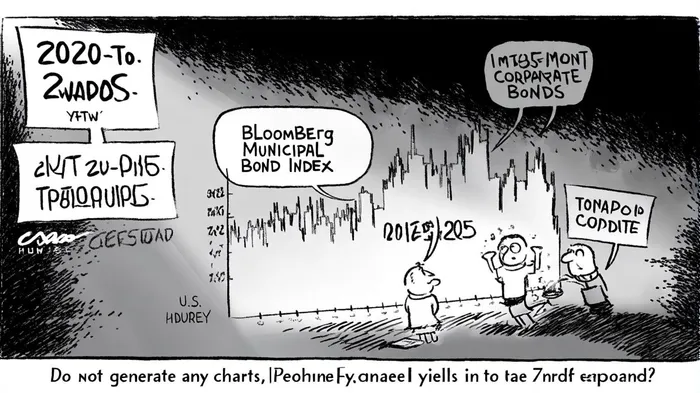
According to a report by Municipal Bonds.com, the yield-to-worst (YTW) of the Bloomberg Municipal Bond Index reached 3.96% as of June 30, 2025, a level exceeded only 4.9% of the time in the past decade [1]. This represents a significant improvement from 2023, when yields languished near 3.5%. For high-tax-bracket investors, the tax-exempt nature of municipal bonds amplifies their appeal. A 4% yield on a New York-based muni bond, for instance, translates to a tax-equivalent yield of approximately 7.3% for a resident in New York's top marginal tax bracket [1]. This advantage is further bolstered by the continued $10,000 cap on the state and local tax (SALT) deduction, which preserves the after-tax value of muni returns [2].
Credit Quality and Default Resilience
Despite concerns about fiscal stress in certain sectors, the municipal bond market has demonstrated remarkable credit resilience. Year-to-date in 2025, only 26 defaults have been recorded, all concentrated in high-risk sectors such as hospitals and higher education [2]. This low default rate—on track to be the second-lowest since 2010—reflects strong state and local government balance sheets, with robust reserve balances and declining unfunded pension liabilities [3]. However, investors must remain vigilant about sector-specific risks, particularly in jurisdictions with volatile revenue streams or underfunded obligations.
Strategic Income Generation in a High-Yield Environment
The current environment favors active management and sector rotation. With new-issue supply hitting a record $256 billion year-to-date in 2025, driven by infrastructure spending and refinancing activity [3], investors have access to a diverse range of opportunities. High-grade munis in high-tax states like California and New York remain particularly attractive, as their tax-equivalent yields outperform taxable alternatives by widening margins [2]. Additionally, longer-duration bonds issued at higher coupons stand to benefit from anticipated Federal Reserve rate cuts and a normalizing yield curve [1].
A tactical approach might involve overweighting sectors with strong credit fundamentals, such as general obligation bonds or essential services like water and sewer utilities, while underweighting sectors with structural challenges, such as public power or healthcare. Geographic diversification is also critical, as in-state allocations can enhance returns through the SALT deduction and local economic alignment [2].
Challenges and Forward-Looking Considerations
While the muni market's resilience is evident, several headwinds persist. Political uncertainty surrounding the potential expiration of the 2017 Tax Cuts and Jobs Act—particularly the SALT deduction cap—could disrupt investor behavior [2]. Similarly, the unwinding of pandemic-era budget surpluses and potential Medicaid cuts may strain municipal finances in the medium term [3]. Investors should also monitor federal regulatory shifts, which could alter the risk-reward profile of certain sectors.
Conclusion
The 2025 municipal bond market offers a compelling case for income-focused investors seeking tax efficiency and downside protection. By leveraging elevated yields, prioritizing high-grade credits, and adopting a sector- and geography-conscious strategy, investors can navigate the complexities of this market while maximizing returns. As always, active management and rigorous credit analysis remain essential to capturing the full potential of this resilient asset class.







Comentarios
Aún no hay comentarios