
Municipal Bitcoin Adoption in 2025: A New Era in Public Finance and Institutional Allocation
The year 2025 has marked a seismic shift in how municipalities and governments approach public finance, with BitcoinBTC-- emerging as a strategic asset for diversification, inflation hedging, and technological innovation. From U.S. states to international jurisdictions, the integration of Bitcoin into sovereign and municipal treasuries is no longer a speculative experiment but a calculated financial strategy. This trend reflects broader institutional confidence in Bitcoin's role as a legitimate asset class, driven by regulatory clarity, market infrastructure, and macroeconomic pressures.
U.S. States Lead the Charge in Bitcoin Treasury Reserves
The U.S. has become a testing ground for Bitcoin adoption at the municipal level, with states like Texas, Arizona, and New Hampshire pioneering the use of Bitcoin in public finance. Texas, in particular, has set a precedent by establishing a Bitcoin reserve with a minimum five-year embargo on selling state-held Bitcoin, signaling a long-term commitment to the asset, according to a Business Initiative report. This initiative, funded through state budgets, positions Texas as a leader in leveraging digital assets for economic development. Meanwhile, Wisconsin became the first U.S. state to purchase Bitcoin ETFs, further blurring the lines between traditional and digital asset management, as noted in a Crypto News report.
According to a report by Crypto News, at least 28 U.S. states have introduced legislation to explore Bitcoin reserves, with Michigan's HB 4087 advancing toward a vote. These efforts are driven by the desire to hedge against inflation and diversify state treasuries in an era of volatile fiat currencies. For instance, New Hampshire and Arizona have authorized Bitcoin treasuries but remain in the planning phase, highlighting the varying stages of adoption across the country, as described in the Business Initiative report.
Global Perspectives: Bhutan and El Salvador as Case Studies
Internationally, the adoption of Bitcoin by municipalities and sovereign entities has taken on unique dimensions. Bhutan's Gelephu Mindfulness City (GMC) has emerged as a model for institutional Bitcoin adoption, with the special administrative region allocating 28% of its GDP to Bitcoin as a strategic reserve asset, according to the Business Initiative report. This bold move underscores Bhutan's commitment to leveraging digital assets for economic resilience and technological sovereignty.
El Salvador, the first country to adopt Bitcoin as legal tender in 2021, provides a contrasting narrative. While the government's Chivo Wallet and Bitcoin Beach initiatives aimed to drive mass adoption, a 2025 report by Crypto Saviours reveals that only 15% of daily transactions involve Bitcoin, with just 12% of Salvadorans using it regularly, according to an Albion Crypto report. President Nayib Bukele has acknowledged these challenges but remains optimistic about future opportunities, including Bitcoin bonds and volcanic energy-powered mining operations, as noted in the Albion Crypto report. El Salvador's experience highlights the gap between policy ambition and public adoption, offering critical lessons for other municipalities considering Bitcoin integration.
Institutional and Corporate Adoption: A Catalyst for Mainstream Acceptance
The surge in institutional Bitcoin adoption has further legitimized its role in public finance. As of 2025, over $110 billion in Bitcoin holdings are reported by institutional investors, driven by the launch of spot Bitcoin ETFs and regulatory frameworks like the CLARITY Act, per an Albion Crypto report. The River Business Report 2025 notes that businesses now hold 6.2% of the total Bitcoin supply, with small businesses leading the charge-75% of business Bitcoin users have fewer than 50 employees, allocating a median of 10% of their net income to Bitcoin, as detailed in the Business Initiative report.
This corporate enthusiasm is mirrored in municipal strategies. For example, Texas's Bitcoin reserve is part of a broader effort to position the state as a hub for blockchain innovation, attracting startups and talent. Similarly, the U.S. Strategic Bitcoin Reserve, established in March 2025 under President Trump, holds 200,000 BTC, signaling federal-level recognition of Bitcoin's macroeconomic potential, according to a Pleb Underground piece.
Challenges and Risks in Municipal Bitcoin Adoption
Despite the momentum, municipalities face significant challenges. Regulatory uncertainty in some jurisdictions, technical barriers to secure storage, and Bitcoin's price volatility remain concerns. El Salvador's experience, where public adoption lagged behind government initiatives, illustrates the need for robust education and infrastructure to ensure Bitcoin's utility in everyday transactions. Additionally, the long-term performance of Bitcoin as a store of value versus its short-term volatility will determine its viability as a treasury asset.
The Future of Bitcoin in Public Finance
The integration of Bitcoin into municipal and institutional portfolios is likely to accelerate in 2025 and beyond. As more states and countries experiment with Bitcoin reserves, the asset's role in public finance will evolve from a speculative hedge to a strategic component of diversified treasuries. Regulatory clarity, technological advancements (e.g., Layer 2 solutions for transaction efficiency), and growing institutional infrastructure will further cement Bitcoin's legitimacy.
For investors, the municipal adoption of Bitcoin represents a unique opportunity to capitalize on a macroeconomic shift. States and municipalities acting as early adopters may drive broader institutional demand, creating a flywheel effect that benefits the entire ecosystem. However, careful due diligence is required to assess the risks and rewards of this nascent market. 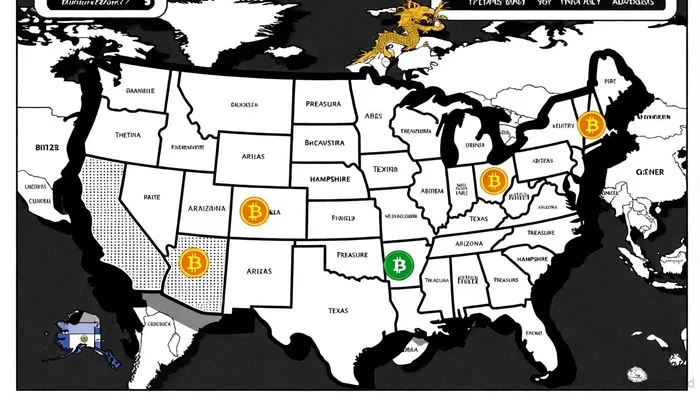






Comentarios
Aún no hay comentarios