
Mueller Industries: Sustaining High Capital Returns in a Normalizing Market
The ability to generate and sustain high returns on invested capital (ROIC) is a hallmark of durable competitive advantage. For Mueller IndustriesMLI--, a vertically integrated manufacturer of copper tube, brass rod, and forgings, this metric has long been a cornerstone of its appeal. However, as markets normalize in 2025, the question arises: Can Mueller Industries maintain its exceptional ROIC and profitability amid shifting dynamics in raw material prices, demand cycles, and industry trends?
Financial Performance and Strategic Foundations
Mueller Industries has demonstrated resilience in 2025, with third-quarter net income of $208.1 million and operating income of $276.1 million, driven by higher selling prices and improved sales performance in key segments. Its ROIC, while slightly down to 31.24% as of December 5, 2025, from a three-year average of 35.61%, remains robust. This durability stems from strategic pillars: vertical integration, which reduces supply chain risks and enhances cost control; a diversified product portfolio spanning water infrastructure, HVAC/R, and electrical transmission; and disciplined capital allocation.
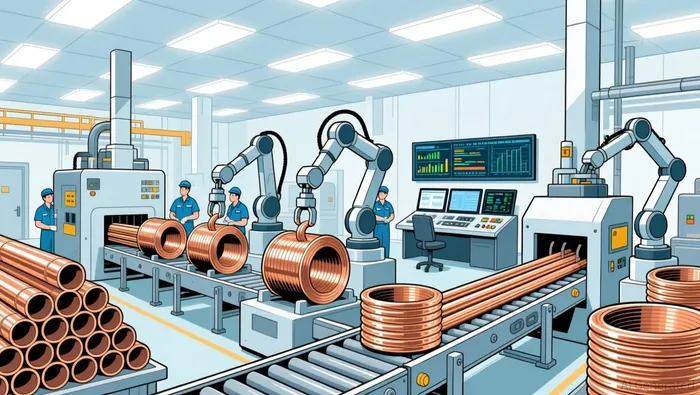 The company's 2024 acquisitions of Nehring Electrical Works and Elkhart Products have further strengthened its position in high-growth sectors, such as energy transmission and copper solder fittings. These moves align with broader industry trends toward onshoring and reduced reliance on imported goods, positioning Mueller to capitalize on domestic manufacturing tailwinds.
Market Positioning and Competitive Advantages
Mueller's competitive edge lies in its unique vertical integration, which is unmatched in North America for copper tube and fittings. This structure allows the company to absorb raw material price volatility-a critical factor as copper prices stabilize post-2025. Additionally, its strong balance sheet, with a current ratio of 5.1 to 1, provides flexibility to reinvest in growth opportunities or navigate downturns.
The company's revenue growth in Q1 2025-17.71%, far outpacing the 0.02% average of competitors, underscores its ability to capture market share. This momentum is supported by its focus on essential sectors, such as water infrastructure and HVAC/R, which are experiencing structural demand from aging systems and climate-driven modernization.
Industry Trends and Growth Prospects
The water infrastructure market, a key growth driver for Mueller, is projected to expand at a 10.10% CAGR through 2030, reaching $46.44 billion according to market analysis. Digitalization, including AI-driven anomaly detection and smart metering, is transforming operations, while sustainable practices like advanced oxidation processes are gaining traction as reported by industry analysts. Mueller's exposure to this sector through Mueller Water Products- reporting a 6.6% sales increase in Q3 2025-positions it to benefit from these trends.
However, the company's reliance on the construction sector, which accounts for roughly 50% of its revenue, introduces cyclical risks. Margin compression in legacy brass rod and industrial components could emerge as demand normalizes. Similarly, the electrical transmission segment, while promising, requires significant capital outlays for infrastructure modernization, which may delay returns according to financial analysts.
Risks to ROIC and Mitigation Strategies
As markets normalize, Mueller faces several headwinds to sustaining its high ROIC. Rising copper prices and favorable inventory accounting have temporarily inflated margins, but these tailwinds may reverse. Additionally, interest-rate sensitivity-a risk shared by utilities and infrastructure firms-could pressure returns if borrowing costs rise as noted by investment analysts. Regulatory changes, particularly in water utilities, may also constrain capital expenditures and return allowances according to industry reports.
To mitigate these risks, Mueller must prioritize reinvestment efficiency. With a 24% ROE as of March 2025, the company has demonstrated strong profitability, but maintaining this requires disciplined capital allocation. Its 89% profit retention rate suggests a focus on internal growth, yet external opportunities-such as further acquisitions in high-margin sectors-could enhance returns.
Conclusion: Balancing Durability and Adaptability
Mueller Industries' long-term durability hinges on its ability to adapt to a normalizing market while leveraging its strategic advantages. Its vertical integration, diversified product portfolio, and strong balance sheet provide a solid foundation. However, the normalization of copper prices, regulatory uncertainties, and interest-rate risks necessitate cautious optimism.
For investors, the key question is whether Mueller can sustain its reinvestment efficiency and pivot toward higher-growth segments, such as electrical transmission and smart water infrastructure, without overextending its capital base. If the company continues to execute its strategic vision-balancing organic growth with disciplined acquisitions-its ROIC and profitability could remain resilient, even in a more mature market environment.







Comentarios
Aún no hay comentarios