
MTR's Tuen Mun Area 16 Project: A Catalyst for Long-Term Value Creation in Hong Kong's Logistics and Commercial Real Estate
Hong Kong's logistics and commercial real estate sectors are poised for a transformative shift, driven by strategic infrastructure investments like MTR Corporation's Tuen Mun Area 16 Project. As the city navigates post-pandemic economic recalibration and global supply chain reconfiguration, this project-anchored by the Tuen Mun South Extension (TME) of the Tuen Ma Line-emerges as a linchpin for long-term value creation. By 2030, the project is expected to catalyze a $24.21 billion economic uplift through enhanced connectivity, logistics modernization, and mixed-use development, aligning with Hong Kong's ambition to solidify its role as a global logistics hub, according to a Transport and Logistics Bureau press release.
Strategic Infrastructure and Connectivity
The TME project extends the Tuen Ma Line by 2.4 kilometers, adding two stations: one at Tuen Mun Area 16 and another near the Tuen Mun Ferry Terminal. This extension, slated for completion in 2030, will directly benefit 60,000 residents near the ferry terminal and 49,000 around Area 16, reducing travel times and alleviating road congestion, according to the Tuen Mun South Extension website. For logistics, the proximity to the ferry terminal-a critical node for river trade-positions the area to capitalize on the government's $190-hectare reclamation plan for Lung Kwu Tan and Tuen Mun West, which prioritizes modern logistics terminals and green industrial zones, as reported by the South China Morning Post.
The MTR Corporation has secured property development rights for a 6-hectare site in Area 16, earmarked for integrated commercial and residential use. This development, funded by a government-deducted lump sum of $24.21 billion from the land premium, underscores public-private collaboration to de-risk large-scale infrastructure projects, the bureau noted. The first phase alone has attracted 31 expressions of interest, including Wheelock Properties, signaling robust market confidence in the area's future potential, according to The Standard.
Logistics and Commercial Real Estate Synergies
The relocation of the Tuen Mun Public Cargo Working Area to Tuen Mun West has freed up 4 hectares in Area 16 for non-industrial uses, aligning with the government's push to repurpose land for smart, green industries, according to the Lung Kwu Tan project page. This shift complements the broader 301-hectare industrial development plan in Tuen Mun, which includes upgraded river trade terminals and a new sea-crossing bridge to enhance freight efficiency, as reported by Dim Sum Daily.
For commercial real estate, the Area 16 project is expected to drive demand for Grade A office spaces and retail hubs. The integration of residential and commercial functions-mirroring MTR's successful "rail plus property" model-will create a self-sustaining ecosystem. David Tang of MTRC estimates the project will deliver 2,440 residential units across two phases, attracting a population that could fuel local consumption and business activity, according to AAStocks.
Alignment with Hong Kong's Strategic Goals
The project dovetails with the Northern Metropolis development plan, which seeks to connect the Tuen Ma Line to the East Rail Line, forming a railway loop to support cross-border logistics and tech industries, according to a government release on news.gov.hk. Additionally, the Action Plan on Modern Logistics Development emphasizes smart, sustainable growth, with Tuen Mun Area 16 serving as a testbed for circular economy initiatives and green energy adoption.
Economic forecasts suggest that while Hong Kong's commercial real estate market faces near-term headwinds-such as 5–10% rent declines in 2024-long-term fundamentals remain resilient. By 2029, the sector is projected to grow to $812 billion, driven by multinational corporations seeking strategic footholds in the Greater Bay Area, according to Statista. Tuen Mun's strategic location, coupled with its transport upgrades, positions it to outperform regional submarkets.
Risks and Mitigants
Challenges include global economic volatility and high financing costs, which could delay private-sector participation. However, MTR's track record in managing large-scale projects-such as the TME's optimized engineering solutions (e.g., 10% fewer river piers, vibration control technology)-mitigates operational risks, as reported by RailProfessional. The government's commitment to funding infrastructure through land premium deductions also ensures project continuity.
Conclusion
MTR's Tuen Mun Area 16 Project exemplifies how infrastructure-led development can unlock long-term value in logistics and commercial real estate. By 2030, the area is set to become a logistics and commercial nexus, driven by enhanced connectivity, sustainable design, and strategic alignment with Hong Kong's economic vision. For investors, this represents a rare opportunity to capitalize on a decade-long transformation, with risk buffers provided by MTR's expertise and government backing.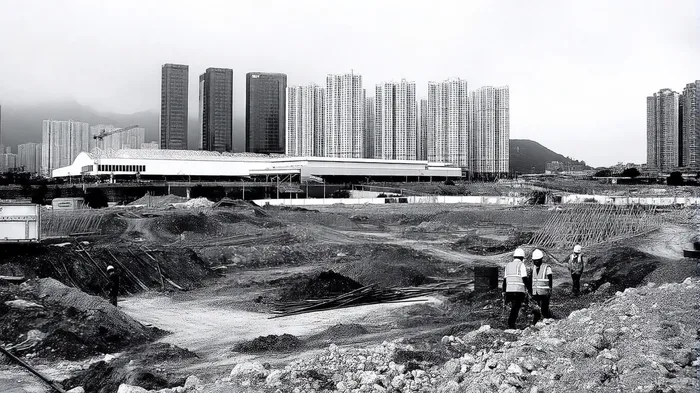







Comentarios
Aún no hay comentarios