
MTG: A Steady Hand in Mortgage Insurance's Favorable Landscape
The mortgage insurance sector has long been a barometer of housing market health, and MGIC Investment CorporationMTG-- (NYSE:MTG) has emerged as a resilient leader in this space. As of Q1 2025, MTG's financial results underscore its ability to navigate cyclical challenges while maintaining a robust capital position. Coupled with favorable valuation metrics relative to peers and industry tailwinds such as stable housing demand and regulatory support, MTGMTG-- presents a compelling case for long-term investors.
Earnings Resilience Amid Fluctuating Markets
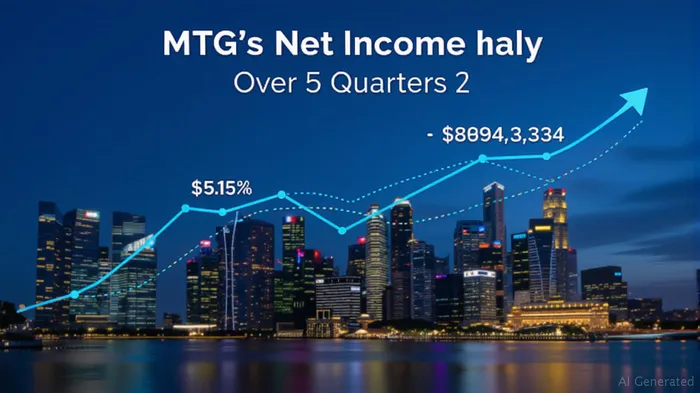
MTG's Q1 2025 results demonstrated remarkable consistency, with net income of $185.5 million ($0.75 per share), nearly flat compared to the prior quarter's $184.7 million. This stability is notable in an industry where earnings can swing with interest rates and delinquency trends. Key drivers include:
- New Insurance Written (NIW): The $10.2 billion figure for Q1 2025 marks a 12% year-over-year increase, reflecting sustained demand for mortgage insurance as homebuyers lean on lower down payments.
- Loss Ratio Management: While the loss ratio rose to 3.9% from 3.6% in Q4 2024, it remains far below the 1.9% recorded in Q1 2024, signaling improved underwriting discipline.
- Capital Strength: PMIERs available assets of $5.9 billion, with excess liquidity of $2.6 billion, provide a buffer against adverse scenarios.
Valuation: A Discounted Leader in a Growing Sector
MTG's valuation metrics offer a stark contrast to its peers. As of Q2 2025, its Price-to-Book (P/B) ratio of 1.33 places it at a 30% discount to its five-year average of 1.9, suggesting undervaluation. Meanwhile, its P/E ratio of 9.49 is well below the sector median of 14-16, and its EV/EBITDA of 6.97 is among the lowest in the industry. For comparison:
- Essent Group (ESNT): P/B of 1.8, P/E of 12.3
- Radian Group (RDN): P/B of 1.5, P/E of 11.1
This discount is puzzling given MTG's superior financial health. Its debt-to-equity ratio of 0.13 is among the lowest in the sector, and its free cash flow of $756.85 million over the past year enables aggressive shareholder returns: $224.3 million in buybacks in Q1 alone, plus a consistent $0.13 quarterly dividend (yielding 1.8%). Analysts' “Hold” consensus, with a price target of $26.63, may underestimate MTG's upside, as its fair value estimates suggest it trades at 61.5% below its intrinsic worth.
Industry Tailwinds: A Favorable Backdrop
The mortgage insurance sector is benefiting from structural tailwinds:
1. Stable Housing Demand: Low unemployment and competitive mortgage rates are sustaining home purchases, with delinquency rates at 2.3%—near decade lows.
2. Regulatory Tailwinds: PMIERs reforms have reduced compliance costs for top-rated insurers like MTG, allowing it to capture market share from weaker competitors.
3. Capital Efficiency: MTG's 38.4 basis point in-force portfolio yield highlights its ability to generate returns on existing policies, even as new originations slow.
The company has also leaned into strategic initiatives, such as its $250.6 million reinsurance deal in Q1 2025, which mitigates risk exposure while freeing capital for growth.
Risks and Considerations
No investment is without risks. MTG's short interest of 2.6% reflects skepticism about its ability to sustain growth, while geopolitical tensions and rising interest rates could dampen housing activity. However, its tangible book value per share of $22.38 (up 17% year-over-year) and a Piotroski F-Score of 4 (signaling moderate financial strength) suggest these risks are manageable.
Investment Thesis
MTG's combination of consistent earnings, undervalued metrics, and sector-specific advantages make it a standout in a niche but critical industry. Investors seeking exposure to a financially disciplined mortgage insurer should consider accumulating shares at current levels. The stock's PEG ratio of 2.59, while elevated, is justified by its 15% 3-year EPS growth rate—outpacing peers.
Final Take
MTG is more than a play on housing cycles; it's a testament to disciplined risk management and capital allocation. With a total shareholder yield of 10.5% (dividends plus buybacks) and a valuation suggesting it's priced for pessimism, the stock offers asymmetric upside. For investors willing to look beyond short-term volatility, MTG could be a cornerstone of a resilient portfolio.
Action Item:
Consider initiating a position in MTG at current levels, with a price target of $32-$35 based on fair value estimates. Pair this with a trailing stop-loss at $25 to manage downside risk. Monitor the Fed's rate policy and delinquency trends for further catalysts.
In a sector where stability is currency, MTG is printing it—and investors stand to benefit.





Comentarios
Aún no hay comentarios