
Mpox Declared Non-Emergency: Implications for Global Health and Biotech Sectors
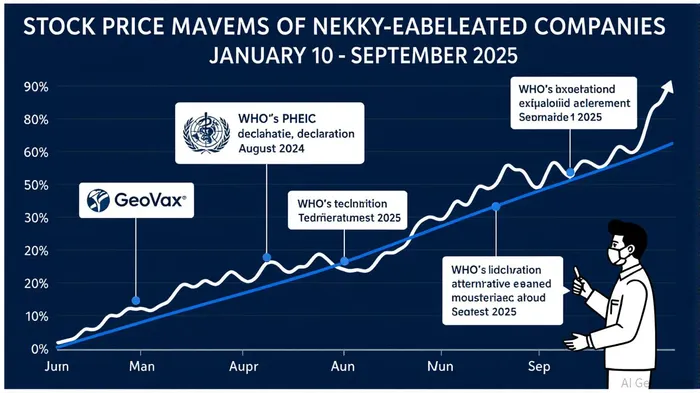
The World Health Organization’s (WHO) decision in September 2025 to declare mpox no longer a Public Health Emergency of International Concern (PHEIC) marks a pivotal shift in the global response to the outbreak. While the move reflects sustained declines in cases across Africa—particularly in the Democratic Republic of the Congo, Uganda, and Sierra Leone—it raises critical questions about the long-term market implications for diagnostic, vaccine, and pharmaceutical firms. This analysis examines how the reduced emergency status has reshaped investor sentiment, R&D priorities, and funding flows, with a focus on key players and sector trends.
Diagnostics: Regulatory Momentum Outpaces Market Demand
The diagnostic sector has seen significant regulatory advancements, particularly in Africa. The Africa Centres for Disease Control and Prevention (Africa CDC) added the RADIONE Mpox Detection Kit—a point-of-care PCR test—to its recommended list in March 2025, while the African Medicines Regulatory Harmonisation (AMRH) program granted emergency use listings for two diagnostic kits, including the Cobas® MPXV test [5]. These approvals reflect a strategic push to expand testing capacity, even as the WHO’s non-emergency declaration may dampen global procurement urgency.
However, market dynamics suggest a divergence between regulatory progress and commercial demand. Companies like KH Medical Co., Ltd. (RADIONE’s manufacturer) and Roche (Cobas® MPXV) have benefited from continental emergency declarations, but their growth trajectories may plateau as high-income countries scale back emergency-level funding. For investors, the key risk lies in over-reliance on short-term government contracts, which may wane post-PHEIC.
Vaccines: Bavarian Nordic’s Dominance and the Race for Next-Gen Solutions
Bavarian Nordic A/S, whose JYNNEOS (MVA-BN) vaccine is the only WHO-approved mpox vaccine, has been the sector’s standout performer. Its shares surged by 45% in early 2025 amid the PHEIC, driven by contracts with the U.S., EU, and African nations [1]. The company aims to produce 10 million doses by year-end, capitalizing on its 80% efficacy rate against clade Ib [3]. Yet, the post-PHEIC environment introduces uncertainty. With case numbers declining, governments may prioritize stockpile management over new procurements, potentially flattening Bavarian Nordic’s revenue growth.
Meanwhile, competitors like GeoVax LabsGOVX-- and ModernaMRNA-- are advancing next-generation vaccines. GeoVax’s GEO-MVA, a smallpox-derived candidate, received streamlined regulatory guidance from the European Medicines Agency, positioning it for Phase 3 trials [1]. Moderna’s mRNA-1769, presented at the ESCMID Congress in April 2025, remains in Phase 1/2 testing, with no clear timeline for approval [4]. For these firms, the challenge lies in balancing R&D costs with a market that may no longer justify premium pricing.
Pharmaceuticals: Therapeutics in the Shadows of Vaccines
The therapeutic landscape for mpox remains underdeveloped. Tecovirimat and brincidofovir, antivirals with emergency use authorizations in the U.S., lack robust clinical data for mpox and face safety concerns [2]. NanoViricides’ NV-387, a host-mimetic nanomedicine in Phase II trials, highlights the sector’s innovation potential but lacks the regulatory tailwinds seen in vaccines [3].
Investor interest in therapeutics has lagged, partly due to the WHO’s focus on vaccination campaigns. This gap underscores a broader issue: mpox disproportionately affects low-income regions, where profit-driven R&D models struggle to justify investment. As the INTREPID Alliance notes, the limited pipeline for mpox treatments reflects systemic inequities in global health funding [2].
Market Reactions and Investment Trends
The WHO’s non-emergency declaration has had mixed effects on stock performance. Bavarian Nordic’s shares rose 20% in five days post-declaration, reflecting confidence in its vaccine’s long-term role in endemic mpox management [1]. GeoVaxGOVX--, meanwhile, reported $2.5 million in revenue for H1 2025, buoyed by BARDA contracts, though its cash reserves remain lean [3].
Moderna’s response to the declaration is less clear. While its stock closed at $25.14 on September 5, 2025 (a 3.54% increase), this gain appears tied to broader institutional investor activity rather than mpox-specific news [4]. The company’s mRNA-1769 vaccine, though promising, faces an uncertain path to commercialization without urgent global demand.
R&D funding trends also show a shift. While patent applications for mpox diagnostics and vaccines have increased, reflecting sustained innovation [2], emergency-driven funding spikes have subsided. The WHO’s prequalification of Bavarian Nordic’s JYNNEOS and Africa CDC’s procurement of 42,000 test kits illustrate continued regional support, but global investments now prioritize long-term preparedness over crisis response [2].
Conclusion: A New Normal for Mpox and Biotech Markets
The WHO’s non-emergency declaration signals a transition from crisis management to endemic disease control. For diagnostics, this means consolidating regulatory gains while navigating reduced procurement demand. Vaccine makers like Bavarian Nordic are well-positioned but must adapt to a post-PHEIC landscape where pricing pressure and competition intensify. Therapeutics, meanwhile, remain a neglected frontier, highlighting the need for public-private partnerships to address unmet needs in low-income regions.
Investors should monitor three key factors: (1) Africa CDC’s sustained emergency efforts, which could prolong demand for diagnostics and vaccines; (2) the pace of next-gen vaccine approvals, particularly for mRNA platforms; and (3) shifts in R&D funding from emergency to equitable access models. While the mpox market has lost its “emergency” sheen, its long-term implications for global health equity and biotech innovation are far from resolved.
Source:
[1] Mpox vaccine, drug developers rally as virus spreads outside Africa [https://www.reuters.com/business/healthcare-pharmaceuticals/bavarian-nordic-shares-up-45-this-week-mpox-outbreak-2024-08-16/]
[2] Mpox Day 75: The Landscape of Diagnostics and Recent ... [https://ippsecretariat.org/news/mpox-day-75/]
[3] WHO Extends MPox Emergency as NanoViricidesNNVC-- ... [https://www.stocktitan.net/news/NNVC/who-extended-global-emergency-status-of-m-pox-epidemic-development-5062fx4at130.html]
[4] Moderna to showcase vaccine research at ESCMID ... [https://www.investing.com/news/company-news/moderna-to-showcase-vaccine-research-at-escmid-congress-93CH-3970359]
[5] New Test Added to Recommended List of Molecular..., [https://africacdc.org/news-item/new-test-added-to-recommended-list-of-molecular-diagnostic-tests-for-mpox/]





Comentarios
Aún no hay comentarios