
Motional's AI-First Strategy and the 2026 Robotaxi Race: Valuation and Strategic Positioning in a Scaling Autonomous Mobility Market
The autonomous vehicle (AV) industry is hurtling toward a pivotal inflection point in 2026, with robotaxi services poised to redefine urban mobility. At the forefront of this revolution is Motional, a joint venture between Hyundai Motor Group and AptivAPTV--, which has positioned itself as a leader in AI-driven autonomy. This article analyzes Motional's AI-first strategy, its valuation trajectory, and its competitive positioning against peers like Waymo, Lucid, and Nuro, while contextualizing the broader market dynamics shaping the 2026 robotaxi race.
Motional's AI-First Strategy: Technology and Partnerships
Motional's roadmap for 2026 hinges on its end-to-end machine learning autonomy framework, which integrates advanced multi-object tracking and behavior prediction systems. These technologies are critical for scalable autonomous driving, enabling the platform to navigate complex urban environments with minimal human intervention. Central to this strategy is the adoption of Large Driving Models (LDMs), which Motional leverages to reduce costs, enhance safety, and accelerate deployment.
The company's partnership with Hyundai is a cornerstone of its strategy. By deploying the IONIQ 5-a vehicle equipped with over 30 sensors, including radars, cameras, and lidars-Motional is preparing for fully driverless commercial operations in 2026. Testing in Las Vegas and other U.S. cities has already validated the platform's readiness, with plans to expand to high-demand urban centers. This collaboration not only ensures access to cutting-edge hardware but also aligns with Hyundai's broader EV and AV ambitions, creating a symbiotic ecosystem.
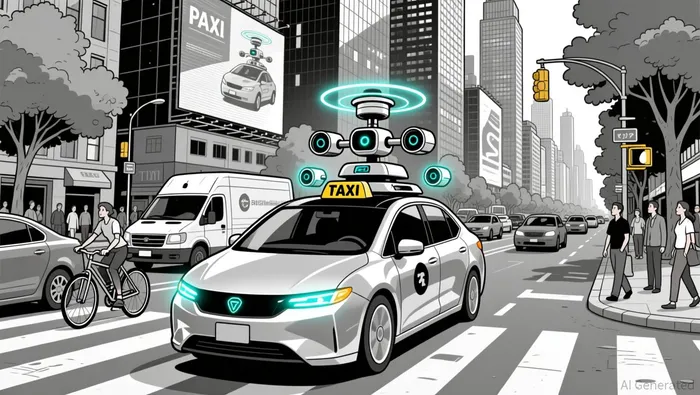
Valuation Metrics: Motional vs. the Competition
Motional's financial trajectory reflects both promise and risk. In May 2024, Hyundai secured a $475 million majority stake, bringing Motional's total funding to $923 million. By October 2025, the company raised an additional $550 million in Series B funding, valuing it at $6.5 billion. This valuation, while impressive, lags behind Waymo's projected $100 billion valuation in 2026, which is underpinned by its 14 million paid rides in 2025 and a revenue run rate of $350 million.
However, Motional's valuation must be contextualized against its peers. Lucid, Nuro, and Uber's joint robotaxi venture, while ambitious, faces skepticism due to Lucid's Zacks Rank #4 (Sell) rating and Nuro's reliance on niche deployments. Waymo's dominance is further reinforced by its sixth-generation autonomous system, regulatory approvals, and partnerships with Hyundai and Zeekr, which enable cost-effective fleet scaling.
Investor sentiment toward Motional remains cautiously optimistic. Despite a C2 credit rating downgrade in August 2025, reflecting elevated risk, the company's focus on affordability and accessibility aligns with long-term market trends. Analysts project robotaxi costs could drop from $8.20 per mile in 2024 to $1.30 by 2035, a metric where Motional's strategy excels.
Strategic Positioning: Competing in a Crowded Market
Motional's strategic advantages lie in its partnership ecosystem and regulatory agility. Unlike Waymo's vertically integrated model, Motional's collaboration with Hyundai and Aurora allows it to leverage existing manufacturing and engineering expertise while mitigating R&D costs. This approach contrasts with Lucid and Nuro's luxury-focused robotaxi, which targets high-end markets but risks limited scalability.
Waymo's lead in consumer trust and geographic expansion remains formidable. With 90% fewer serious injury crashes compared to human drivers and plans to enter 12 new cities in 2026-including London and Tokyo- Waymo's safety record and brand equity give it a distinct edge. However, Motional's emphasis on affordable mobility solutions for underserved populations positions it to capture market share in mid-tier cities and rural areas, where Waymo's premium services may not be viable.
Challenges and the Road Ahead
Despite its strengths, Motional faces significant hurdles. Regulatory delays and high entry costs remain industry-wide challenges, with BCG estimating full scalability could take up to 10 years in most cities. Additionally, Motional's credit volatility- peaking at a 2.648 default probability in April 2025-highlights financial risks that could deter investors.
The 2026 robotaxi market will also be shaped by AI-driven innovation and collaborative partnerships. For instance, Lucid, Nuro, and Uber's use of Nvidia's AI platforms to enhance real-time processing capabilities underscores the importance of cross-industry alliances. Motional's ability to integrate LDMs and scale its Hyundai-based fleet will determine its success in this competitive landscape.
Conclusion: A Calculated Bet on the Future of Mobility
Motional's AI-first strategy and strategic partnerships position it as a formidable contender in the 2026 robotaxi race. While its $6.5 billion valuation pales in comparison to Waymo's $100 billion, Motional's focus on affordability, accessibility, and regulatory compliance offers a complementary value proposition. As the market evolves, investors must weigh Motional's technological agility against the entrenched advantages of Waymo and the financial risks inherent in AV development.
The robotaxi market, projected to grow from $4.84 billion in 2025 to $693.84 billion by 2033, represents a transformative opportunity. For Motional, the key will be executing its 2026 roadmap with precision, leveraging its Hyundai partnership, and navigating regulatory and financial headwinds to secure a lasting position in this high-stakes arena.







Comentarios
Aún no hay comentarios