
Mosaic's $30M Carlsbad Exit: A Tactical Streamlining or a Sign of Weakness?
The event is a definitive divestiture. On December 22, MosaicMOS-- announced it has agreed to sell its entire Carlsbad potash operation to International Minerals Carlsbad for a total of $30 million. The deal structure is straightforward: $20 million in cash upfront, subject to closing adjustments, and $10 million in deferred payments to be made in three equal annual installments starting in 2029. The buyer assumes all associated liabilities, including asset retirement obligations.
This transaction is more than a simple asset sale. It includes the entirety of Mosaic's Carlsbad operations, from mining assets to facilities, and crucially, intellectual property tied to the operation, notably the K-Mag and Dynamate fertilizer brands. The sale effectively ends Mosaic's potash production in New Mexico after decades, concentrating its entire potash output in Saskatchewan, Canada.
The immediate financial mechanics are clear. Mosaic expects to record a non-cash asset impairment charge in the fourth quarter of 2025. This is a critical signal. It means the company has already written down the book value of the Carlsbad assets, acknowledging their value has deteriorated before the sale. The upfront cash provides liquidity, but the deferred payments, not due until 2029, are a long-term receivable with inherent credit and timing risk.
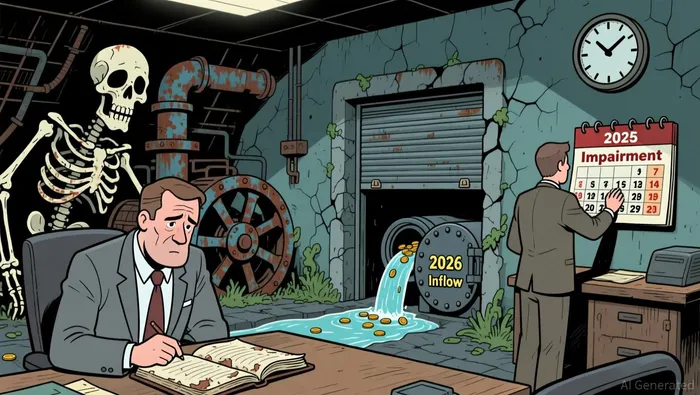
The core question for investors is whether this is a value-accretive streamlining move or a symptom of deeper issues. The company frames it as strategic focus: "We are pleased that International Minerals Carlsbad will provide continuity... and that Mosaic has taken another step to focus on core assets." The Canadian operations are described as "expected to continue to generate strong returns." Yet, the $30 million price tag for a legacy operation with brands and liabilities raises a red flag. It suggests the asset's economic value is minimal, potentially reflecting either poor performance or high operational costs that the buyer is taking on.
Strategic Rationale: Canada's Competitive Advantages
Mosaic's stated strategy is clear: invest where we have the greatest capacity to thrive and shape our portfolio to maximize returns. The Carlsbad exit is framed as a step toward that goal, concentrating production in Saskatchewan. The company operates three potash sites there: the flagship underground mine in Esterhazy, another underground operation in Colonsay, and a solution mine in Belle Plaine. This Canadian base is the world's largest potash-producing region, with Canada itself being the top global producer and exporter.
The logic is straightforward. By focusing on these three sites, Mosaic aims to streamline operations and direct capital toward what it sees as its highest-return assets. The company's internal priorities emphasize increasing efficiency and operational reliability and focusing investments on resilient opportunities where we have a competitive advantage. In theory, this should allow for better cost control and higher margins.
Yet, the global market context complicates this rationale. The outlook for potash is one of a well-supplied global market, with production at record highs and capacity projected to expand further. This oversupply pressure is a fundamental headwind to prices and profitability across the industry. In this environment, simply having a competitive asset base is not enough; it must be a truly low-cost, high-efficiency operation to generate strong returns.
The question, then, is whether the remaining Canadian portfolio justifies the $30 million exit. The sale price for Carlsbad was minimal, suggesting the asset had little standalone value. If Mosaic's Canadian operations were truly the crown jewels, one would expect a more substantial strategic rationale for shedding a legacy operation with brands and liabilities. The move reads more like a tactical pruning of a non-core asset to improve balance sheet clarity, rather than a bold bet on Canada's inherent superiority in a saturated market. The strategy makes sense only if the Canadian sites are demonstrably the lowest-cost producers, a claim that requires scrutiny against the backdrop of persistent global oversupply.
Valuation and Market Reaction: A 39% Upside Thesis vs. Reality
The market's verdict on Mosaic's Carlsbad exit is starkly different from Wall Street's bullish math. While analysts maintain a consensus Moderate Buy rating with a $33 price target, implying roughly 39% upside, the stock's recent performance tells a story of deep skepticism. The shares are down 26.9% over the past 120 days and trade near their 52-week low of $22.36. This disconnect is the core of the tactical setup.
The $30 million sale price is a key data point in this tension. It is a rounding error against the company's market cap of $8.2 billion. For all the strategic talk, the immediate financial impact on the balance sheet is negligible. The deferred payments, not due until 2029, are a long-term receivable that does little to address near-term cash flow needs. The market is looking past this tiny transaction to the broader fundamentals.
Valuation metrics confirm the market's caution. The stock trades at a PE of 6.7 and a PB of 0.64, signaling deep value. Yet, a price-to-book below 1 often reflects underlying concerns about asset quality or future profitability. The 3.4% dividend yield offers some income, but the lack of dividend growth over the past year is a subtle red flag.
The bottom line is that the Carlsbad sale itself is not the catalyst the stock needs. It's a tactical move that does not resolve the fundamental headwinds: a well-supplied global potash market and the high costs of production. The market is pricing in the risk that Mosaic's remaining Canadian operations, while focused, may not be enough to generate the "strong returns" management expects in this environment. The 39% upside thesis from analysts requires a leap of faith in the company's ability to execute its strategy flawlessly against a backdrop of persistent oversupply. For now, the stock's downtrend suggests investors are not buying that story.
Catalysts and Risks: What to Watch Next
The immediate catalyst is the closing of the Carlsbad sale itself. Mosaic expects to finalize the deal in the first half of 2026. This will lock in the non-cash impairment charge and remove the asset from the balance sheet, providing a clean break from a legacy operation. The key near-term event is the Q4 2025 earnings report, where the company will disclose the exact size of that charge and management's commentary on the Canadian operations' efficiency and capital allocation plans. This call will be the first concrete data point on whether the streamlining is creating tangible value or merely shifting costs.
The primary risk is that the Carlsbad exit is not an isolated event. If the minimal $30 million sale price signals broader asset underperformance, further impairments could follow. The market will be watching for any hint that other operations, even in Saskatchewan, face similar write-down pressures. This would undermine the entire "focus on core assets" thesis and likely trigger another round of negative sentiment.
More broadly, the stock's direction will be dictated by the fundamental market it operates in. The outlook is for a well-supplied global potash market with capacity set to expand further. Any sign of weakening demand or persistent oversupply will pressure prices and profitability across the board. Mosaic's strategy of concentrating in Canada only works if those operations are demonstrably the lowest-cost producers in a competitive landscape. Investors must monitor production cost reports and industry pricing data for confirmation.
The deferred payments from the sale are a long-term receivable, not a near-term cash infusion. The real test is whether the freed-up capital is deployed effectively to bolster the Canadian portfolio or returned to shareholders. Until then, the stock's path will be determined by the interplay between these operational catalysts and the enduring headwinds of a saturated global market.





Comentarios
Aún no hay comentarios