
Mortgage Refinance Opportunities in Early 2026 Amid Volatile Rate Fluctuations
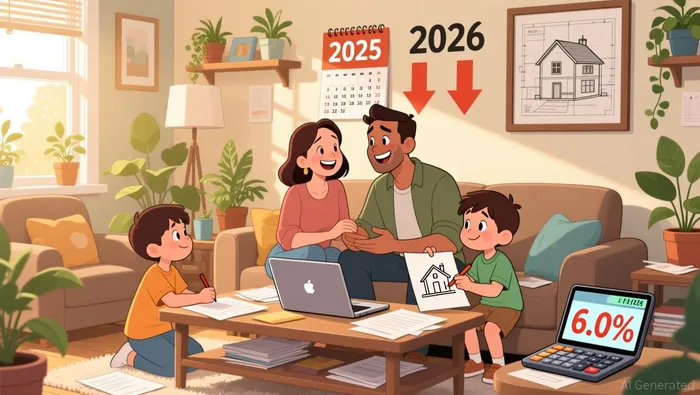
As the U.S. mortgage market enters early 2026, homeowners and investors face a pivotal juncture shaped by modest rate declines, anticipated (Fed) policy shifts, and evolving lender competition. With as of late December 2025 and projected to hover between 6.25% and 6.50% in early 2026, the question of whether to refinance hinges on strategic timing, cost-benefit analysis, and a nuanced understanding of market dynamics.
Current Rate Landscape and Fed Projections
The Fed's rate-cutting cycle in 2025, which included three reductions, has translated into a gradual decline in mortgage rates, though the impact has been tempered by persistent inflation. As of January 6, 2026, , reflecting a slight improvement from late 2025 levels. However, experts caution that the Fed's projected single rate cut in 2026 may not significantly lower mortgage rates, with for the year. This implies that refinancing opportunities in early 2026 will likely yield limited savings compared to the dramatic drops seen in prior years.
Strategic Timing and Cost-Benefit Analysis
For homeowners considering refinancing, the break-even point remains a critical metric. For example, . Conversely, a -where costs are rolled into the loan or offset by a slightly higher interest rate-might appeal to borrowers planning to stay in their homes for less than five to seven years.
The decision to refinance also depends on the expected trajectory of rates. by 2027, homeowners who wait until mid-2026 could secure better terms. However, this strategy carries risk, as economic volatility or inflationary pressures could delay or negate rate reductions.
Lender Competition and Borrower Strategies
The mortgage market in 2026 is marked by intensified lender competition, driven by the availability of private credit and digital lending innovations. Borrowers can leverage this by securing multiple loan estimates on the same day to compare rates, fees, and terms effectively. . Key sections of the loan estimate, such as (Section A), are often negotiable, offering further savings potential.
For equity optimization, homeowners should consider hybrid strategies. First-lien HELOCs and home equity loans provide flexible access to capital for renovations or investments, particularly if local housing markets favor appreciation. Additionally, investing in value-adding home improvements-such as energy-efficient upgrades or kitchen remodels-can directly boost property equity.
Conclusion
, the path to optimization requires careful planning. Homeowners must weigh the break-even point against their long-term residency plans and market conditions. Lender competition and the Fed's policy trajectory will play decisive roles in Q2 2026, potentially unlocking savings for those who act strategically. For investors and homeowners alike, a disciplined approach to cost-benefit analysis and lender negotiations will be essential in navigating this transitional phase of the housing market.







Comentarios
Aún no hay comentarios