
Mortgage Rate Thresholds and U.S. Housing Market Dynamics: Strategic Investment Timing in an Era of Demographic Shifts
The U.S. housing market has long been a barometer for economic health, with mortgage rate thresholds serving as a pivotal determinant of buyer behavior and investment outcomes. From 2020 to 2025, the interplay between historically low rates, subsequent sharp increases, and recent stabilization has reshaped both residential investment patterns and demographic purchasing dynamics. For real estate investors, understanding these shifts is critical to timing entry and exit points effectively.
Historical Trends and Market Volatility
The Federal Reserve's emergency rate cuts in 2020 and 2021 drove the 30-year fixed mortgage rate to an average of 3.15% in 2021-the lowest since the product's introduction. This spurred a surge in homebuying and refinancing, as affordability improved for millions. However, inflationary pressures in 2022 forced the Fed to raise benchmark rates, pushing the 30-year fixed rate to a peak of 7.62% in October 2023. The Congressional Budget Office reported that real residential investment plummeted by 18.8% in 2022 and was projected to decline further by 0.3% in 2023. By 2025, however, cooling inflation and anticipated rate cuts led to a stabilization, with the 30-year rate averaging 6.19% as of December 2025.
Affordability Challenges and Regional Disparities
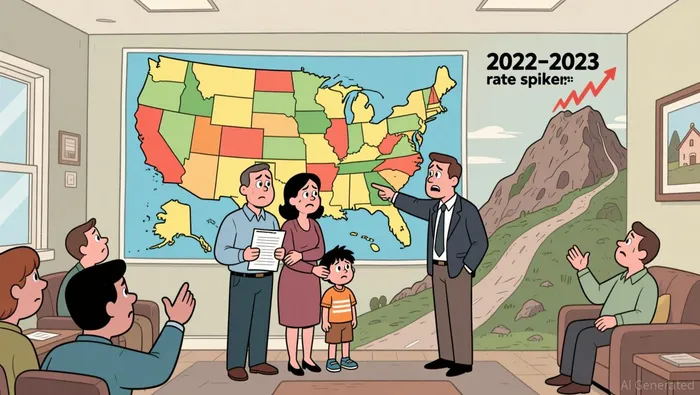 The sharp rise in mortgage rates disproportionately impacted affordability, particularly in high-cost regions like California. There, the 30-year rate climbed from 2.7% in January 2021 to 7.6% by October 2023, making homeownership costs 62% higher than renting for a 2-bedroom home. Median household incomes in California now fall short of the income required to qualify for a mortgage on a mid-tier home, exacerbating the affordability gap. Nationally, the annual cost of homeownership for a median-priced home accounted for 47% of median household income in July 2025-far exceeding the 30% affordability threshold.
Demographic Shifts in Homebuyer Behavior
Mortgage rate fluctuations have also reshaped demographic purchasing patterns. First-time buyers and younger households, often with lower incomes, have been particularly vulnerable to rate hikes. For instance, when rates rose from 6.5% to 6.75% in 2024, approximately 1.13 million households were priced out of the market. Conversely, rate declines in 2025 brought 2.8 million households back into the market, with regions like Florida-driven by population growth and supply constraints-seeing renewed demand.
Lower-income households have also adapted by purchasing smaller homes or relocating to less expensive areas. Data from the American Community Survey indicates that median home values for new purchases in 2024 were lower than in 2021, despite higher mortgage payments. This suggests a shift toward more modest properties or suburban/secondary markets as buyers adjust to tighter affordability.
Strategic Investment Timing: Navigating Rate Cycles
For investors, timing entry into the market requires a nuanced understanding of rate cycles and their cascading effects. The 2023–2025 period illustrates how elevated rates can suppress demand but also create opportunities in undervalued markets. For example, "mortgage lock-in"-homeowners reluctant to sell due to low existing rates-reduced inventory, creating bidding wars in sunbelt cities like Tampa and Orlando. However, as rates stabilized in 2025, increased inventory and modest wage growth began to balance the market.
Looking ahead, the Federal Reserve's anticipated rate cuts in 2026 could further improve affordability and unlock pent-up demand. Investors should monitor construction trends, as rising material and labor costs continue to constrain new housing supply. Markets with strong population inflows and limited inventory-such as secondary-tier cities-may offer the most compelling opportunities.
Conclusion
Mortgage rate thresholds remain a linchpin of U.S. housing market dynamics, influencing both macroeconomic trends and individual buyer behavior. For strategic investors, the key lies in aligning entry points with rate projections, demographic shifts, and regional supply-demand imbalances. While 2025's rate stabilization has begun to restore some market equilibrium, the path forward will depend on the Fed's policy trajectory and the pace of housing supply adjustments.







Comentarios
Aún no hay comentarios