
Mortgage Rate Dips and Their Implications for Housing Market Investing
The September 2025 decline in U.S. mortgage rates, which brought the 30-year fixed rate to 6.38%-a 0.17 percentage point drop from the prior week-has sparked renewed interest in real estate and REIT investing. While the reduction is modest and nearly unchanged from a year ago, according to Bankrate, it aligns with broader Federal Reserve expectations of a 25 basis point rate cut in September 2025, per CBS News. This development, though limited in immediate impact, signals a potential inflection point for housing market participants and investors.
Historical Context: Rate Cuts and REIT Performance
Historically, Federal Reserve rate cuts have created favorable conditions for Real Estate Investment Trusts (REITs). When borrowing costs decline, REITs-particularly commercial and industrial sectors-benefit from reduced capital costs, enabling debt refinancing and portfolio expansion, as explained in a Sortis guide. Mortgage REITs (mREITs), which profit from interest rate spreads on mortgage-backed securities, also see improved margins as short-term borrowing costs fall. Conversely, rising rates often compress mREIT profits, as their funding costs rise faster than returns on long-term mortgages.
The September 2025 rate dip, while small, suggests a continuation of this dynamic. With the Fed poised to cut rates further, REITs may gain access to cheaper financing, enhancing their ability to acquire assets or fund new developments. For instance, industrial REITs, which have faced headwinds from tariffs and economic slowdowns, could see renewed demand as e-commerce growth stabilizes, according to J.P. Morgan research. Similarly, residential REITs, which operate in high-demand urban areas, are well-positioned to capitalize on sustained rental demand driven by affordability challenges, as noted in the Sortis guide.
Market Realities: Stagnation Amid Lower Rates
Despite the rate decline, the U.S. housing market remains stubbornly stagnant. Pending home sales dropped 1% year-over-year in August 2025, while existing-home sales also declined marginally, according to a FinancialContent report. This paradox-lower rates failing to ignite activity-stems from persistent affordability barriers. Home prices rose 2.2% year-over-year, and property taxes and insurance costs remain elevated, the report found. Additionally, 81% of existing homeowners hold mortgages with rates below 6%, creating a "lock-in effect" that discourages selling and purchasing, the report notes.
However, this stagnation may present opportunities for investors. Multifamily REITs, such as Mid-America Apartment Communities (MAA) and AvalonBay CommunitiesAVB-- (AVB), could benefit from increased rental demand as potential homeowners opt to rent instead of buy, the FinancialContent report suggests. Similarly, REITs focused on affordable housing or mixed-use developments may gain traction as policymakers prioritize cost-effective solutions through initiatives like the ROAD to Housing Act of 2025, the report adds.
Strategic Entry Points: REIT Sector Opportunities
The September 2025 rate dip underscores strategic entry points for investors seeking exposure to real estate. J.P. Morgan Research projects REIT earnings growth of approximately 3% in 2025, with acceleration to nearly 6% in 2026, driven by improved capital market liquidity. Institutional investors are already increasing allocations to REITs, with listed REITs comprising 11% of real estate portfolios on average.
Key sectors to consider include:
1. Multifamily REITs: With housing affordability challenges persisting, demand for rental properties is likely to remain resilient.
2. Data Center and Tower REITs: These sectors have outpaced traditional office and retail REITs, reflecting the growing demand for digital infrastructure.
3. Mortgage REITs: As the Fed's rate cuts reduce short-term borrowing costs, mREITs may see margin expansion, particularly if long-term mortgage rates stabilize.
Investors should also monitor regional disparities. The Northeast and Midwest have shown stronger demand compared to the South and West, where price declines and longer days on market persist, according to the FinancialContent report.
Conclusion: Balancing Caution and Opportunity
While the September 2025 mortgage rate dip has not yet catalyzed a housing market rebound, it signals a potential shift in the economic landscape. For investors, the key lies in balancing caution with strategic entry into REITs and real estate assets that align with long-term trends. As the Fed's rate cuts continue to unfold, sectors with strong cash flow generation and exposure to inelastic demand-such as multifamily and industrial REITs-may offer compelling opportunities. 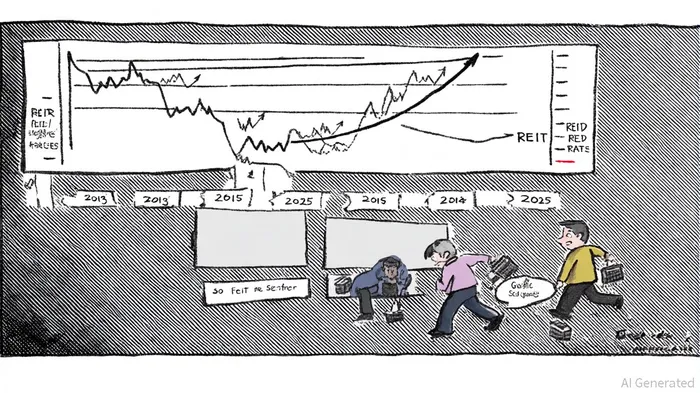





Comentarios
Aún no hay comentarios