
Morning Bid: No Place to Hide from Trump Tariff Worries
Generado por agente de IAWesley Park
viernes, 28 de febrero de 2025, 12:48 am ET2 min de lectura
GOOGL--
As the sun rises on another day in the global financial markets, investors are finding it increasingly difficult to hide from the looming shadow of President Trump's tariff threats. The new administration's protectionist stance has sent shockwaves through markets worldwide, with no sector left unscathed. Let's dive into the impact of Trump's tariffs on global markets, particularly those in Canada, Mexico, and China, and explore potential retaliatory measures these countries might take to mitigate the impact on their economies.
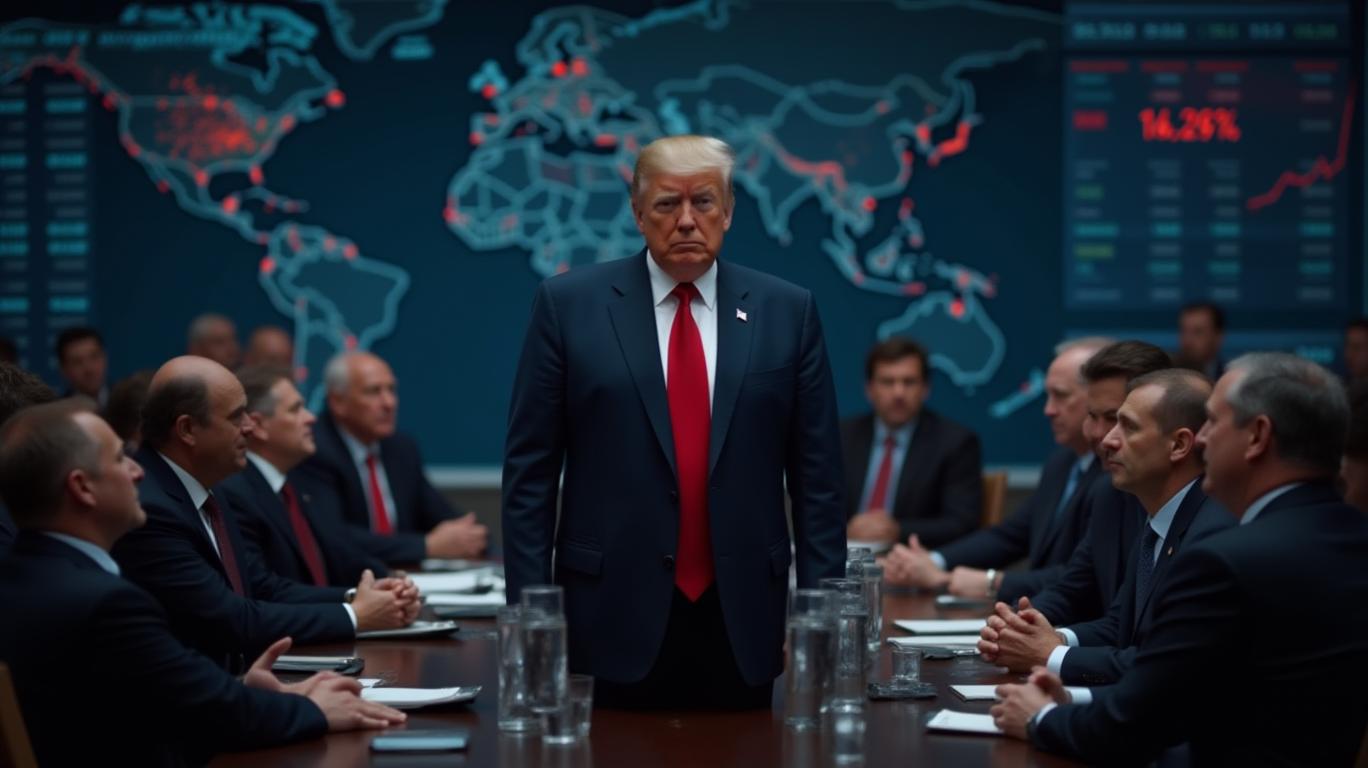
Trump's Tariff Strategy: A Double-Edged Sword
Trump's tariff strategy operates on two levels. The first targets Canada and Mexico, leveraging tariffs as a bargaining tool for non-trade issues such as immigration and drug enforcement. This approach has already led to a temporary pause in tariffs after Canada implemented new border control measures. The second category reflects a broader trade confrontation with China, echoing policies from Trump's first term. While tariffs on Canada and Mexico may never materialize, they have had a greater impact on market volatility than the more predictable versions aimed at China. Market responses, particularly in metals and oil, highlight the power of tariff threats, even in the absence of implementation.
Global Markets React to Trump's Tariff Threats
Global markets have been volatile in response to Trump's tariff threats, with Canada, Mexico, and China all experiencing market fluctuations and considering retaliatory measures to mitigate the impact on their economies.
* Canada: The Canadian dollar (CAD) has been particularly sensitive to Trump's tariff threats. On November 6, 2024, the CAD fell 1% against the US dollar (USD) following Trump's announcement of a 25% tariff on all products from Mexico and Canada (Reuters). Canadian officials have advocated for a deeper energy relationship with the US, seeking to align with US energy policies. However, the proposed tariffs could disrupt this relationship and impact Canadian energy exports (Materials). Canada may retaliate with tariffs on US energy imports, export controls on tungsten and other critical minerals, and an antitrust probe into GoogleGOOGL-- (Materials). Analysts at Scotiabank warned that tit-for-tat tariffs with the US would be the "worst possible scenario for Canada," given its weak economy, high debt, and low trade diversification (Materials).
* Mexico: The Mexican peso (MXN) also reacted to Trump's tariff threats, falling 2% against the USD on November 6, 2024 (Reuters). Mexico's 450,000 barrel per day (bpd) crude exports to the US face a 25% tariff rate, which could lead to lower US refinery runs and higher input costs for US refiners (Materials). Mexico may respond with retaliatory tariffs on US energy imports, although the MXNMX-- has shown resilience due to carry traders buying the currency on dips (Reuters).
* China: China has been a primary target of Trump's tariff threats, with the US President-elect promising a 10% tariff on Chinese goods (Reuters). Chinese assets, particularly export sectors, have been under pressure due to the extra tariffs, which could impact corporate profits (Natixis). China may accelerate its process of self-reliance and import substitution to mitigate the impact of tariffs (Panyao Asset Management). China has already responded to Trump's first-term tariffs with retaliatory measures, including tariffs on US energy imports and export controls on tungsten and other critical minerals (Materials).
Retaliatory Measures: A Double-Edged Sword
As global markets grapple with the fallout from Trump's tariff threats, countries like Canada, Mexico, and China are considering retaliatory measures to mitigate the impact on their economies. However, these measures come with their own risks and potential unintended consequences. For example, retaliatory tariffs could further disrupt US exports and exacerbate the US trade deficit. Additionally, escalating tensions could lead to a full-blown trade war, with potentially devastating consequences for the global economy.
In conclusion, Trump's tariff strategy has had a significant impact on global markets, particularly those in Canada, Mexico, and China. As these countries consider retaliatory measures to mitigate the impact on their economies, investors must remain vigilant and adapt their portfolios to navigate the ever-changing landscape of international trade. By staying informed and diversifying their investments, investors can position themselves to weather the storm and capitalize on opportunities as they arise.
MX--
As the sun rises on another day in the global financial markets, investors are finding it increasingly difficult to hide from the looming shadow of President Trump's tariff threats. The new administration's protectionist stance has sent shockwaves through markets worldwide, with no sector left unscathed. Let's dive into the impact of Trump's tariffs on global markets, particularly those in Canada, Mexico, and China, and explore potential retaliatory measures these countries might take to mitigate the impact on their economies.
Trump's Tariff Strategy: A Double-Edged Sword
Trump's tariff strategy operates on two levels. The first targets Canada and Mexico, leveraging tariffs as a bargaining tool for non-trade issues such as immigration and drug enforcement. This approach has already led to a temporary pause in tariffs after Canada implemented new border control measures. The second category reflects a broader trade confrontation with China, echoing policies from Trump's first term. While tariffs on Canada and Mexico may never materialize, they have had a greater impact on market volatility than the more predictable versions aimed at China. Market responses, particularly in metals and oil, highlight the power of tariff threats, even in the absence of implementation.
Global Markets React to Trump's Tariff Threats
Global markets have been volatile in response to Trump's tariff threats, with Canada, Mexico, and China all experiencing market fluctuations and considering retaliatory measures to mitigate the impact on their economies.
* Canada: The Canadian dollar (CAD) has been particularly sensitive to Trump's tariff threats. On November 6, 2024, the CAD fell 1% against the US dollar (USD) following Trump's announcement of a 25% tariff on all products from Mexico and Canada (Reuters). Canadian officials have advocated for a deeper energy relationship with the US, seeking to align with US energy policies. However, the proposed tariffs could disrupt this relationship and impact Canadian energy exports (Materials). Canada may retaliate with tariffs on US energy imports, export controls on tungsten and other critical minerals, and an antitrust probe into GoogleGOOGL-- (Materials). Analysts at Scotiabank warned that tit-for-tat tariffs with the US would be the "worst possible scenario for Canada," given its weak economy, high debt, and low trade diversification (Materials).
* Mexico: The Mexican peso (MXN) also reacted to Trump's tariff threats, falling 2% against the USD on November 6, 2024 (Reuters). Mexico's 450,000 barrel per day (bpd) crude exports to the US face a 25% tariff rate, which could lead to lower US refinery runs and higher input costs for US refiners (Materials). Mexico may respond with retaliatory tariffs on US energy imports, although the MXNMX-- has shown resilience due to carry traders buying the currency on dips (Reuters).
* China: China has been a primary target of Trump's tariff threats, with the US President-elect promising a 10% tariff on Chinese goods (Reuters). Chinese assets, particularly export sectors, have been under pressure due to the extra tariffs, which could impact corporate profits (Natixis). China may accelerate its process of self-reliance and import substitution to mitigate the impact of tariffs (Panyao Asset Management). China has already responded to Trump's first-term tariffs with retaliatory measures, including tariffs on US energy imports and export controls on tungsten and other critical minerals (Materials).
Retaliatory Measures: A Double-Edged Sword
As global markets grapple with the fallout from Trump's tariff threats, countries like Canada, Mexico, and China are considering retaliatory measures to mitigate the impact on their economies. However, these measures come with their own risks and potential unintended consequences. For example, retaliatory tariffs could further disrupt US exports and exacerbate the US trade deficit. Additionally, escalating tensions could lead to a full-blown trade war, with potentially devastating consequences for the global economy.
In conclusion, Trump's tariff strategy has had a significant impact on global markets, particularly those in Canada, Mexico, and China. As these countries consider retaliatory measures to mitigate the impact on their economies, investors must remain vigilant and adapt their portfolios to navigate the ever-changing landscape of international trade. By staying informed and diversifying their investments, investors can position themselves to weather the storm and capitalize on opportunities as they arise.

Divulgación editorial y transparencia de la IA: Ainvest News utiliza tecnología avanzada de Modelos de Lenguaje Largo (LLM) para sintetizar y analizar datos de mercado en tiempo real. Para garantizar los más altos estándares de integridad, cada artículo se somete a un riguroso proceso de verificación con participación humana.
Mientras la IA asiste en el procesamiento de datos y la redacción inicial, un miembro editorial profesional de Ainvest revisa, verifica y aprueba de forma independiente todo el contenido para garantizar su precisión y cumplimiento con los estándares editoriales de Ainvest Fintech Inc. Esta supervisión humana está diseñada para mitigar las alucinaciones de la IA y garantizar el contexto financiero.
Advertencia sobre inversiones: Este contenido se proporciona únicamente con fines informativos y no constituye asesoramiento profesional de inversión, legal o financiero. Los mercados conllevan riesgos inherentes. Se recomienda a los usuarios que realicen una investigación independiente o consulten a un asesor financiero certificado antes de tomar cualquier decisión. Ainvest Fintech Inc. se exime de toda responsabilidad por las acciones tomadas con base en esta información. ¿Encontró un error? Reportar un problema


SOBRE NOSOTROS
Nuestra historiaAutores de noticiasBase de conocimientosPolítica de privacidadTérmino de usoDescargo de responsabilidad de corretaje de tercerosTérminos de uso de AIMEDivulgaciones de riesgos de AInvest AICarrerasCONTÁCTENOS
Email: support@ainvest.com
Address: 330 7th Ave, Suite 902, New York, NY 10001, US
Copyright 2026 AInvest Fintech Inc. All rights reserved.


Comentarios
Aún no hay comentarios